
Choosing an intake manifold supplier for Mercedes repair and replacement work
When buyers search for an intake manifold supplier, they are usually not shopping for a generic engine part. They are trying to avoid a comeback: a fitment mismatch, a cracked runner, a missing sensor port, or a part that looks right until the mechanic puts it on the lift. For Mercedes applications in particular, the intake manifold sits at the center of both airflow and drivability, so the sourcing decision affects more than just the bill of materials. It affects repair confidence.
This matters whether you are a parts distributor, a workshop buying in volume, or a sourcing team comparing OEM car parts against direct factory auto parts options. The buyer is not only asking, “Will it fit?” The real question is: “Will this part behave like the original system once it is installed?”
What this manifold is and why fitment matters
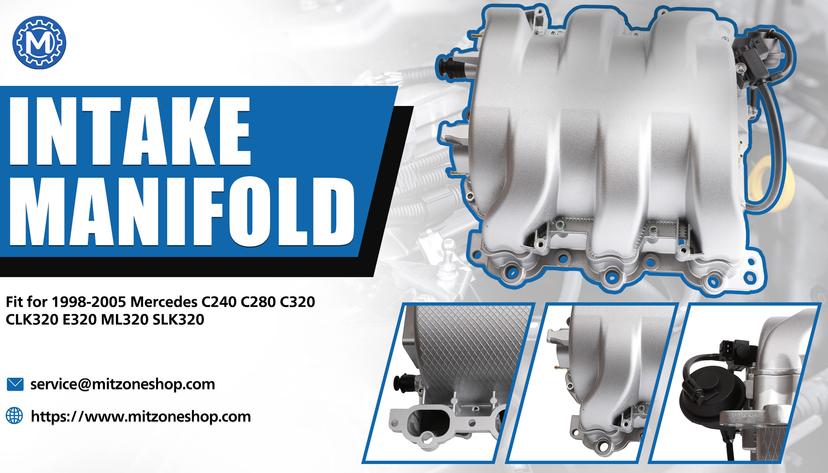
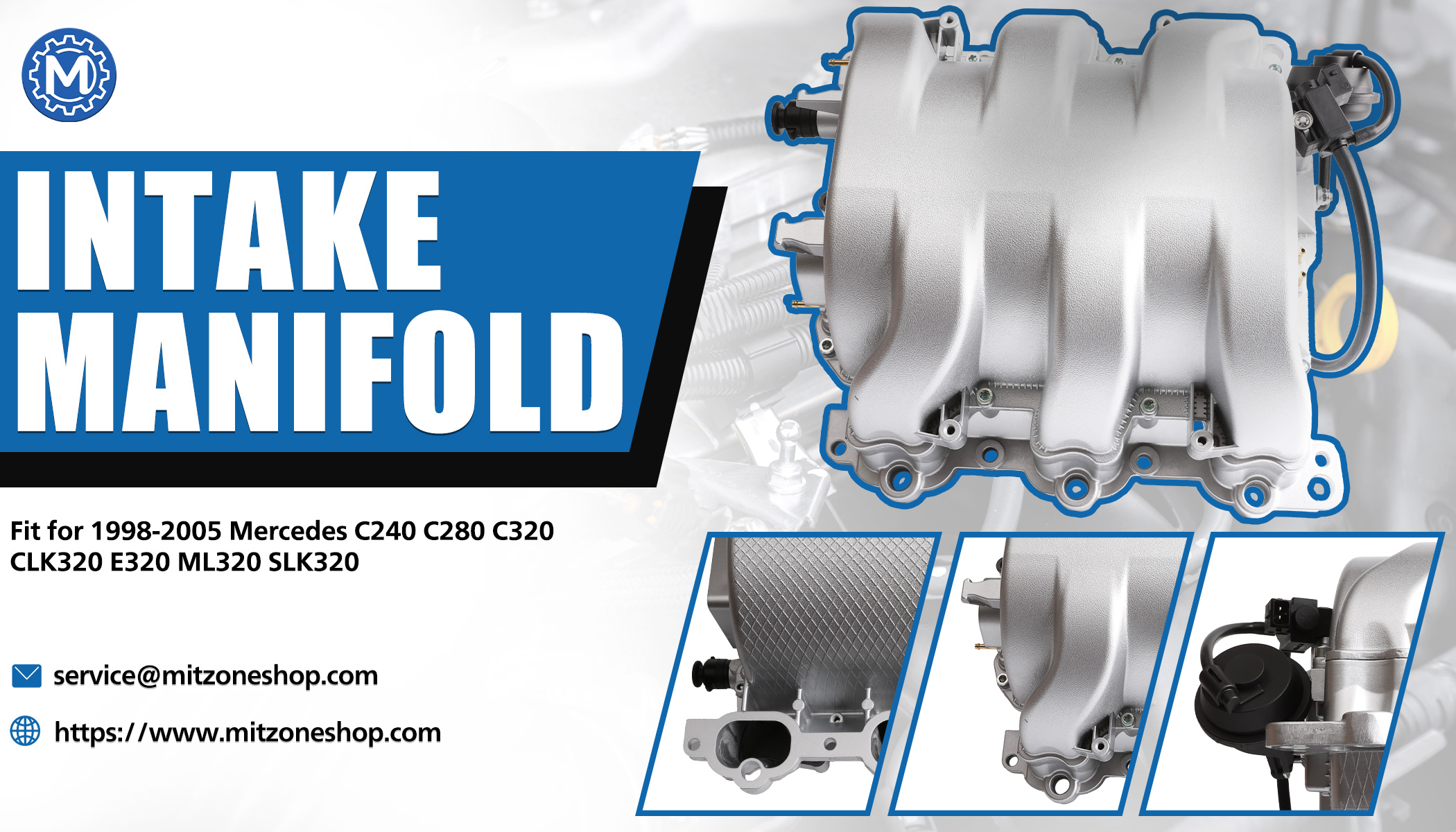
The intake manifold here is described for 1998–2005 Mercedes C240, C280, C320, CLK320, E320, ML320, and SLK320 applications. That compatibility range is the first thing a serious buyer should notice. It narrows the use case immediately and also tells you something practical: this is not the kind of part you can buy loosely by appearance alone.
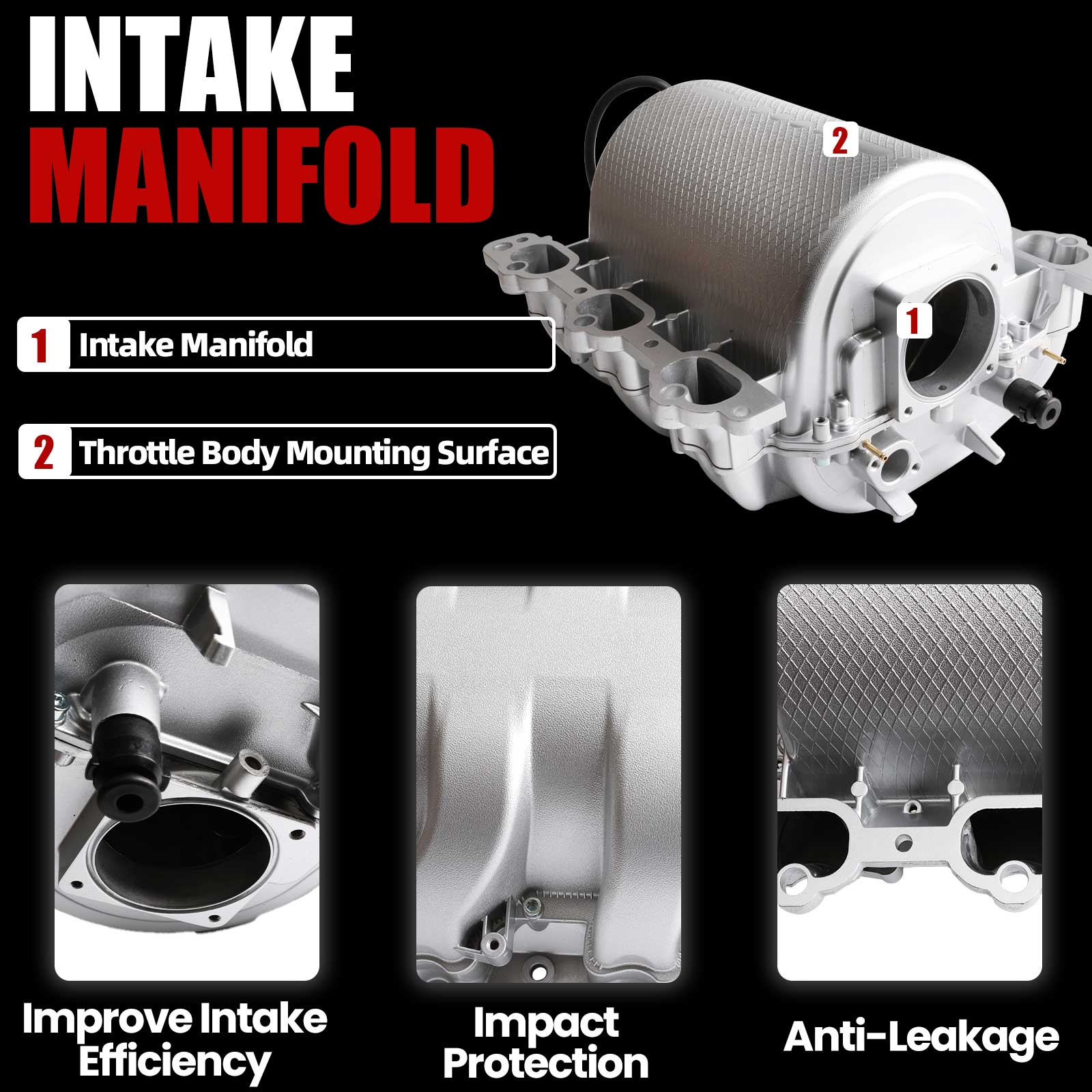
An intake manifold routes intake air to the engine cylinders and is part of the engine’s air distribution system. In a real service environment, that means the part has to line up correctly with mounting points, seals, sensors, hoses, and adjacent components. The product shown appears to be a cast aluminum manifold with a silver metallic finish, multi-runner design, and integrated hardware such as actuator or sensor components and hose connections. That combination is typical of an OEM-style replacement engine component, although the exact manufacturing route is not stated.
Quick buyer takeaway: what to check before you place an order
For a sourcing manager, the short list is usually more useful than a long one.
Confirm the vehicle application first
Mercedes model names alone are not enough. Verify the year range, the exact model, and the engine application used in the vehicle. The listing information here gives model coverage, but engine code and displacement are not supplied, so a cautious buyer should cross-check those details before committing.
Inspect the hardware arrangement
The visible actuator and sensor-related features are not cosmetic. They are part of the assembly’s function and installation compatibility. If your service team needs a manifold with specific ports, brackets, or vacuum connections, the supplier should be able to show the same configuration from the right angle, not just a polished front shot.
Ask what is included
This is where many purchases go sideways. Gaskets, seals, and installation hardware may or may not be included. The supplied data does not confirm inclusion, so a buyer should ask directly rather than assume a complete kit.
Why direct factory auto parts sourcing can be attractive
For repair networks and export buyers, direct factory auto parts sourcing is often about consistency. The value is not only price, and it is not only speed. It is the ability to reorder the same fit, the same mounting pattern, and the same external configuration without revalidating every shipment.
That said, direct factory sourcing is only as good as the documentation behind it. A supplier who can show clear application data, repeatable part identification, and stable packaging practice is usually more useful than one who simply says the part is “compatible.” Compatibility claims are common; usable documentation is rarer.
This is also where an exporter mindset matters. If the part is being shipped across markets, packaging protection, labeling accuracy, and part traceability start to matter almost as much as the casting itself. An intake manifold is bulky, vulnerable at the hose nipples and flange edges, and expensive to return if the fit is wrong.
Cast aluminum manifolds: practical strengths and buyer cautions
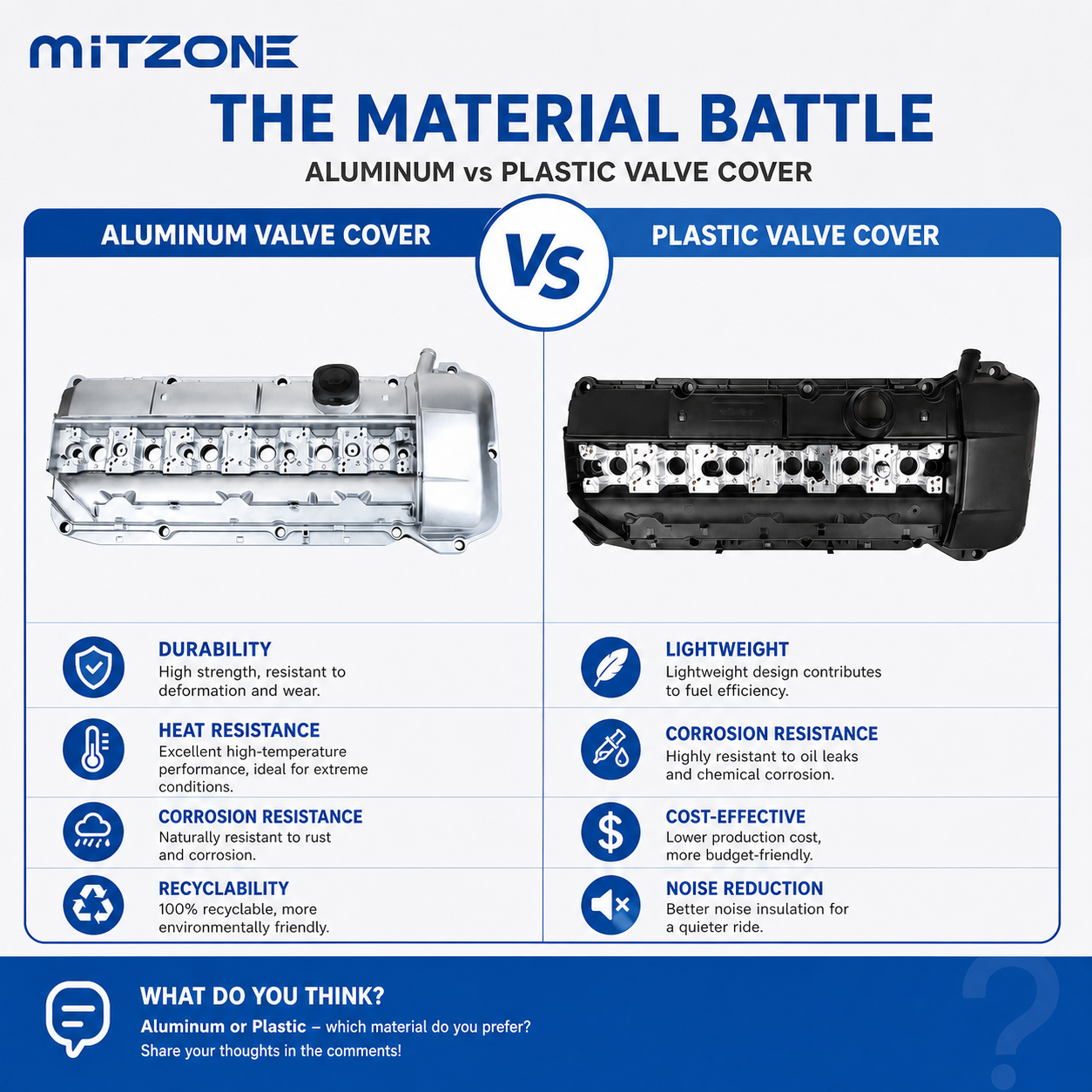
A cast aluminum manifold has some obvious advantages. It is rigid, heat-tolerant, and well suited to complex shapes with runners and mounting features. The silver metallic finish seen here is consistent with a metal casting that has been machined where needed. That said, appearance alone does not prove quality.
Buyers should still ask about machining accuracy, port cleanliness, thread condition, and surface finish on gasket faces. Even a visually solid manifold can create headaches if a flange is uneven or a sensor boss is poorly finished. In engine repair, small flaws become large labor costs.
Common sourcing mistakes with Mercedes intake manifolds
The biggest mistake is treating all Mercedes manifolds in the same model family as interchangeable. They are not always interchangeable. Another common error is assuming a photo proves complete fitment. It doesn’t. Photos help identify shape, actuator placement, and port layout, but they do not replace application data.
A second mistake is focusing only on whether the part is “new” or “replacement” and ignoring the system context. Intake manifolds interact with hoses, throttle-related components, sensors, and sealing surfaces. If any one of those interfaces differs, installation time rises quickly.
FAQ for procurement and repair buyers
Is this an OEM part?
The available information does not confirm whether it is OEM, aftermarket, or remanufactured. A buyer should ask the supplier to specify that point clearly.
Can it be used for restoration projects?
Yes, the listed Mercedes fitment makes it relevant for compatible restorations, service replacement, and intake system refurbishment, provided the exact engine application matches.
Should I choose a supplier that only sells OEM car parts?
Not necessarily. What matters more is whether the supplier can document fitment, part configuration, and packaging consistency. Some OEM car parts channels are strong on traceability, while other suppliers excel at availability. The right choice depends on your service model.
What a good supplier should be able to answer quickly
A serious intake manifold supplier should be able to confirm application coverage, show matching photos of the actual configuration, explain what hardware is included, and answer basic fitment questions without delay. If they cannot do that, the part may still be usable, but the purchasing risk shifts back to you.
For buyers handling Mercedes repair stock, the safest next step is simple: verify the exact vehicle application, request full part details, and compare the hardware layout against the removed manifold before ordering in volume. That small discipline saves more time than most rush shipments ever will.