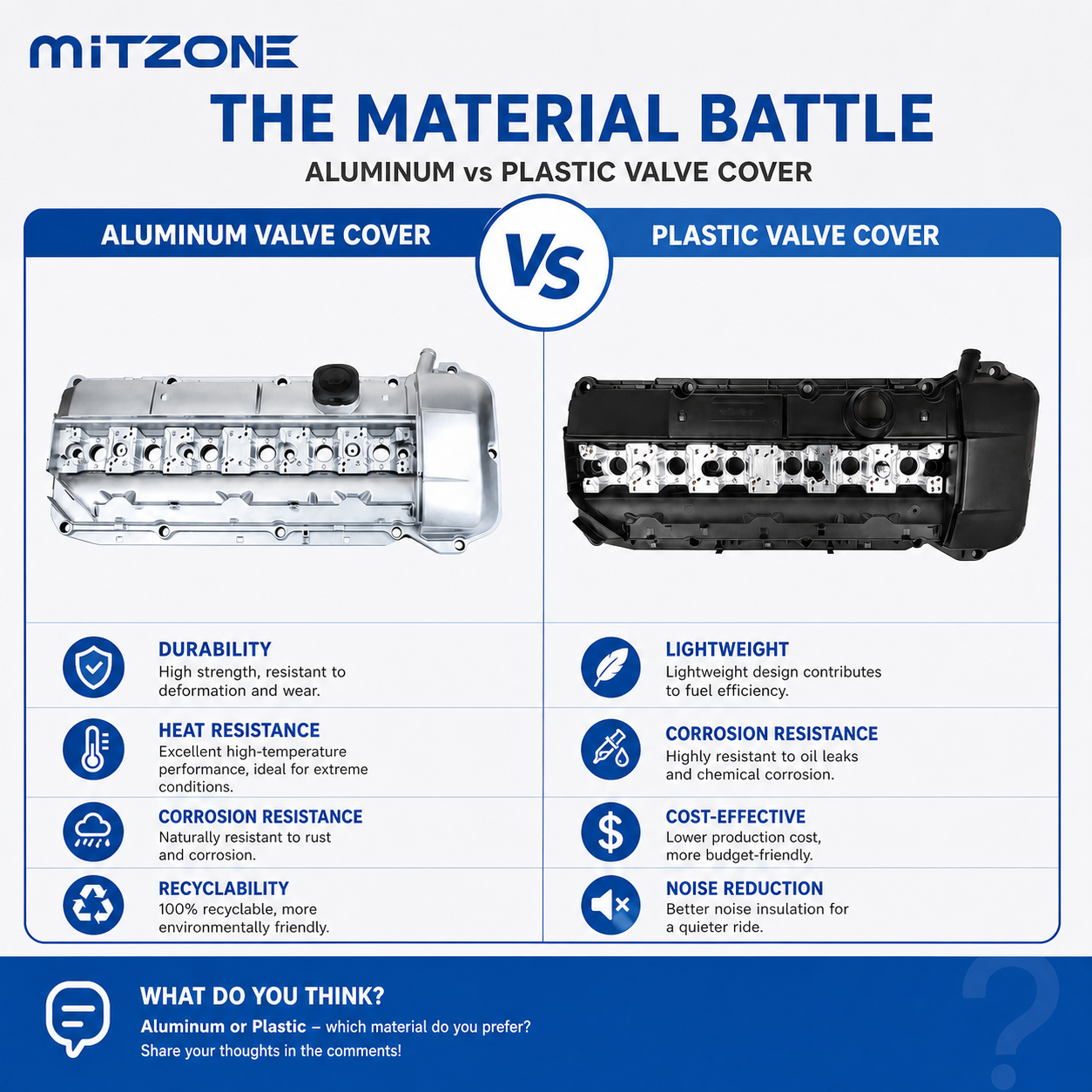

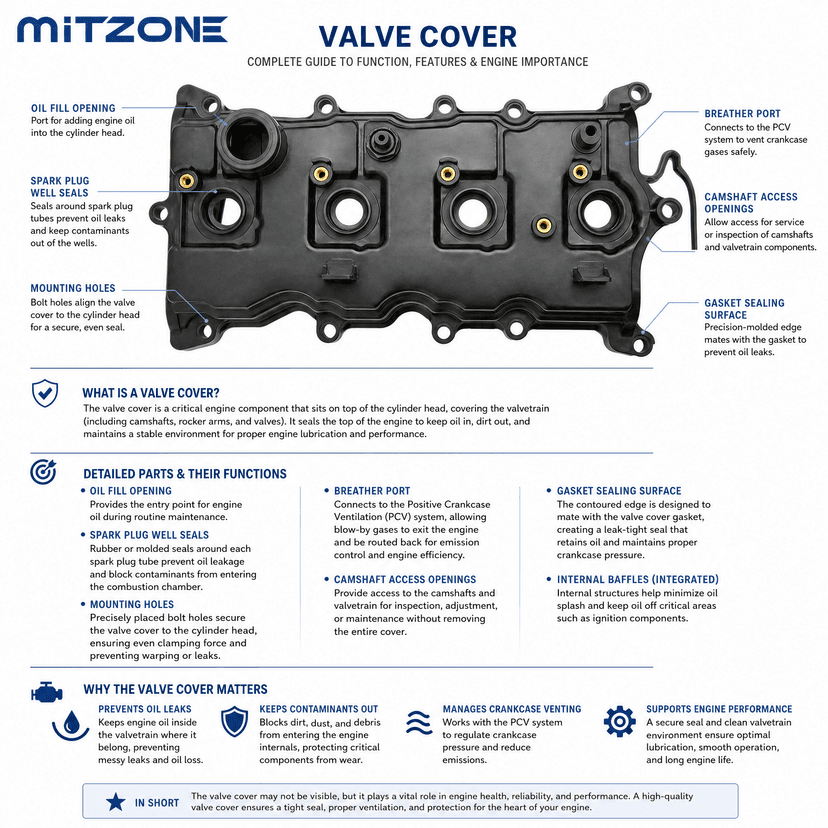
A valve cover sits on top of the cylinder head and covers the valvetrain, including the camshafts, rocker arms, and valves. Its job is simple: keep oil in, keep dirt out, and maintain a stable environment for lubrication.
Main parts and what they do
- Oil fill opening. The port used to add engine oil during routine service.
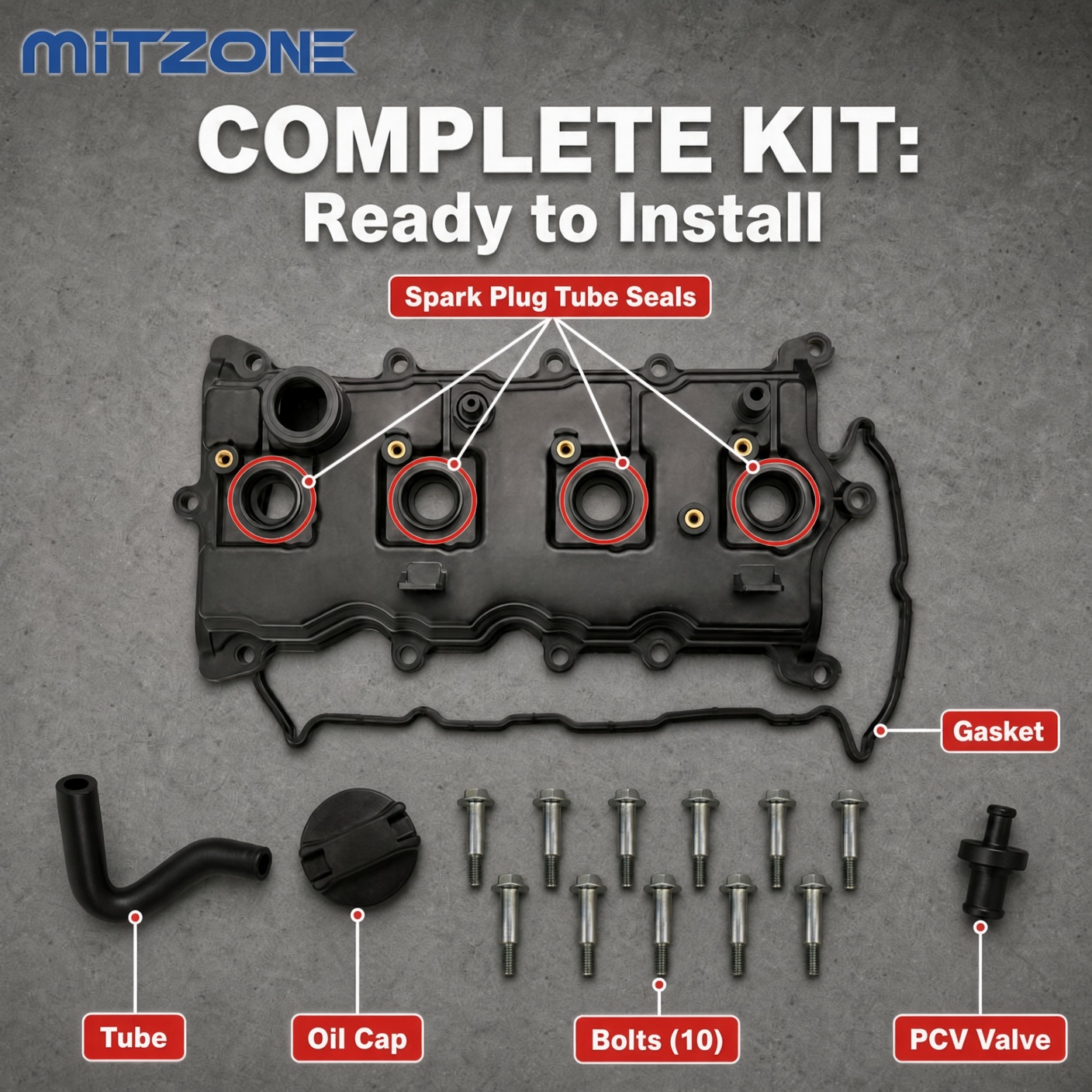
- Spark plug well seals. Rubber or molded seals around each spark plug tube. They stop oil from leaking into the wells and keep dirt out.
- Mounting holes. Bolt holes that clamp the cover evenly to the cylinder head and help prevent warping and leaks.
- Breather port. Connects to the PCV system so blow-by gases can leave the crankcase and be routed for emissions control.
- Camshaft access openings. Allow inspection or service of the camshafts and valvetrain without removing the whole cover.
- Gasket sealing surface. The precision edge that mates with the valve cover gasket to stop oil leaks.
- Internal baffles. Help reduce oil splash and keep oil off ignition components.
Why the valve cover matters
A good seal prevents oil leaks and oil loss. It blocks dirt and debris from entering the engine. It also manages crankcase venting through the PCV system, which helps control pressure and emissions. When the cover, gasket, or spark plug well seals wear out, common signs are oil on the outside of the engine, oil in the spark plug wells, a burning oil smell, and rough running.
Need the right cover?
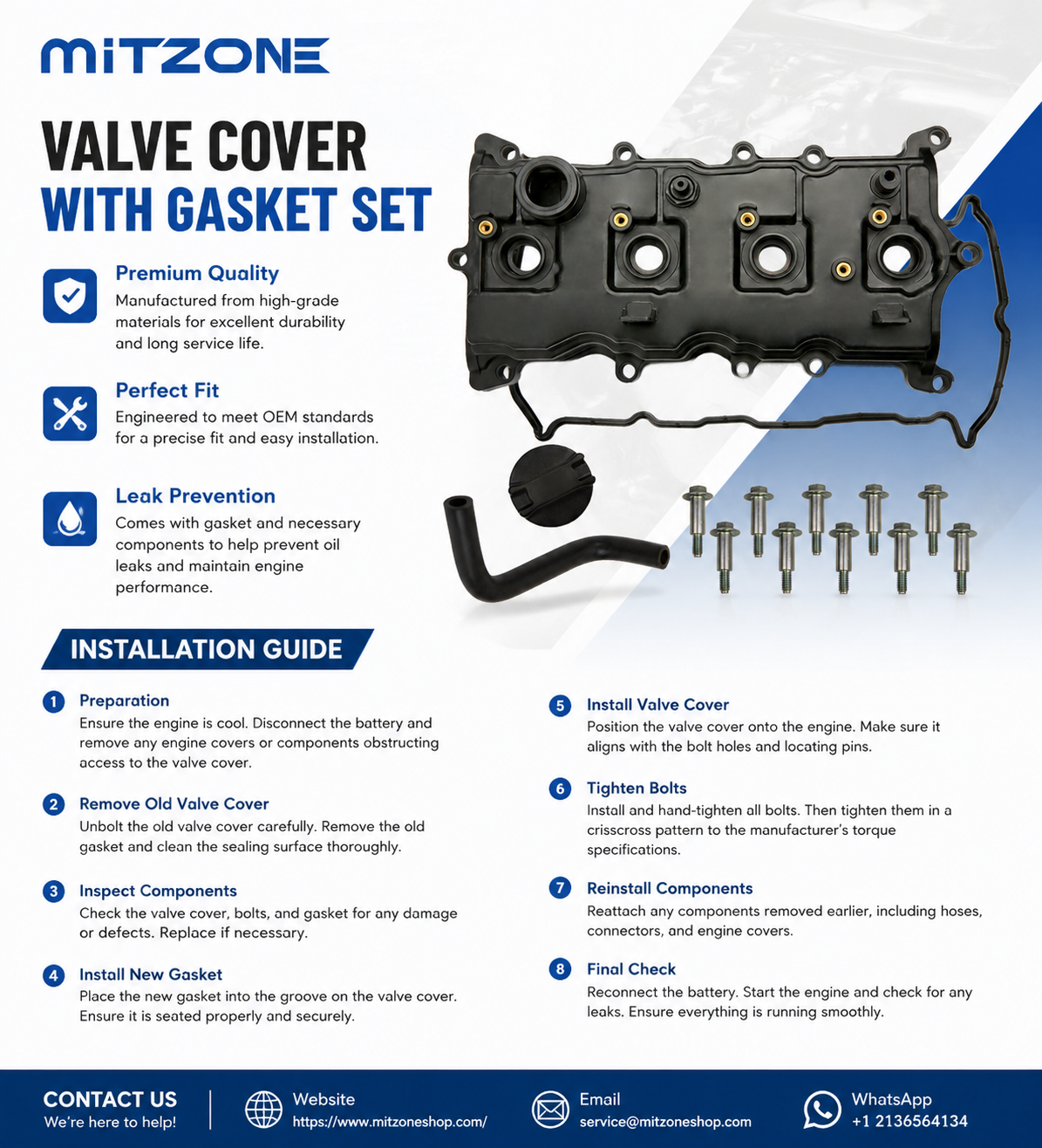
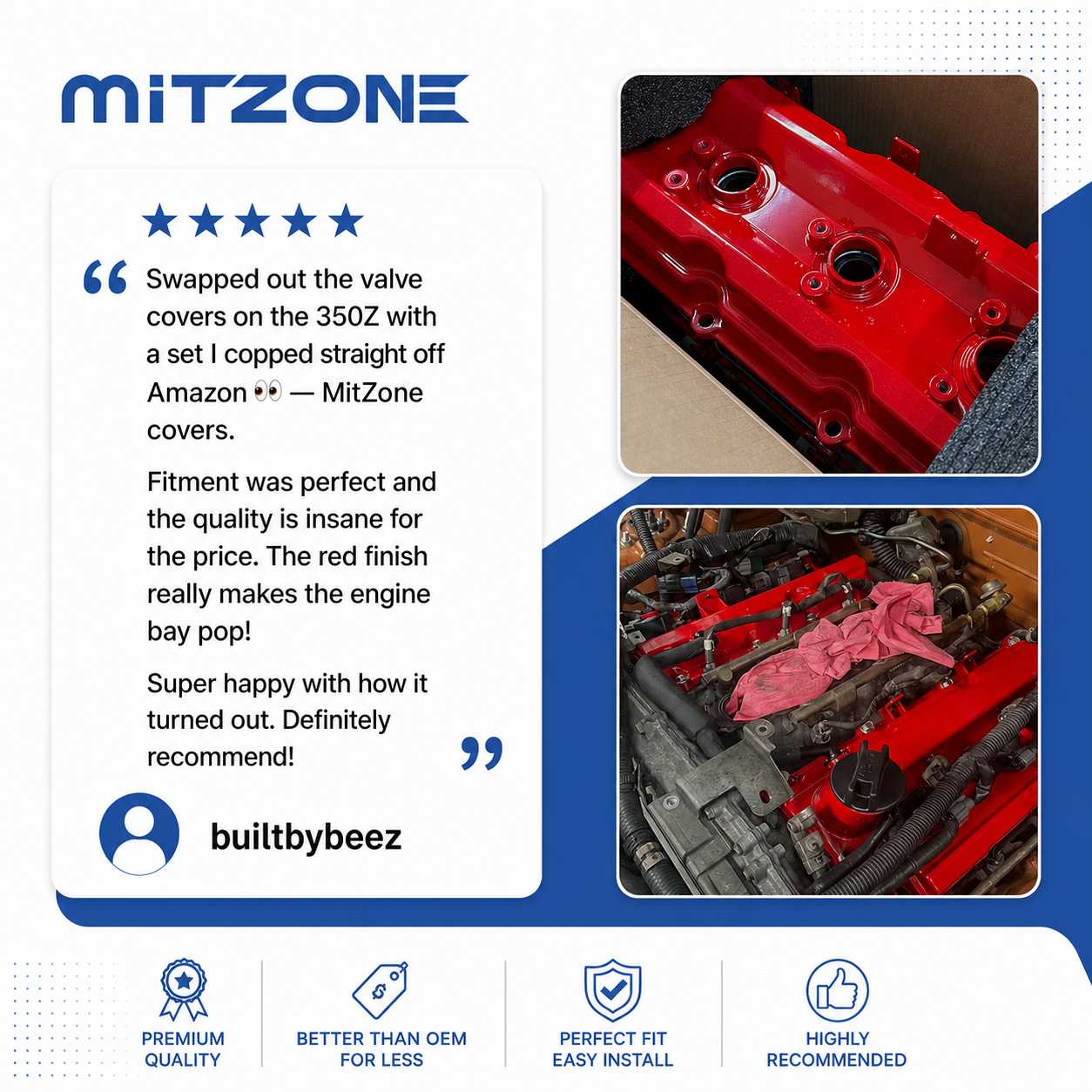
Match the valve cover to your year, make, model, and OEM number before ordering. MITZONE supplies OEM-fit valve covers with a focus on sealing and fitment.
Shop valve covers: https://www.mitzoneshop.com/
Questions: service@mitzoneshop.com