
Choosing a thermostat housing outlet supplier for GM cooling-system parts
If you are sourcing a thermostat housing outlet supplier, the first question is usually not price. It is fitment. A coolant thermostat housing may look like a simple cast-metal module, but the wrong outlet angle, hose neck size, or mounting pattern can turn a routine repair into a return, a warranty claim, or a vehicle that runs hot on the first road test. That matters especially for buyers handling OEM car parts programs, repair-channel inventory, or direct factory auto parts supply for GM applications.
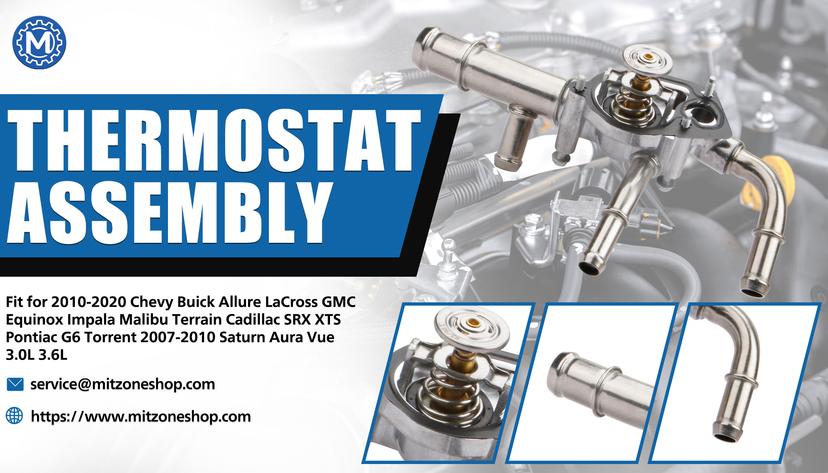
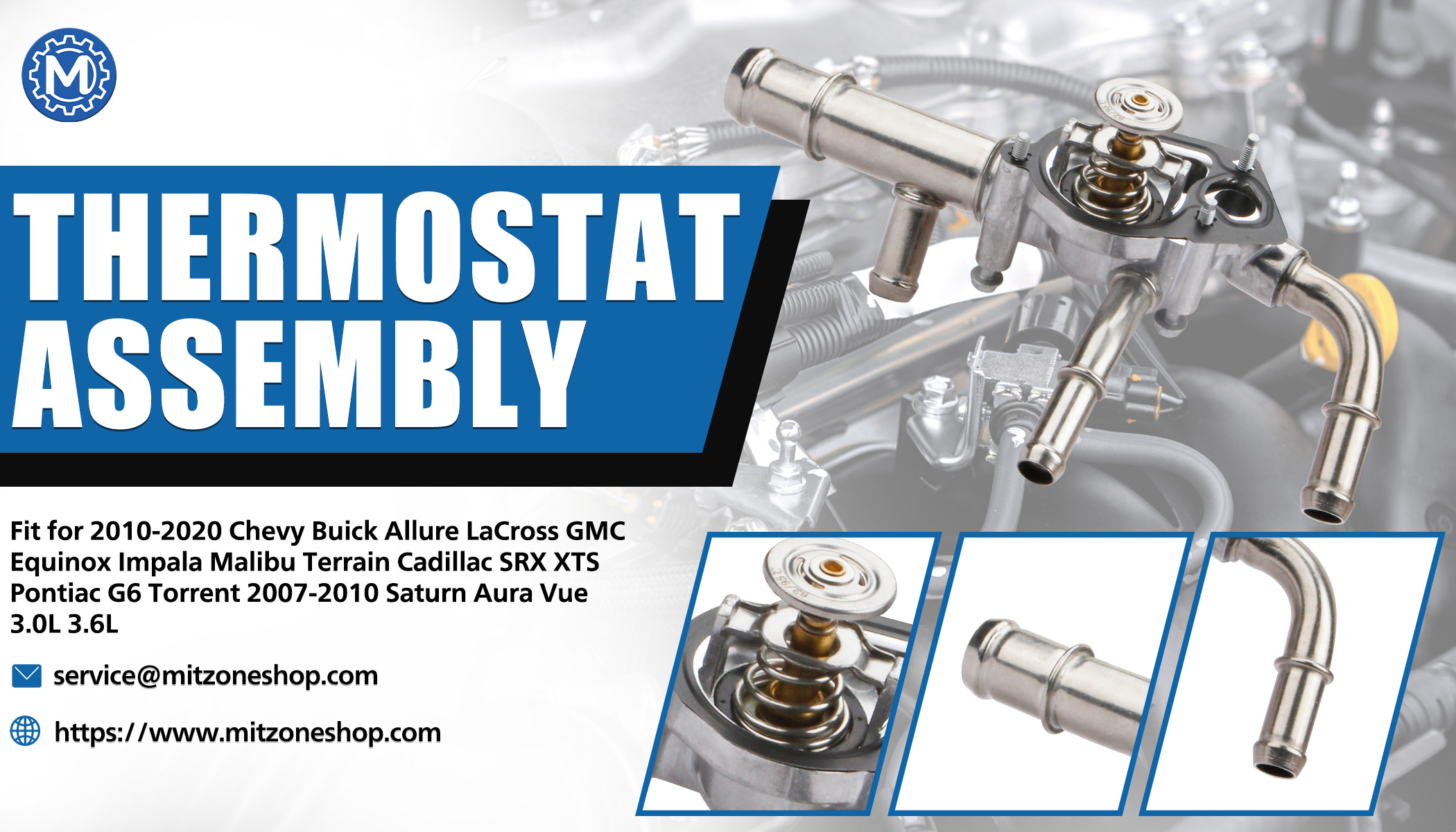
The thermostat housing assembly discussed here is a complete cooling component, not just a bare thermostat. It combines a metal housing, multiple hose connections, a spring-loaded thermostat valve element, and fastening points in one module. For compatible Chevrolet, Buick, GMC, Cadillac, Pontiac, and Saturn vehicles, that compact layout is what controls coolant flow and helps the engine stay within its operating range.
What this part does in the cooling system
The job is straightforward, but the consequences of failure are not. The thermostat housing sits in the coolant path and helps regulate when coolant moves through the engine and radiator circuit. When the engine is cold, the thermostat stays closed or restricted. As temperature rises, it opens and allows more flow. In practice, that balance protects warm-up performance, emissions behavior, and long-term engine health.
When the housing leaks, the valve sticks, or the outlet cracks, the symptoms are usually familiar to repair shops: unstable temperature readings, coolant loss, overheating under load, or a vehicle that never quite reaches proper operating temperature. For distributors, these failures also create a repeat-purchase category, because cooling-system parts are often replaced in pairs with hoses, seals, or related service items.
Quick reference: what buyers should verify
Before you place volume orders, confirm the items that actually drive fitment and serviceability:
Vehicle coverage listed in the notes includes 2010–2020 Chevy, Buick, GMC, Cadillac, Pontiac, and Saturn applications, with some 2007–2010 models also mentioned for specific vehicles. Engine fitment is noted for 3.0L and 3.6L platforms. The assembly is a multi-port outlet style with angled and straight hose necks, so hose routing matters as much as the part number. And because the unit is a complete assembly, buyers should confirm whether their channel wants an assembled module or individual thermostat service pieces.
Why the housing design matters more than it first appears
Cooling parts are one of those categories where small geometry changes cause outsized headaches. A thermostat housing outlet supplier needs to control casting quality, machining accuracy, and the consistency of the hose necks. If the tube section is off by even a modest amount, the hose clamp may sit poorly, the hose may twist, or the connection may stress the plastic or rubber line downstream. That is how a part that “looks right” becomes a field complaint.
The visible unit here appears to use a metal housing, likely cast and machined, with a smooth metallic finish. That is common for engine-cooling hardware because the part has to handle heat cycling, coolant exposure, and repeated thermal expansion. It is also easier for buyers to inspect visually for machining quality and port consistency than with hidden internal components.
What to ask from a supplier
Fitment data, not just model names
Vehicle lists are helpful, but buyers should still ask for exact engine and year mapping. The note set references several GM nameplates and both 3.0L and 3.6L engines, yet not every trim uses the same coolant plumbing. A broad listing is useful for cataloging; it is not a substitute for a verified application table.
Assembly scope
Some channels want a complete thermostat assembly because it reduces labor and helps standardize installation. Others prefer separable components. If you buy for wholesale or exportor channels, define the scope early. A “housing only” listing and a “complete module” listing are not interchangeable in the warehouse, even when the silhouette looks close.
Material and finish consistency
The part shown is metallic silver and appears to be a metal casting with machined tube sections. That is a practical selling point because buyers in repair distribution usually prefer a robust, service-friendly housing over a lightweight substitute. Still, do not assume alloy grade or surface treatment unless the supplier states it clearly.
Common sourcing mistakes
The most common mistake is treating all thermostat housings as generic. They are not. Port count, hose orientation, and mounting bosses can vary across platform revisions. Another easy mistake is ignoring the fact that a thermostat housing is a system part. If the customer’s old housing failed because of hose pressure, contamination, or poor coolant maintenance, replacing only the housing may not solve the root issue.
A practical warning for buyers: if a supplier cannot explain which vehicles the part fits and how the coolant lines route, the catalog image alone is not enough. In this category, “looks similar” is not a reliable approval method.
Who this part is for
This kind of thermostat housing outlet is aimed at aftermarket distributors, repair shops, fleet maintenance buyers, and programs sourcing direct factory auto parts for GM cooling repairs. It is especially relevant when the replacement strategy is to restore the full thermostat assembly rather than chase individual internal pieces.
For export and wholesale buyers, the value is usually a balance of fitment breadth, visible build quality, and packaging consistency. For service buyers, the value is more direct: fewer comebacks and less labor uncertainty.
Buying advice before you place an order
Ask for the fitment sheet, confirm whether the assembly is complete, and compare the hose outlet geometry against the target application. If you are stocking for multiple GM platforms, separate the 3.0L and 3.6L coverage into its own SKU logic. That makes receiving and service-counter selection far easier. It also reduces the odds of a return that starts with a simple sentence: “The part was close, but not right.”
Next step
If you are evaluating a thermostat housing outlet supplier for GM cooling parts, send the vehicle list, engine codes, and the installation scope you need. The right supplier should be able to match the complete assembly to the application, not just quote a part that resembles it on paper.