
Why thermostat housing sourcing gets complicated faster than it should
For anyone buying a thermostat housing outlet supplier for repair, resale, or assembly work, the challenge is rarely the part itself. The real issue is fitment. A coolant thermostat housing can look straightforward on paper, yet one wrong outlet angle, bolt pattern, or sealing face turns a routine replacement into a comeback job. That matters in the field because cooling-system failures are rarely forgiving; a small leak or poor seal can quickly become an overheated engine and an unhappy customer.
In the aftermarket, buyers are often choosing between OEM car parts, direct factory auto parts, and suppliers that focus on exportor channels. Each route can work, but the best choice depends on how strict your fitment requirements are, how you handle inventory, and whether you need a complete thermostat assembly or only a component-level replacement.
What this part actually does
The thermostat housing sits in the engine cooling system and holds the thermostat in position while directing coolant through the proper passages. In practical terms, it helps the engine reach operating temperature and then maintain it. If the housing cracks, warps, or the sealing surface fails, coolant leaks often show up first. Temperature control issues usually follow soon after.
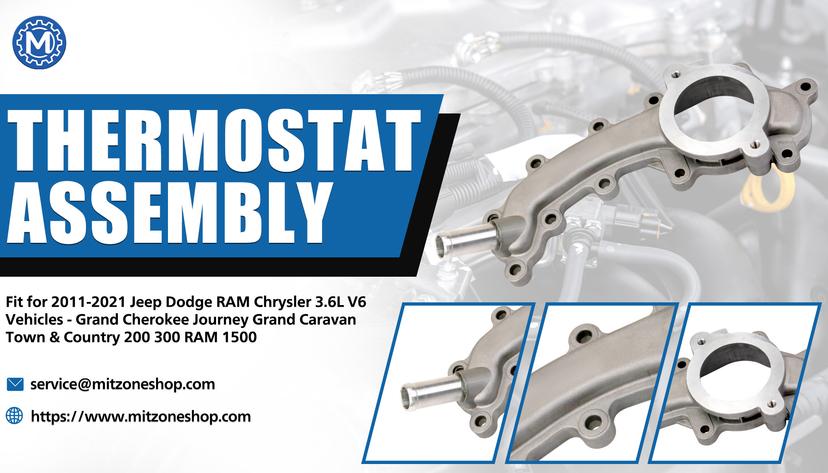
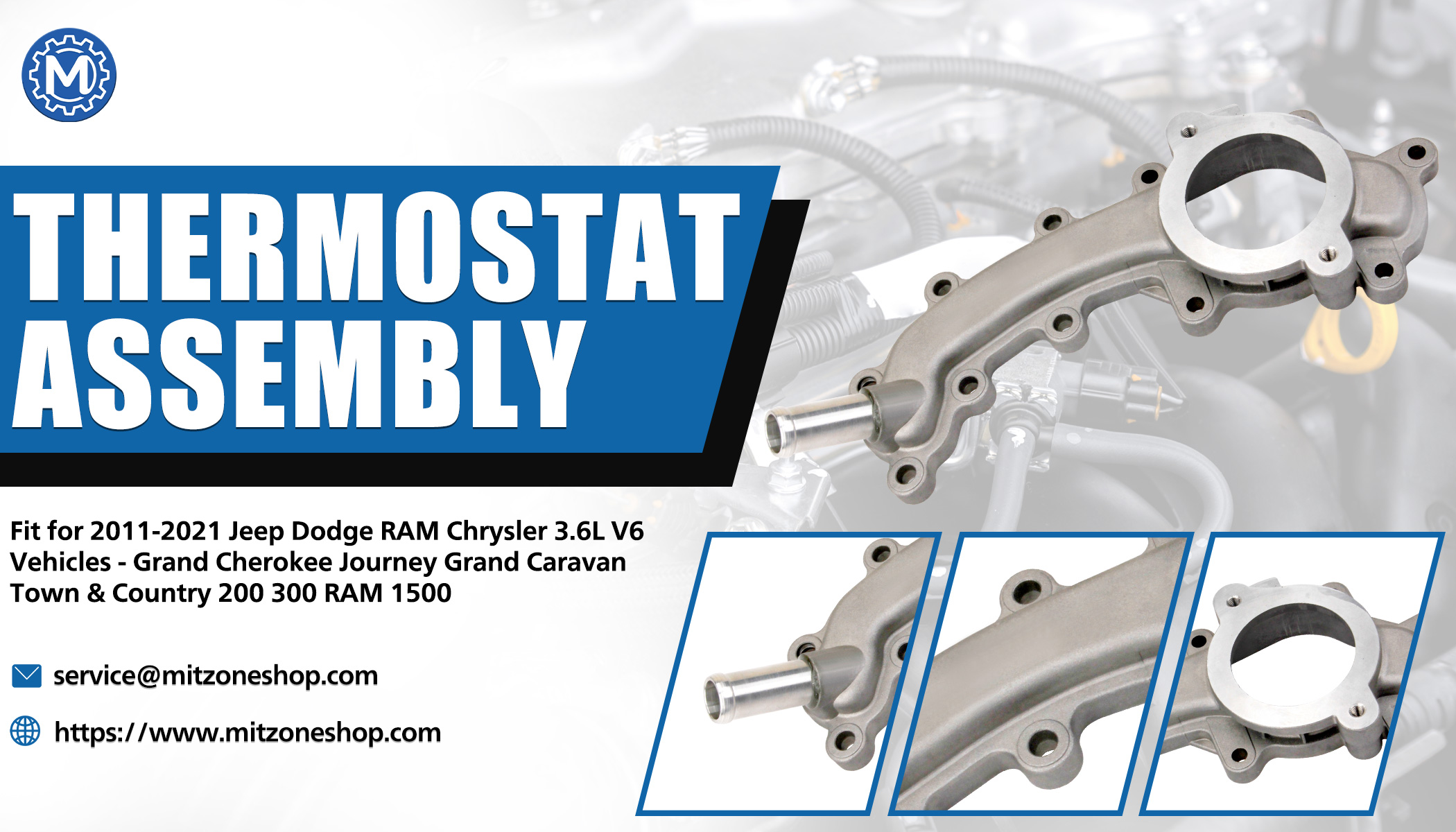
For the product described here, the housing appears to be a cast or machined metal design, likely aluminum alloy, with a bare metallic finish and machined sealing faces. The shape includes a long curved body, bolt holes and bosses, a circular thermostat opening, and a hose neck or outlet. That combination is common in engine cooling parts where packaging space is tight and coolant routing has to be exact.
Fitment matters more than marketing language
The stated use case is for 2011–2021 Jeep, Dodge, RAM, and Chrysler 3.6L V6 vehicles, including Grand Cherokee, Journey, Grand Caravan, Town & Country, 200, 300, and RAM 1500. That is useful, but buyers should still verify the exact engine code and application notes before placing volume orders. Even within a shared platform, coolant routing, sensor placement, and mounting detail can vary by model year or trim.
This is where a thermostat housing outlet supplier earns its keep. A good supplier does not just list a broad vehicle range; they help confirm the part matches the cooling layout the customer actually has. For distributors and workshop chains, that reduces returns. For procurement teams, it keeps the catalog cleaner and avoids stocking near-duplicates that sit on shelves for months.
What to look for in a supplier relationship
1. Clear fitment data
Ask for application coverage that is specific, not vague. The more exact the vehicle list, the easier it is to sell with confidence. If the supplier calls itself an exportor, that is not enough by itself; export experience should show up in documentation quality, packaging consistency, and responsive part matching.
2. Machining quality on sealing surfaces
Because this housing relies on mating faces and bolt clamping to contain coolant, the machined surfaces matter. Buyers should look for clean bolt holes, uniform flanges, and a thermostat seat that appears properly finished. You do not need lab data to spot poor workmanship, but you do need to inspect sample parts carefully.
3. Complete assembly versus loose components
The image notes suggest a complete thermostat assembly rather than a loose thermostat insert. That is important for purchasing because assembly-level parts can simplify repair work and reduce mismatch risk. On the other hand, they may change your stocking logic if your repair network prefers separate thermostats and housings.
Common mistakes buyers make
The biggest mistake is assuming all coolant outlet housings are interchangeable because they share the same engine family. They are not. Another common problem is buying on appearance alone. A cast aluminum housing may look close enough, but the wrong hose neck orientation or bolt pattern can stop installation cold.
It is also worth being cautious about claims that sound too neat. Unless a supplier states exact testing, certifications, or OEM equivalence, do not fill in the blanks yourself. Request what you need in writing. That simple habit saves time later.
Practical buying advice for engineers and sourcing teams
If you are building a maintenance or aftermarket program, start with the end use. Is the part meant for dealership-adjacent repair quality, independent workshop replacement, or export distribution? Your answer determines how much documentation, packaging detail, and cross-reference support you need.
For high-turn cooling parts, it helps to keep a short internal checklist: vehicle coverage, housing material, flange geometry, hose outlet orientation, and whether the unit ships as a full thermostat assembly. That is usually enough to separate a reliable supplier from one that is merely searchable.
FAQ
Is this part only for one vehicle?
No. The listed fitment covers multiple Jeep, Dodge, RAM, and Chrysler models with the 3.6L V6, but buyers should still confirm exact year and application.
Is aluminum the only possible material?
No, but the visible part looks like a cast or machined metal housing, likely aluminum alloy. That is a reasonable assumption, not a confirmed spec.
Why buy through a direct factory auto parts channel?
For many buyers, direct factory auto parts sourcing can improve consistency and simplify replenishment. The tradeoff is that you need tighter communication on part numbers and fitment rules.
What to ask before you place the order
Ask for the exact vehicle applications, confirm whether the part is supplied as a complete assembly, and request clear photos of the sealing faces and outlet geometry if you are comparing samples. If your business depends on steady replenishment, that short conversation is often worth more than a long product page.
If you are evaluating a thermostat housing outlet supplier now, the next step is simple: compare fitment data, sample quality, and responsiveness side by side. The supplier that makes those three things easy is usually the one worth keeping on your approved list.