
Why buyers look for a thermostat housing outlet supplier
A thermostat housing outlet supplier is usually not the first vendor people call when a cooling system problem appears, but it becomes a very practical one once a vehicle starts running hot, leaking coolant, or throwing inconsistent temperature readings. In fleet maintenance, repair distribution, and parts sourcing, this is one of those components that looks simple from the outside and still causes real headaches when the fitment is wrong.
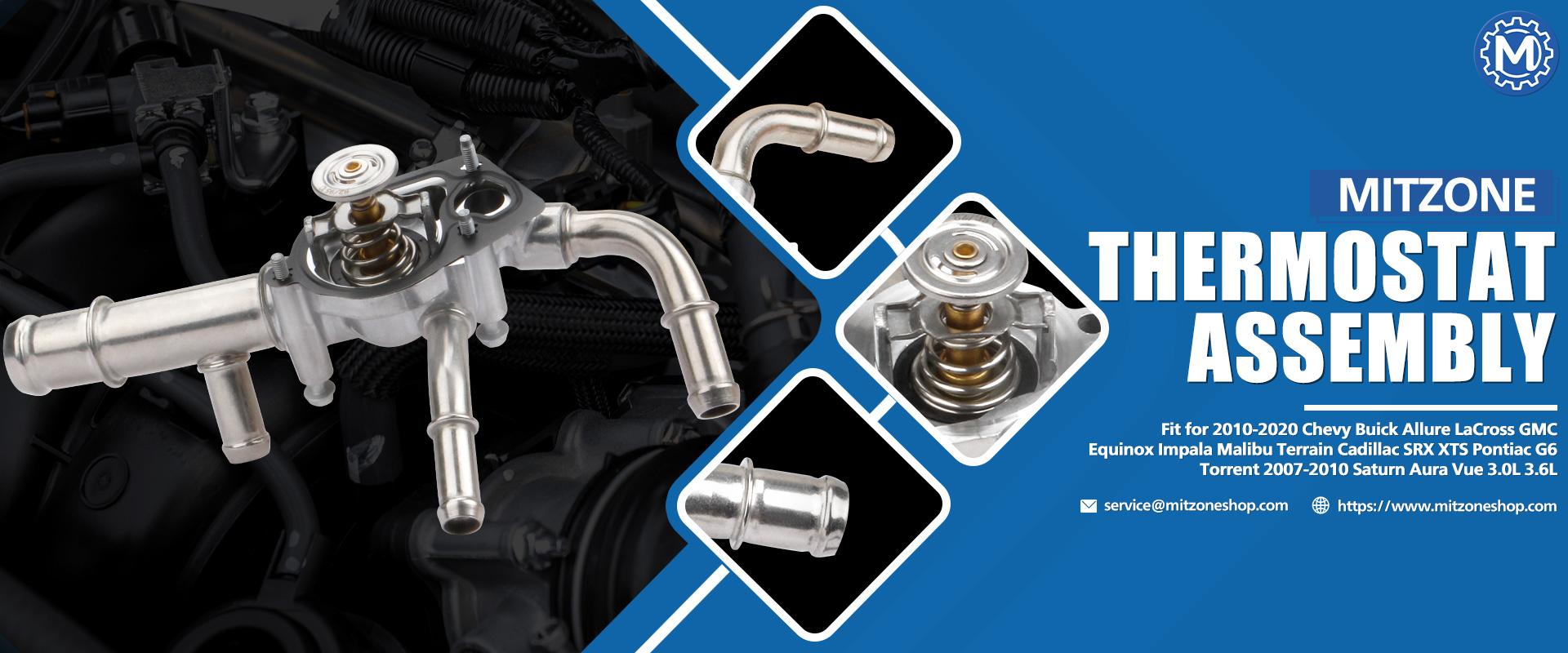
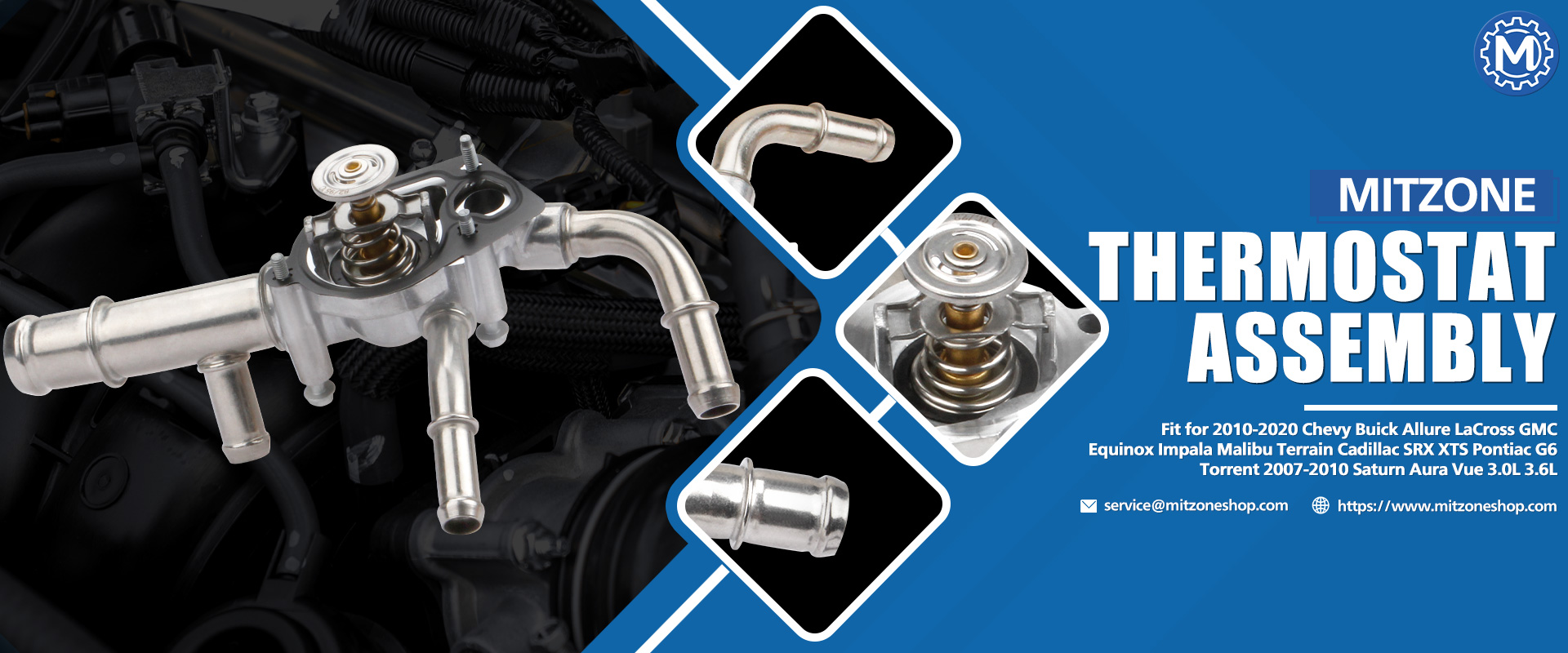
The part in question is an automotive coolant thermostat assembly used in an engine cooling system. Its job is straightforward: regulate coolant flow so the engine reaches operating temperature and stays there. The housing you are buying is not just a cover. It is a multi-port coolant routing piece, with hose necks, mounting points, and a visible spring-loaded thermostat element. That makes selection more sensitive than a generic hose or bracket order.
What the part does in the cooling system
A thermostat housing sits in the path of coolant flow and helps control when coolant moves through the engine and radiator circuit. When the engine is cold, the thermostat stays closed or mostly closed. As temperature rises, the valve opens and coolant circulation increases. That balance matters for fuel efficiency, cabin heat, emissions behavior, and long-term engine health.
If the housing cracks, the gasket surface degrades, or one of the outlet necks starts leaking, the whole system can suffer. In the field, the symptoms are familiar: coolant smell, low reservoir level, unstable temperature gauge readings, or visible seepage around the housing. Sometimes the thermostat itself is blamed first, but the housing is often part of the failure story.
Visible construction and what it suggests
The assembly described here appears to be cast metal, likely aluminum or an aluminum alloy, with a machined satin finish rather than a plastic body. That matters to buyers because it usually suggests better heat resistance and a more rigid mounting surface, though it does not eliminate the need to check fit and sealing surfaces carefully.
The geometry is also worth noting. This is a multi-port assembly with at least one large curved hose outlet, one horizontal outlet, and several smaller vertical or angled coolant ports. That sort of layout is common in modern cooling systems where one housing has to manage several branches at once. It also means the buyer cannot treat this as a one-dimensional replacement part.
Vehicle fitment should be checked early, not late
The listed fitment notes point to Mitzone 12651113 and compatibility with a range of GM vehicles, including 2010–2020 Chevy, Buick, GMC, Cadillac, Pontiac, and Saturn applications such as Allure, LaCrosse, Equinox, Impala, Malibu, Terrain, SRX, XTS, G6, Torrent, Aura, and Vue 3.0L/3.6L configurations.
That is useful, but it is not enough on its own. Engine family, model year, and even small emissions or cooling package changes can alter the correct part. A professional buyer should verify by VIN, engine code, and the existing housing layout before ordering in volume. A part can look close and still miss a port angle or mounting point by just enough to create a costly return.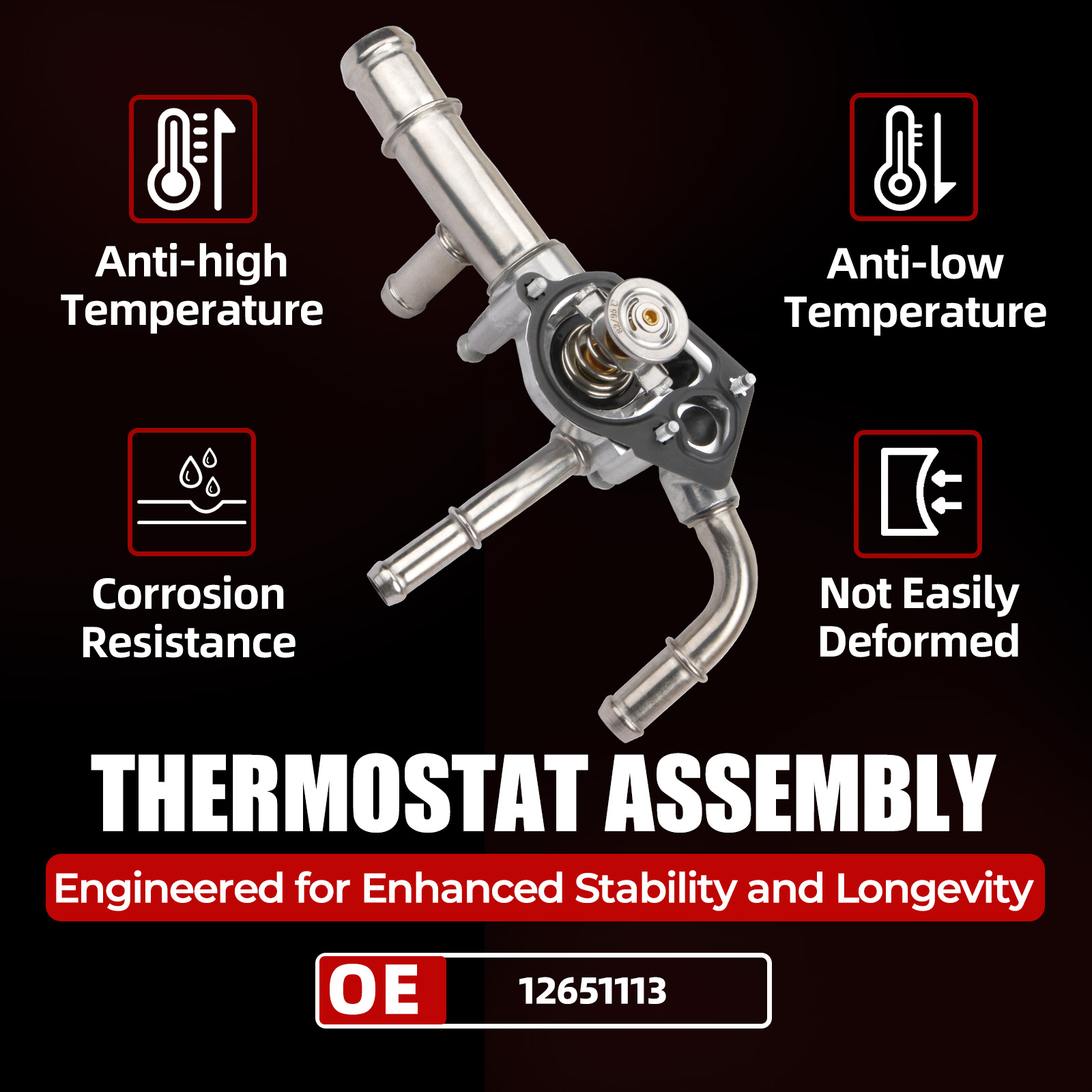
What sourcing teams should compare before placing an order
If you are evaluating an OEM car parts program or looking for direct factory auto parts supply, focus on the details that affect installation and warranty risk:
Fitment accuracy
Match the engine application and outlet arrangement, not just the vehicle nameplate.
Material and finish
A metal housing may offer durability benefits, but the real question is whether the machining and sealing surfaces are consistent.
Port layout
Count the hose necks and confirm their angles. Cooling systems are unforgiving when a return line or bypass port is misplaced.
Thermostat assembly visibility
If the thermostat element is integrated and visible, clarify what is included in the supply package. Do not assume seals, sensors, or hardware are part of it unless confirmed.
Common buyer mistakes
The most common mistake is treating this as a commodity casting. It is not. Another mistake is assuming all housings for a given GM family are interchangeable. They are often not. Buyers also get burned by incomplete part descriptions, especially when an exportor or cross-border reseller uses broad language and omits the one detail that matters on the bench.
For repair channels, coolant leak repair work can be delayed if the wrong housing is delivered first. For distributors, that means higher return costs and a frustrated installer waiting on a vehicle lift.
Practical advice for shops and sourcing managers
Ask for clear product photos, mounting-point views, and port orientation data. If possible, compare the old and new housings side by side before releasing the shipment to the workshop. For larger programs, sample-fit a few units before committing to a broader purchase. That small step can save an embarrassing amount of labor later.
Also, keep in mind that thermostat housing replacement is usually part of a broader cooling-system repair. If the housing failed from age, heat cycling, or contamination, it may be smart to inspect hoses, clamps, and coolant condition at the same time.
Quick takeaway for buyers
A thermostat housing outlet supplier should be judged on fitment clarity, casting quality, and how well the part matches the actual coolant routing needs of the vehicle. For GM applications like the ones listed here, the difference between a clean installation and a return often comes down to details that are easy to overlook in a catalog.
If you are sourcing this part for distribution, repair networks, or OEM-style replacement programs, request the exact application data first and confirm the port layout before placing the order. That is the fastest way to reduce downtime and avoid a very ordinary-looking part causing an expensive delay.