
The Valve Cover: More Than Just a Lid
Many drivers assume the valve cover is just a piece of plastic or metal designed to keep oil from splashing out. In reality, modern valve covers are highly engineered components with several critical internal parts.
Anatomy of a Valve Cover
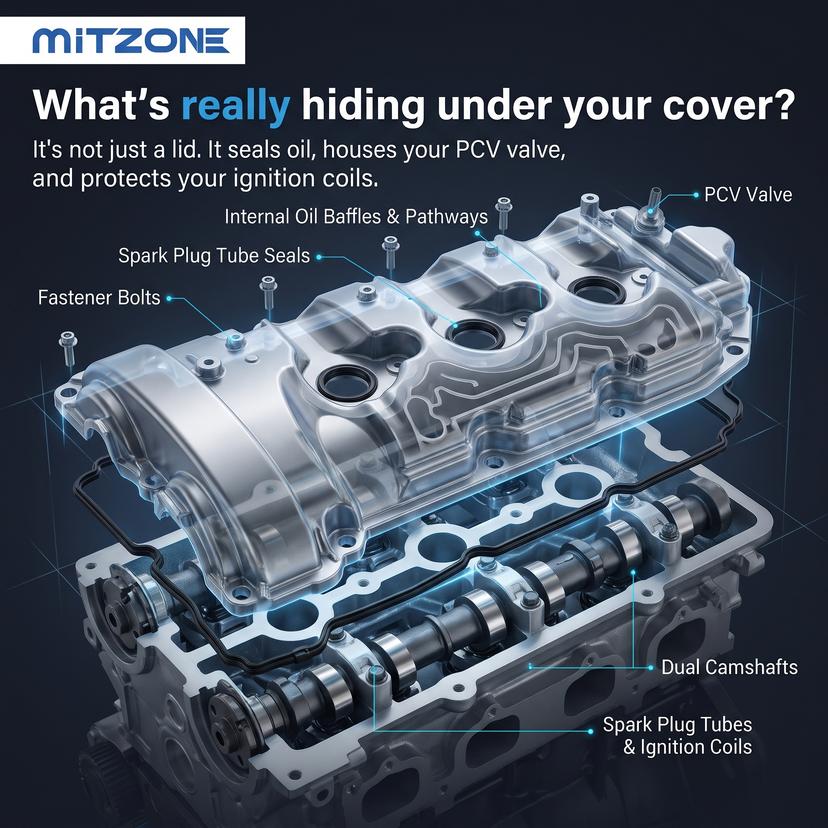
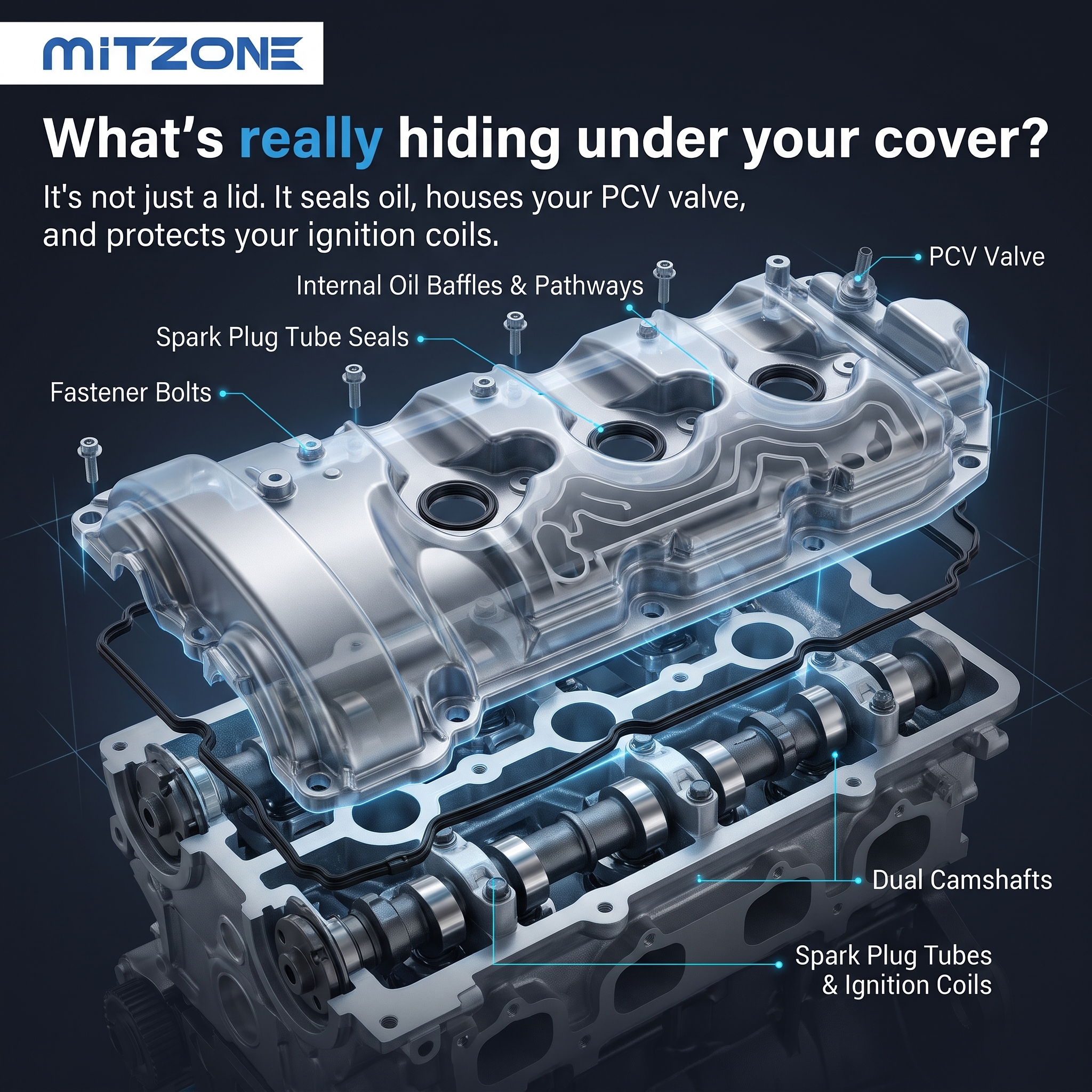
Based on our cutaway diagram, here is what is really happening under the cover:
🔹 PCV Valve: The Positive Crankcase Ventilation valve regulates internal pressure. If it clogs, pressure builds up and forces oil past seals, causing leaks.
🔹 Spark Plug Tube Seals: These crucial rubber seals keep oil away from your spark plugs and ignition coils. When they harden, oil floods the plug wells, causing misfires (like P0300 or P0301 codes).
🔹 Internal Oil Baffles & Pathways: These direct oil back to the crankcase, preventing it from being sucked into the intake.
🔹 Dual Camshafts & Ignition Coils: The cover protects the valvetrain and houses the coils that fire your spark plugs.
Why Failures Happen
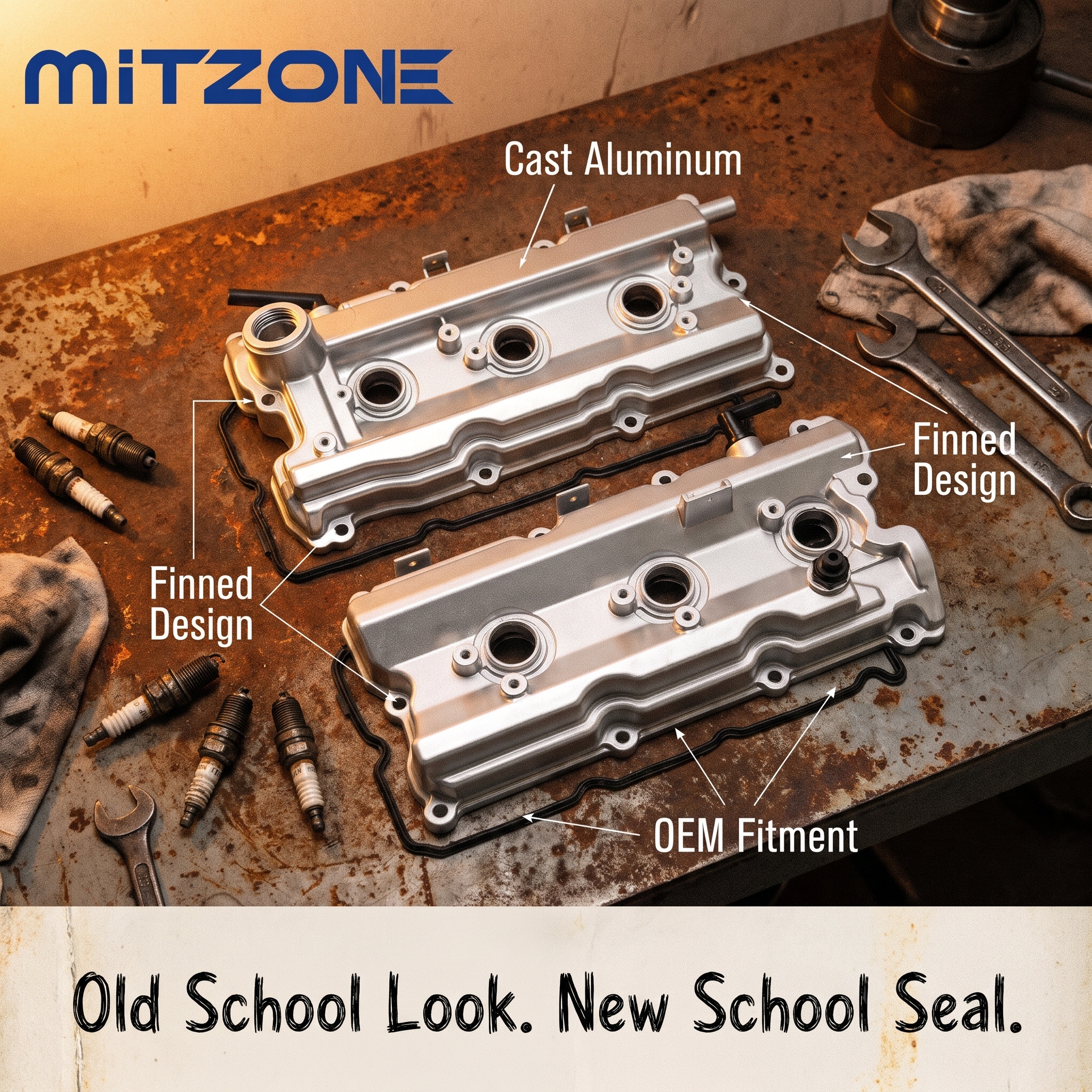
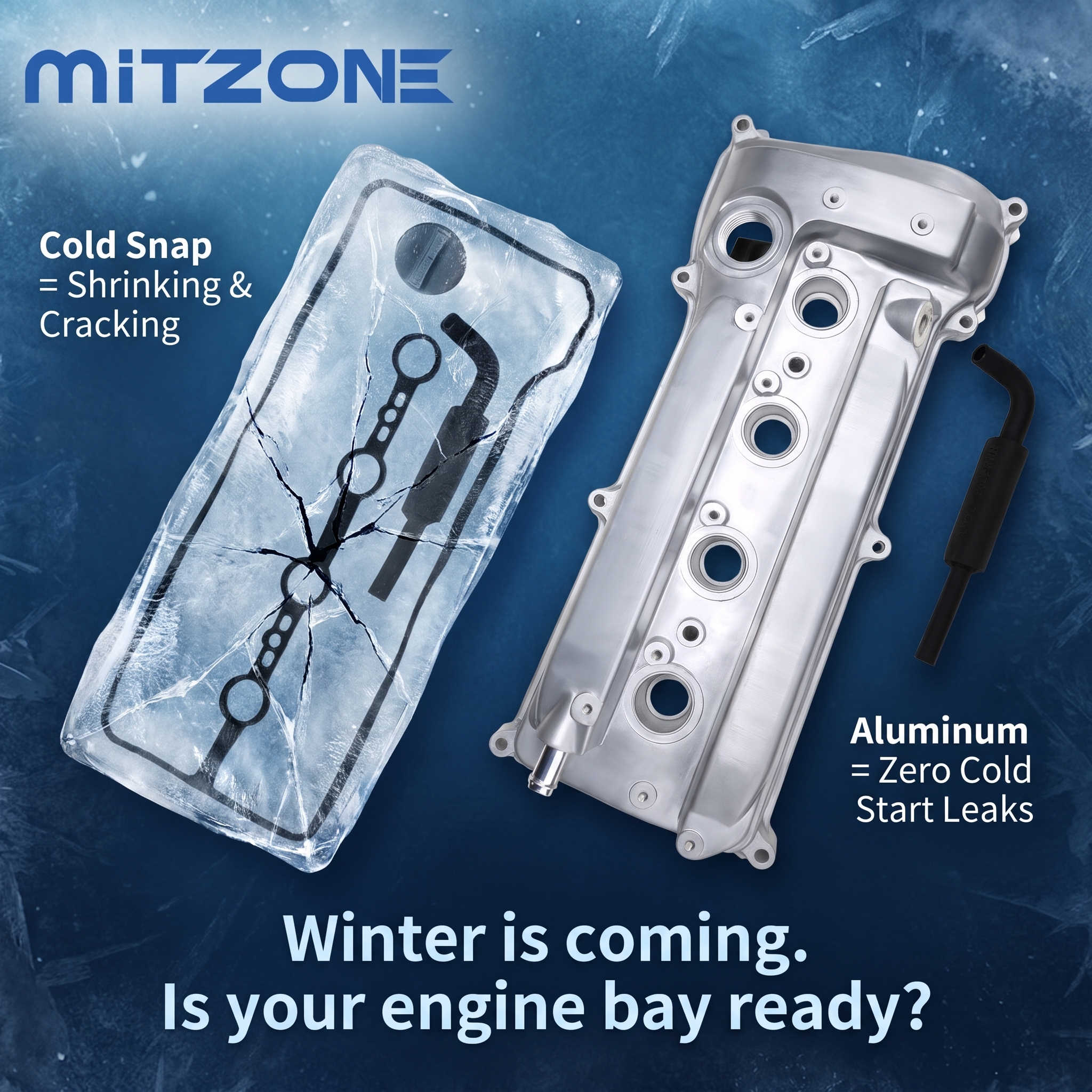
Constant exposure to extreme heat cycles causes the gasket and tube seals to harden and crack. Plastic covers can also warp over time. When this happens, a simple gasket replacement might not be enough—especially if the cover itself is distorted.
The MITZONE Solution
If your valve cover is warped, cracked, or leaking internally, replacing the complete assembly is the most reliable fix. MITZONE offers precision-engineered, OEM-spec valve covers (including all necessary gaskets and tube seals) to restore your engine's performance and protect your ignition system.
🔗 Find the perfect fitment for your vehicle here: https://www.mitzoneshop.com/
📧 Email: service@mitzoneshop.com
📱 WhatsApp: +1 2136564134