
Why buyers look for a thermostat housing outlet supplier
When a cooling system starts leaking, the thermostat housing is often one of the first places technicians inspect. A cracked coolant thermostat housing, warped sealing face, or damaged hose neck can create a small leak that quickly turns into an overheating problem. For sourcing teams, the challenge is not just finding a replacement part, but finding a thermostat housing outlet supplier that can match the vehicle, the coolant path, and the mounting pattern without creating avoidable comeback claims.
This matters most on high-volume service parts, where fitment errors are expensive. In engine cooling, there is little room for guesswork: the housing must sit flat, seal cleanly, and connect to the hose line with enough strength to handle thermal cycling. That is why buyers in the aftermarket, repair channel, and exportor trade tend to focus on direct replacement parts rather than broad one-size-fits-all listings.
What this part does in the cooling system
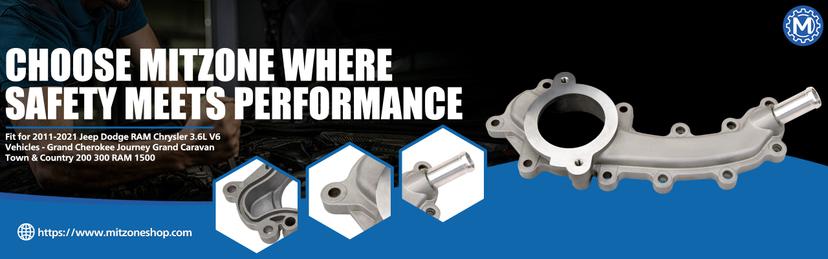
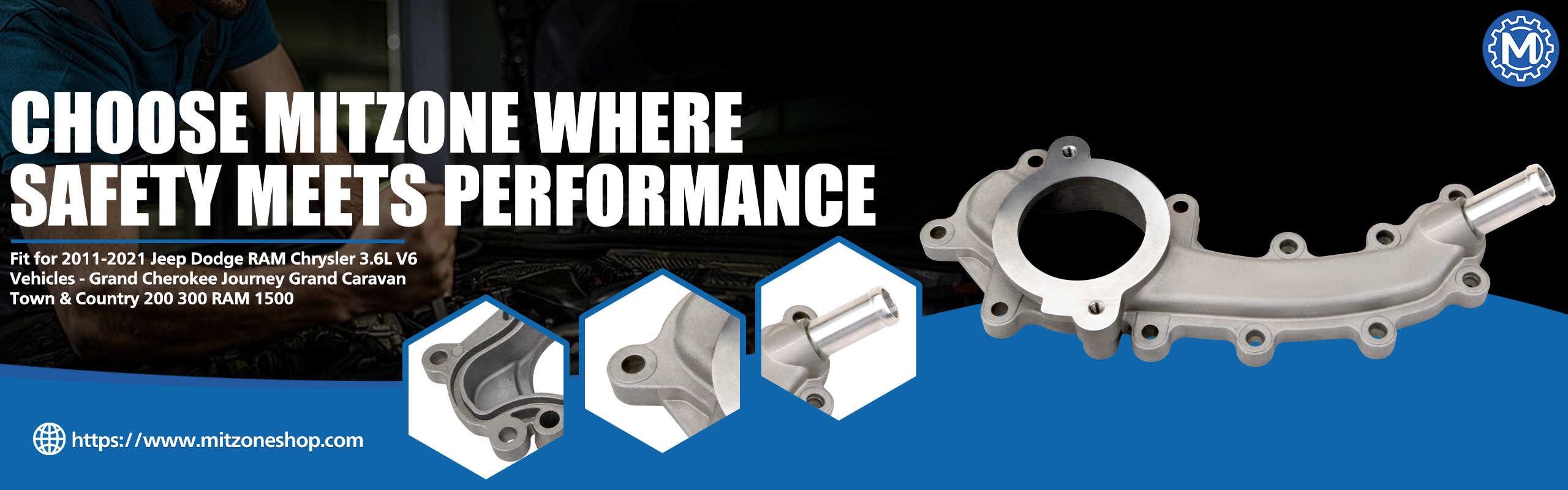
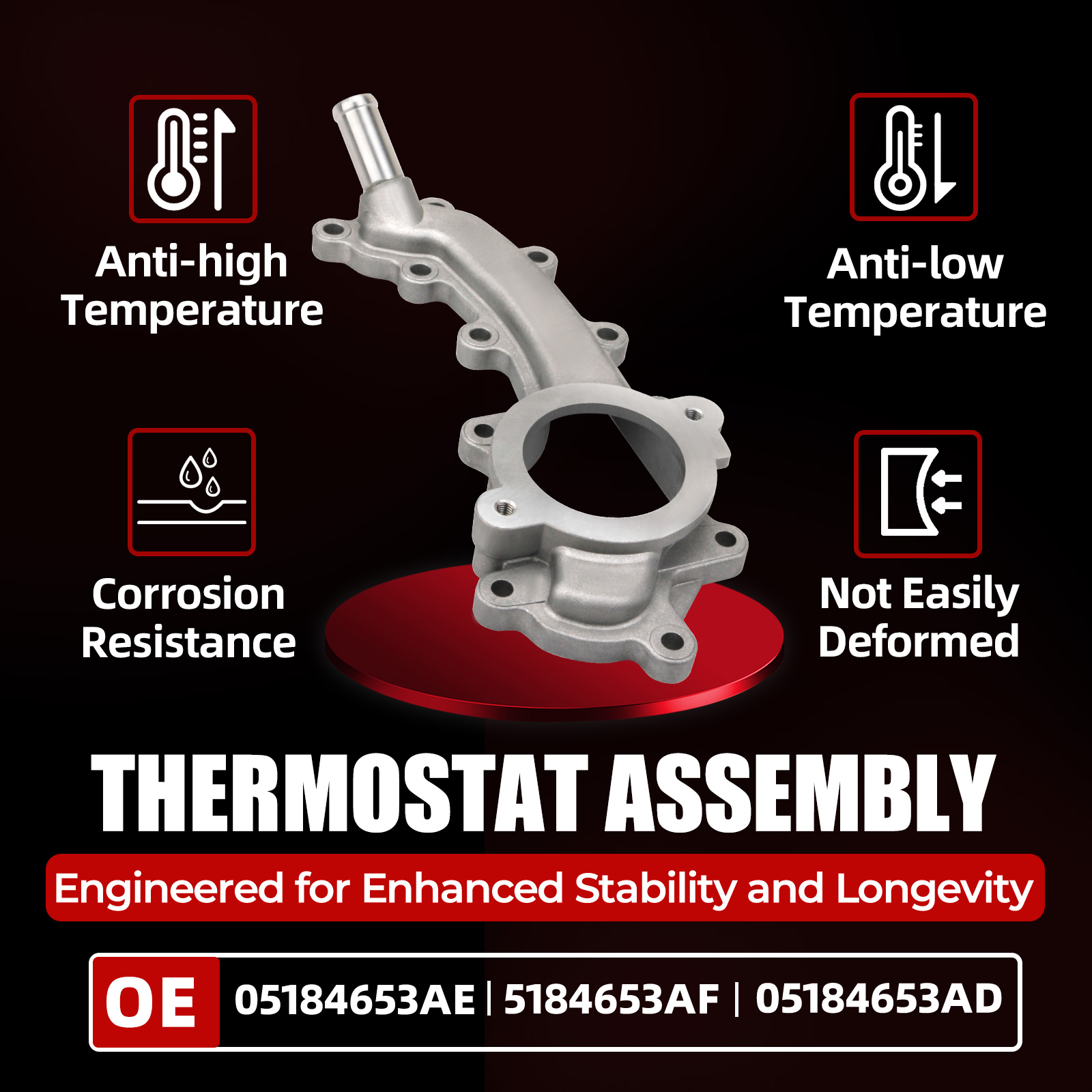
The coolant thermostat housing, also called an engine coolant outlet housing, holds and routes coolant around the thermostat area. In practical terms, it is the connection point that helps control coolant flow as the engine warms up and reaches operating temperature. The visible construction of the part supplied here suggests a silver-gray metal body, likely cast aluminum or an aluminum alloy, with machined sealing surfaces, a large central opening, mounting ears, and an integrated outlet tube for the hose connection.
That combination is common in modern cooling systems because it balances strength, heat resistance, and packaging efficiency. The cast body provides the overall shape, while machining refines the mating faces so the seal can do its job. It is a straightforward design, but not a forgiving one. If the surface is off, the leak will usually show up sooner rather than later.
Fitment details that matter to sourcing teams
Supplied notes indicate fitment for 2011-2021 Jeep, Dodge, RAM, and Chrysler 3.6L V6 vehicles, including Grand Cherokee, Journey, Grand Caravan, Town & Country, 200, 300, and RAM 1500. That kind of fitment range is useful, but only if the supplier can keep the catalog data disciplined. Cross-model parts can sell well, yet they also create risk when a buyer relies on incomplete application notes or assumes one outlet shape covers every revision.
For service replacement, the first filter is always vehicle compatibility. The second is the connection geometry: bolt holes, hose neck orientation, and sealing face design. Those details decide whether the part installs cleanly or turns into a labor issue.
How to judge a direct factory auto parts source
Not every listing that claims to be a direct factory auto parts source will actually reduce sourcing risk. Buyers should ask how the part is made, how the fitment is controlled, and whether the supplier can support repeat orders without changing the specification quietly. For a thermostat housing, a stable casting and machining process is usually more important than marketing language.
Points worth checking before you place an order
Look at the sealing surfaces first. Then review bolt-hole location, hose neck angle, and the overall shape of the housing around the central opening. If the supplier can provide consistent dimensional control, that is a better sign than a long features list. For OEM car parts programs or service replacement lines, consistency usually matters more than a flashy presentation.
Also ask whether the thermostat, gasket, or ancillary seals are included. In this case, those details are not confirmed, so a buyer should not assume a complete kit. That small question saves a lot of confusion in warehouse receiving and workshop installation.
Common mistakes when buying this type of cooling part
The most common mistake is treating every thermostat housing as interchangeable. They are not. Even when the engine family is the same, hose routing, bolt pattern, and outlet orientation can differ. Another common problem is overlooking the quality of the machined face. A housing may look robust in photos but still leak if the mating surface is uneven or poorly finished.
Some buyers also focus only on the metal body and ignore the stress point at the integrated outlet tube. That neck sees repeated hose clamp pressure and thermal movement. If the material is weak or the casting quality is inconsistent, the hose area becomes a failure point.
Practical advice for export and aftermarket buyers
If you are sourcing for export, aftermarket distribution, or fleet repair, keep the part description specific. State the vehicle family, engine size, and visible configuration clearly. A thermostat housing outlet supplier should be able to confirm whether the part matches the 3.6L V6 application and whether it is suitable for replacement of cracked or warped original housings.
When comparing suppliers, do not stop at the photo. Compare the casting shape, bolt-ear count, outlet position, and sealing ring area. If those details are vague, the part may still work, but the risk is higher. And in cooling-system repair, higher risk usually means more returns, not just more inspection time.
Buyer questions worth asking
Is this a casting-only part or a machined assembly?
The visible part appears to be cast and then machined, which is typical for this category. Still, buyers should ask how the sealing surfaces are finished and whether any post-cast processing is used.
Does it match OEM-style fitment?
The notes point to direct-fit coverage for several Jeep, Dodge, RAM, and Chrysler models, but buyers should verify the exact application before ordering in volume.
Will it solve leak complaints reliably?
If the leak comes from a cracked housing, damaged sealing face, or failed outlet neck, a correctly matched replacement is usually the right repair path. If the problem is elsewhere in the cooling system, the housing alone will not fix it.
A sensible next step for sourcing teams
For this category, the safest buying decision is usually the simplest one: confirm the fitment, confirm the connection geometry, and confirm the supplier can keep the part consistent from batch to batch. A thermostat housing is not a glamorous component, but it has a direct effect on engine reliability and repair quality. If your purchasing team needs a replacement path for 2011-2021 Jeep, Dodge, RAM, or Chrysler 3.6L V6 cooling system work, start with the application data and then press on the details that actually prevent leaks.