

What buyers really need from a thermostat housing outlet supplier
If you are sourcing a thermostat housing outlet supplier, you are rarely shopping for a simple casting. You are trying to avoid repeat coolant complaints, comebacks, and the kind of fitment issue that turns a routine repair into a bay-clogging problem. On a part like an automotive thermostat assembly, the housing, seal, and thermostat element all have to work together; a small mismatch can mean leaks, slow warm-up, or temperature control that never quite settles down.
That is why this category deserves more scrutiny than a casual parts reorder. Buyers in repair distribution, aftermarket retail, and fleet support usually need two things at once: the right vehicle coverage and a part that installs cleanly the first time. With engine cooling parts, “close enough” is not a strategy.
What this part does in the cooling system
The thermostat housing sits in the engine cooling circuit and helps regulate coolant flow as the engine warms up. In practical terms, it supports stable operating temperature, which affects fuel efficiency, cabin heat performance, emissions behavior, and overall engine durability. When the housing or thermostat fails, drivers may see overheating, coolant leakage, or inconsistent temperature readings. Sometimes the fault is obvious. Sometimes it is the sort of slow, intermittent issue that comes back to haunt the shop after a few weeks.
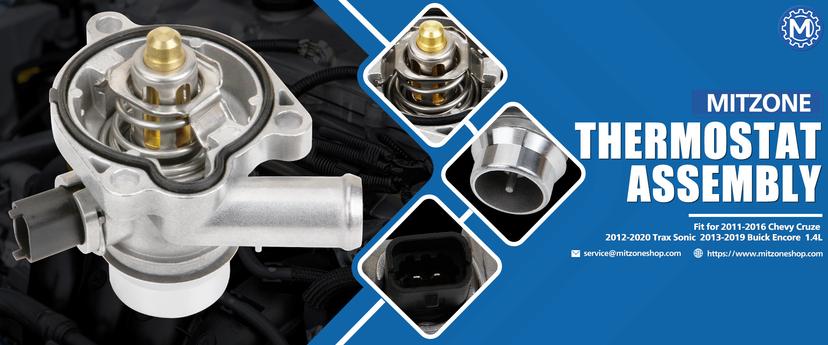
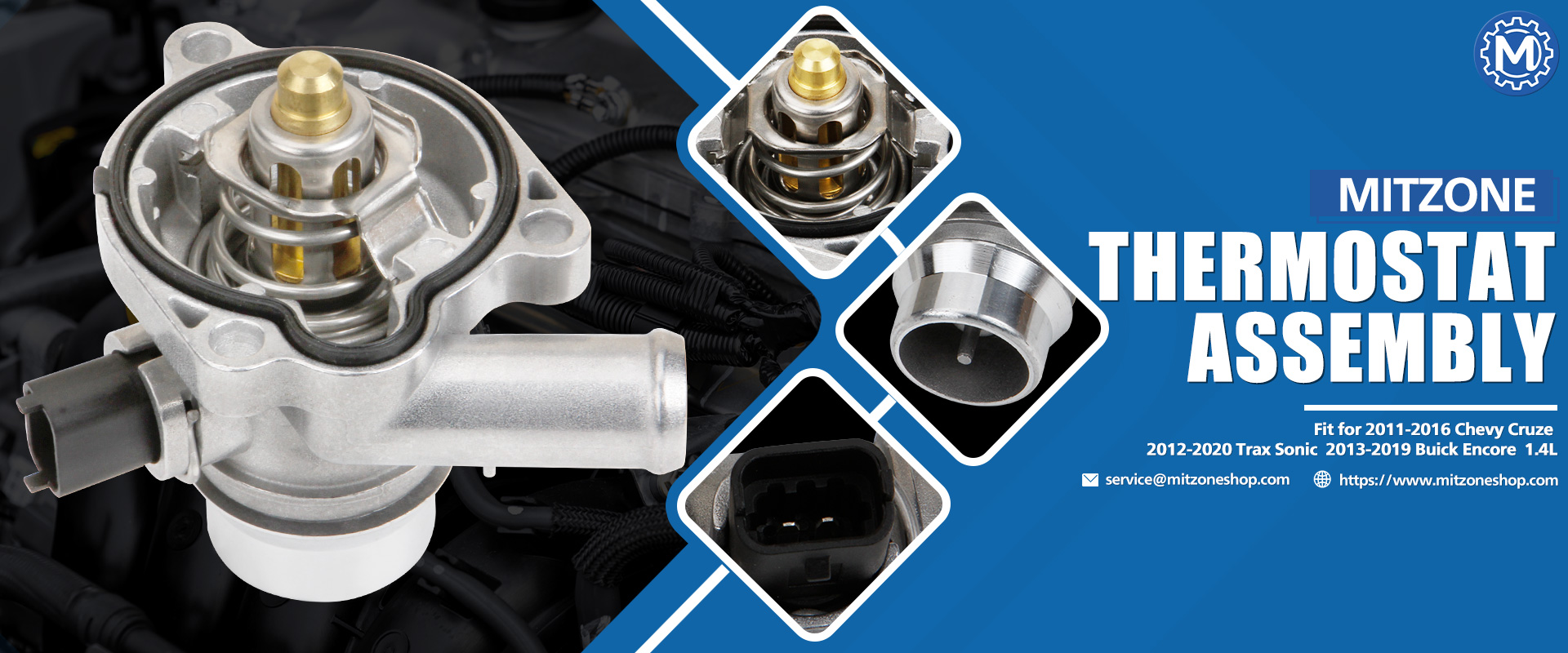
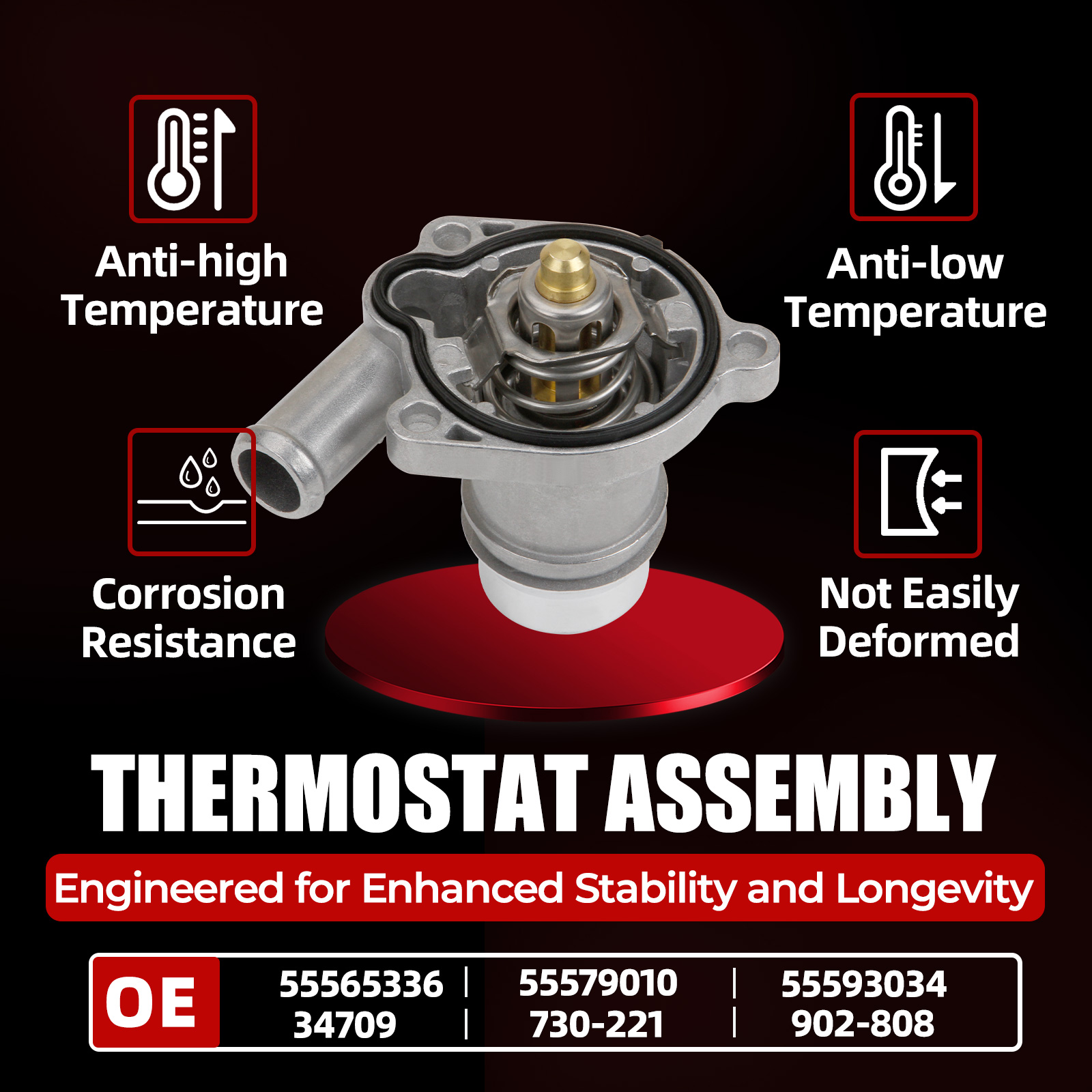
The product details provided describe a cast metal housing with a machined silver or aluminum-looking body, an integrated spring-and-valve thermostat element, a black rubber O-ring or gasket around the perimeter, and an electrical connector on the side. That combination suggests a more integrated assembly than a bare mechanical thermostat. Buyers should treat it as a replacement cooling-system component that may include electronic or sensor-related features, though the exact control method is not fully verifiable from the image alone.
Fitment matters more than appearance
One of the easiest mistakes in sourcing OEM car parts and aftermarket replacements is assuming that a housing that “looks right” will fit. Coolant housings are notorious for being similar across engine variants while still differing in connector position, seal geometry, port layout, or sensor integration. The notes supplied identify Mitzone 55565336 and list fitment for 2011–2016 Chevy Cruze, 2012–2020 Trax/Sonic, and 2013–2019 Buick Encore 1.4L. That is useful, but buyers should still verify the exact engine and model-year application before placing volume orders.
A supplier who understands those fitment boundaries saves time at both ends of the chain. A reseller avoids returns. A repair operation avoids an angry driver waiting on a second shipment. The part itself may be small; the downstream cost of an error is not.
What to ask before placing an order
For this type of component, sourcing decisions usually come down to a short list of practical questions:
Does the assembly include the seal or gasket already installed, or is it supplied separately? Is the electrical connector part of a sensor, a heater circuit, or another control function? Is the part packaged as a complete replacement thermostat housing outlet, or as a partial assembly that still requires additional hardware? The product information does not confirm all of those details, so a buyer should request that clarification rather than assume it.
It also helps to ask how the part is produced and finished. The visible housing appears cast and machined, which is standard for this category, but buyers still want clean sealing surfaces, consistent machining, and a stable fit around the O-ring. Those are the details that separate a workable part from a nuisance return.
Direct factory auto parts versus broader sourcing channels
Many purchasing teams compare direct factory auto parts with distributor stock or trading-company supply. The tradeoff is familiar: direct sourcing can improve communication on part structure, packaging, and application control, while wider distribution channels may offer faster mixed-model coverage. A good exportor can also matter here, especially when the buyer needs consolidated shipments for multiple SKUs. The important point is not the label on the supplier, but whether the supplier can confirm fitment, maintain consistent build quality, and handle repeat supply without drifting on details.
For a thermostat housing outlet, consistency is usually more valuable than a flashy promise. This is not the category for improvisation.
Common buyer mistakes
The most common error is ordering by engine family alone and ignoring variant differences. The second is overlooking the seal condition, especially on assemblies that rely on a perimeter O-ring. A third mistake is assuming every electronically equipped housing uses the same connector or internal function. In cooling systems, these small oversights are enough to create leakage or diagnostic trouble after installation.
Another practical warning: do not overstate performance claims unless the supplier has supplied the test data. For this part, the safe statement is that it is intended for replacement use in engine coolant temperature regulation. Anything beyond that should be documented, not guessed.
Buyer-facing takeaway
If you are evaluating a thermostat housing outlet supplier, focus on application accuracy, assembly completeness, and the supplier’s willingness to confirm the details that are not obvious from a photo. The Mitzone 55565336 reference and the listed vehicle coverage give you a starting point, but the real value lies in whether the supplier can support your order with clear fitment data and repeatable part quality.
For sourcing teams, that is usually the difference between a part number that moves and a part number that comes back.
Next step
If you are building a replacement cooling-system line or comparing suppliers for a vehicle-specific thermostat housing, request fitment confirmation, packaging details, and connector information before you commit. A few minutes of checking now can save a great deal of rework later.