
Why buyers start looking for an intake manifold supplier
When an engine develops a vacuum leak, rough idle, loss of power, or a persistent check-engine light, the intake manifold is often one of the parts that gets inspected early. For repair shops, fleets, and parts buyers, the real question is not just whether the manifold fits. It is whether the intake manifold supplier can provide a part that matches the vehicle platform, holds up in service, and arrives ready for installation without surprises.
That matters especially on high-volume repair work. A 3.6L V6 intake manifold is not a niche component; it is used across a wide range of Jeep, Dodge, RAM, Chrysler, and other applications from 2011–2023. In other words, the buying decision is tied to availability, fitment confidence, and consistency. If any of those fail, the vehicle sits, the bay stays blocked, and the job becomes more expensive than it should be.
What this manifold does, and why material choice matters
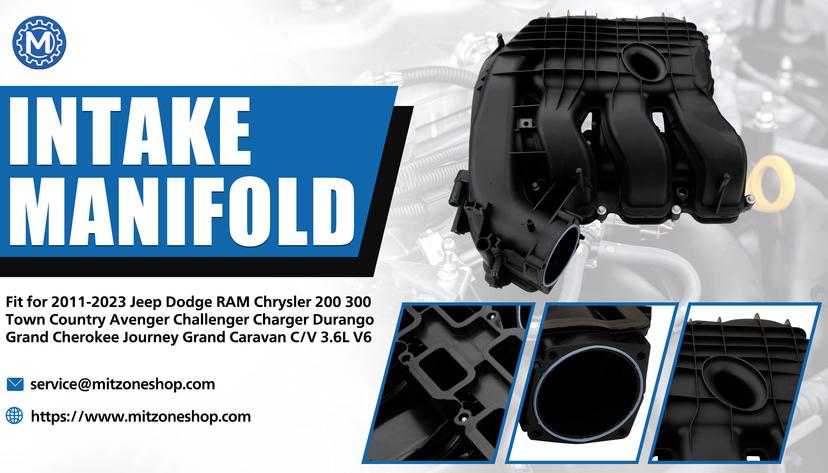
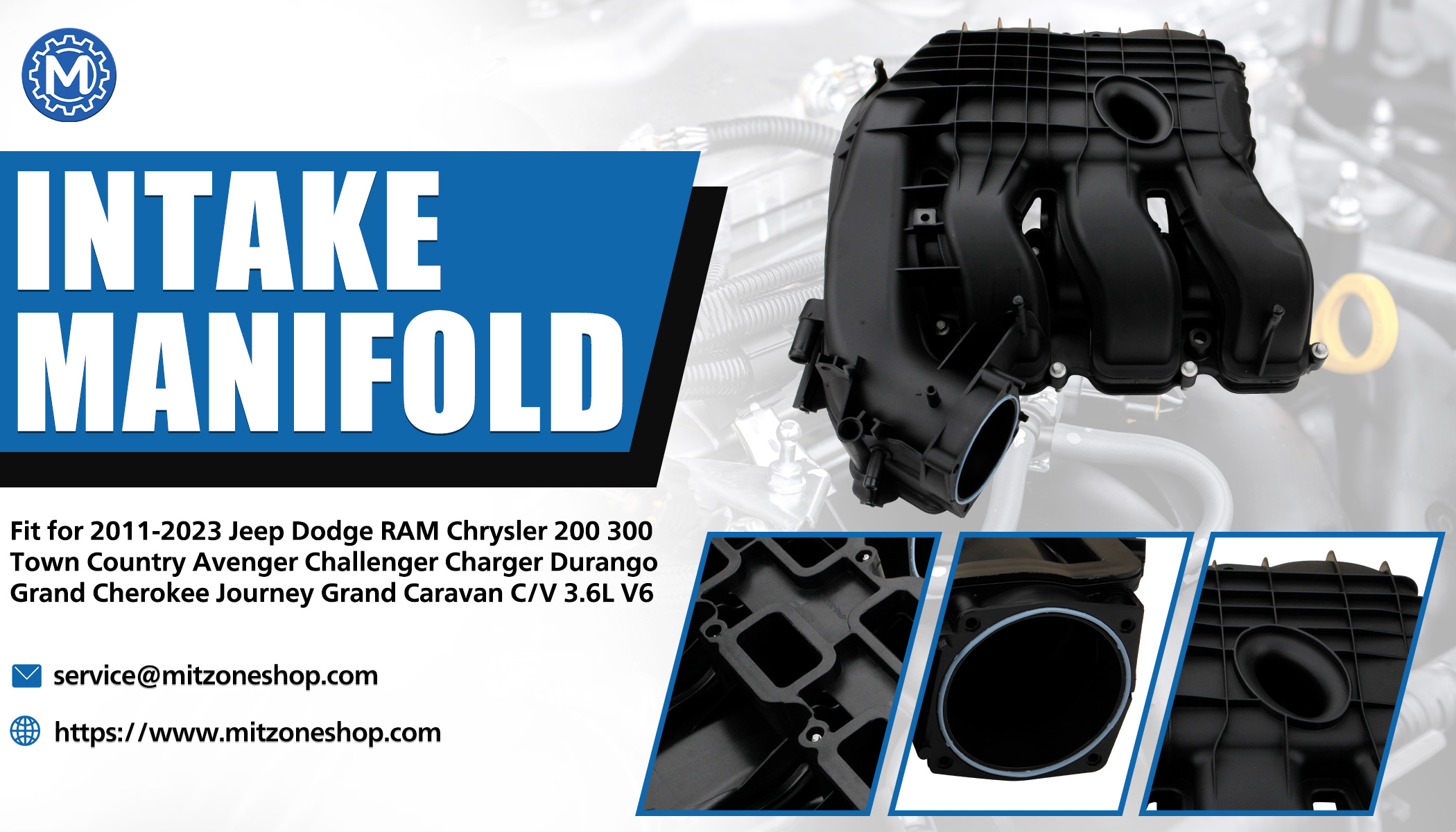
An automotive intake manifold distributes intake air from the throttle body to the engine cylinders. In the unit described here, the structure is a black molded manifold body with curved intake runners, an integrated plenum, flange openings, mounting bosses, and a large circular air inlet port. The visible construction suggests a plastic composite or molded polymer design, which is common in modern intake systems because it can reduce weight and support complex internal geometry.
That said, not every molded manifold is created equal. Buyers should avoid assuming that a clean exterior automatically means correct internal flow paths, sensor provisions, or sealing behavior. Those details are often critical in OEM car parts sourcing, but they are not always obvious from product photos. A direct factory auto parts approach is useful here: verify the application first, then confirm the assembly details second.
Fitment is the first filter, not the last
The supplied notes list fitment for 2011–2023 Jeep, Dodge, RAM, Chrysler, 200, 300, Town & Country, Avenger, Challenger, Charger, Durango, Grand Cherokee, Journey, Grand Caravan, and C/V models with 3.6L V6 engines. That is a broad application range, which is helpful for the seller and also a warning for the buyer.
Broad coverage can create false confidence. Two vehicles with the same displacement may still differ in sensor mounting, port shape, gasket layout, or emissions equipment. A buyer should treat published fitment as a starting point, then confirm year, engine code, and any side-specific features before placing an order. This is where a reliable exportor or domestic distributor earns its keep: by reducing the chance of a return caused by a small but expensive mismatch.
What sourcing teams should check before ordering
1. Assembly completeness
The manifold shown appears to be a complete assembly with integrated runners and inlet, but the included gaskets, sensors, valves, or other accessories are not confirmed. That matters because a “complete” listing in the aftermarket can mean very different things depending on the seller.
2. Sealing surfaces and mounting points
On intake components, the visible flange surfaces and bolt points are not cosmetic details. They are the difference between a clean repair and a comeback. Even a part that looks right can create air leaks if the sealing face is warped or the boss pattern does not align properly.
3. Material and manufacturing consistency
Injection-molded plastic manifolds are common, but buyers still need to know whether the part comes from a stable process. If the supplier cannot discuss molded polymer construction, reinforcing structure, or product verification at a basic level, that is worth noting. For OEM car parts programs, consistency often matters more than one-off sample appearance.
Common buyer mistakes
The most common mistake is ordering by engine size alone. The second is assuming every 3.6L V6 manifold is interchangeable across the full vehicle list. The third is overlooking what is not shown in the photo: sensors, seals, and internal components. These omissions are not necessarily problems, but they do need to be clarified before the job starts.
Another practical caution: if the vehicle came in with intake-related drivability complaints, do not install the new manifold without checking adjacent issues such as vacuum lines, throttle body condition, and gasket surfaces. A replacement part will not cure a separate fault. Shops know this, but it is still easy to miss when time is tight.
What a good supplier relationship looks like
For this category, a capable intake manifold supplier should be able to answer fitment questions quickly, provide clear product structure information, and communicate exactly what is included. If the supplier also supports direct factory auto parts purchasing, that can shorten the path from quotation to installation and reduce the number of intermediaries involved. For buyers managing repair throughput or regional distribution, that difference is often practical rather than theoretical.
Quick buyer takeaway
If you are sourcing a 3.6L V6 intake manifold, focus on verified fitment, assembly completeness, and sealing integrity before anything else. The part may look straightforward, but the details decide whether it performs like a proper replacement or becomes another return.
Next step
When comparing suppliers, ask for application confirmation by vehicle and year, part-included details, and any available installation guidance. That short conversation usually tells you more than a polished listing ever will.