
What a CustomerReview can tell you about a BMW engine-bay part
A useful CustomerReview can tell you more about a BMW engine-bay part than a polished product page ever will. That matters because buyers are usually trying to answer a practical question, not admire marketing language: will this piece fit, will it survive real use, and is it worth choosing over a pricier factory option?
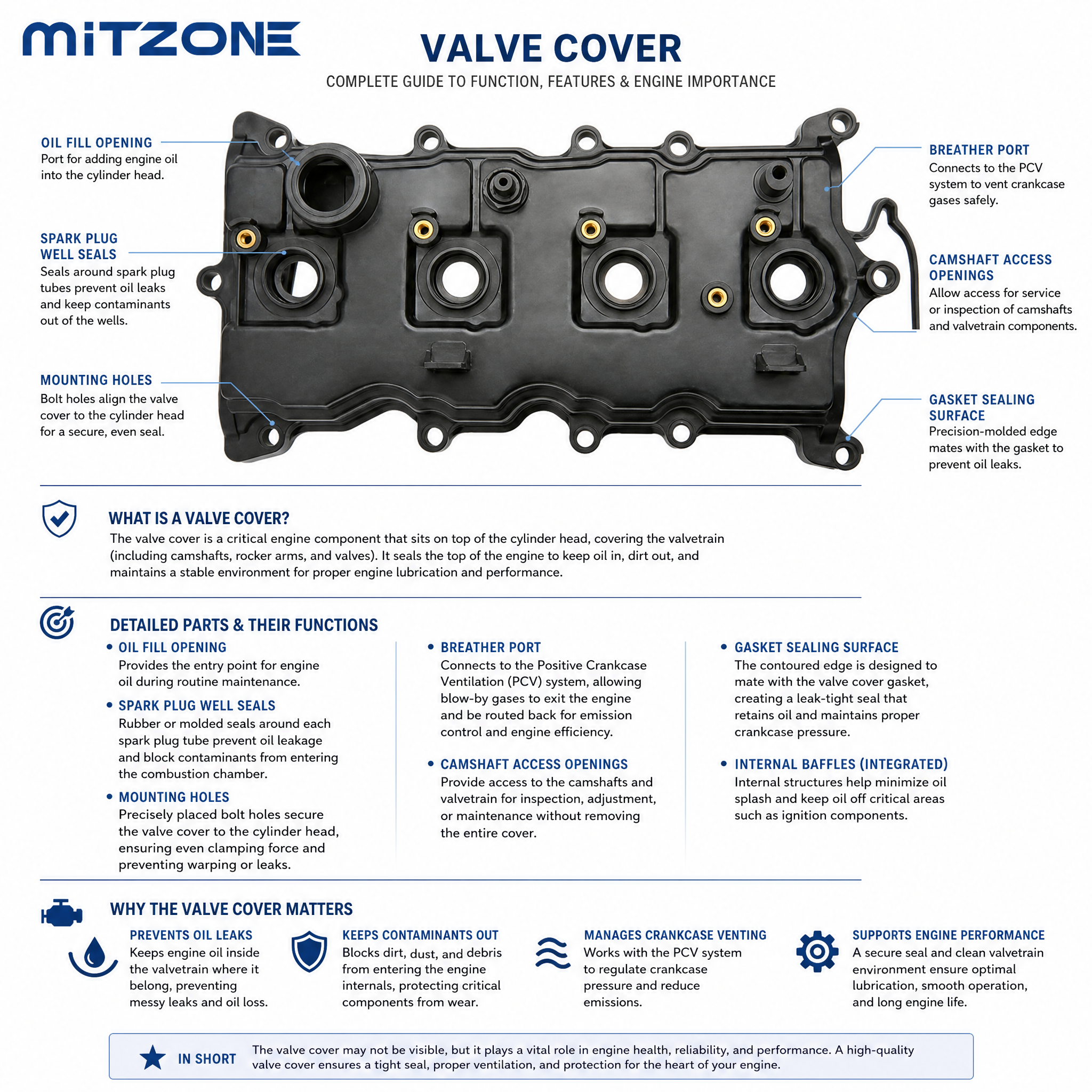
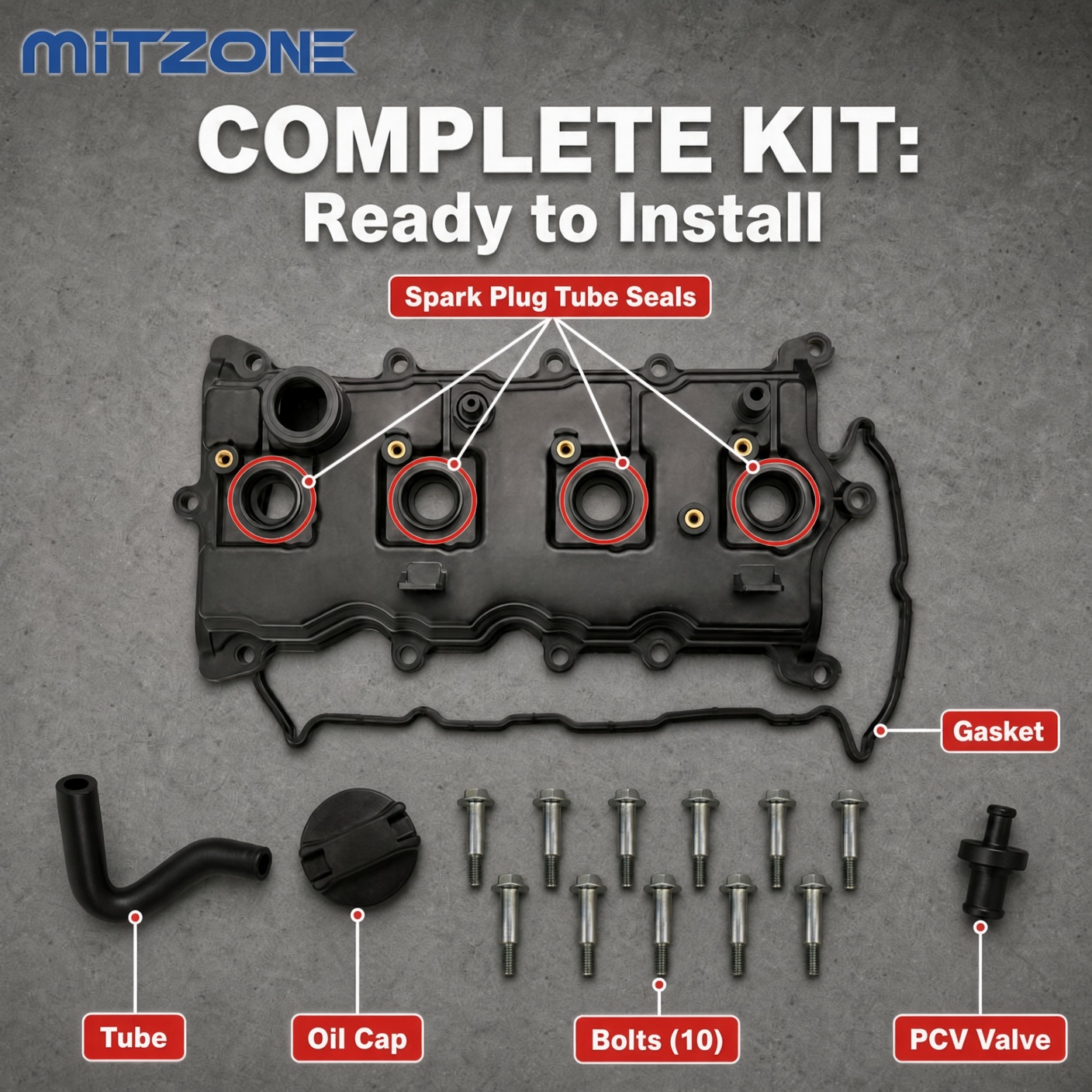
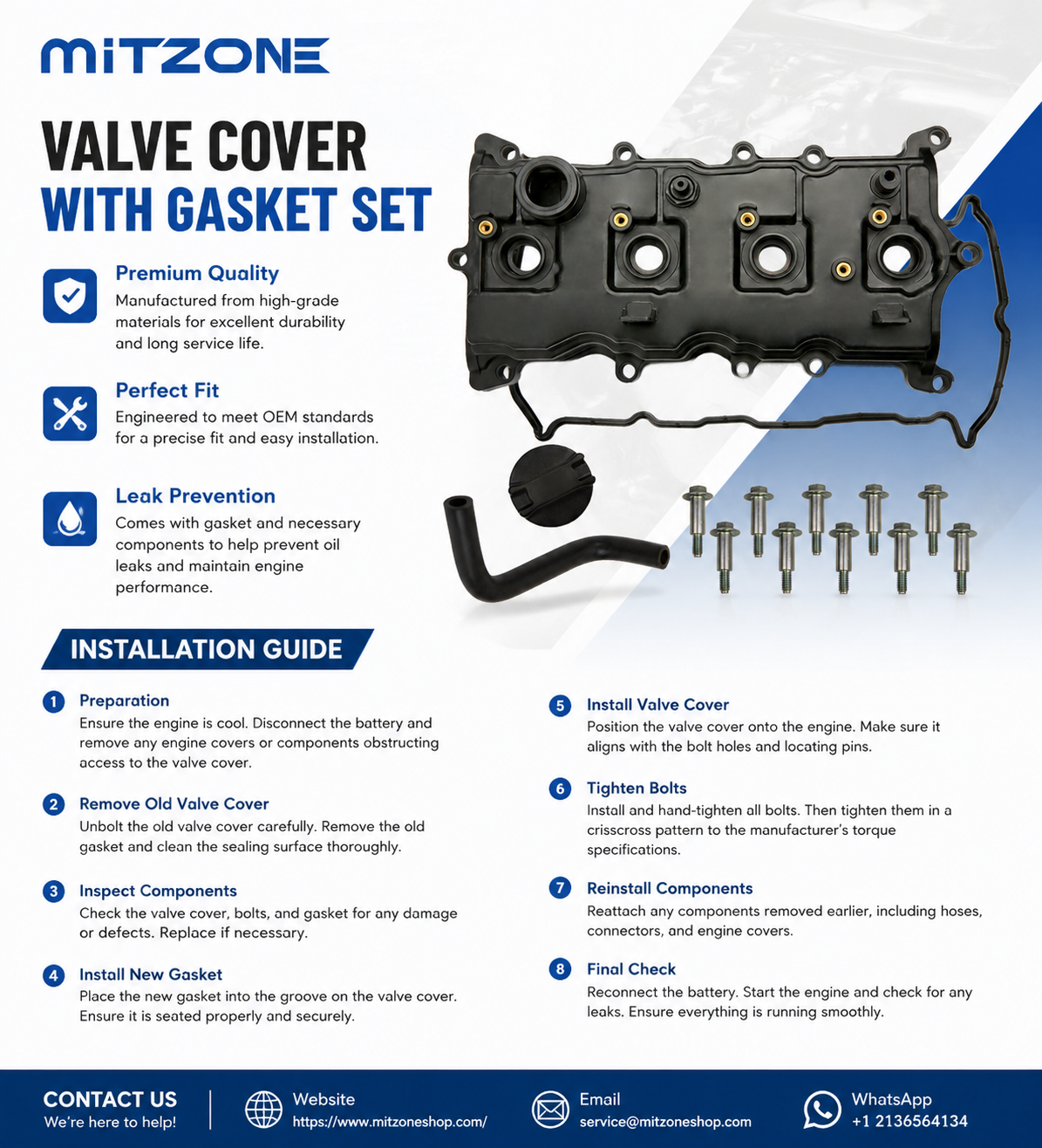
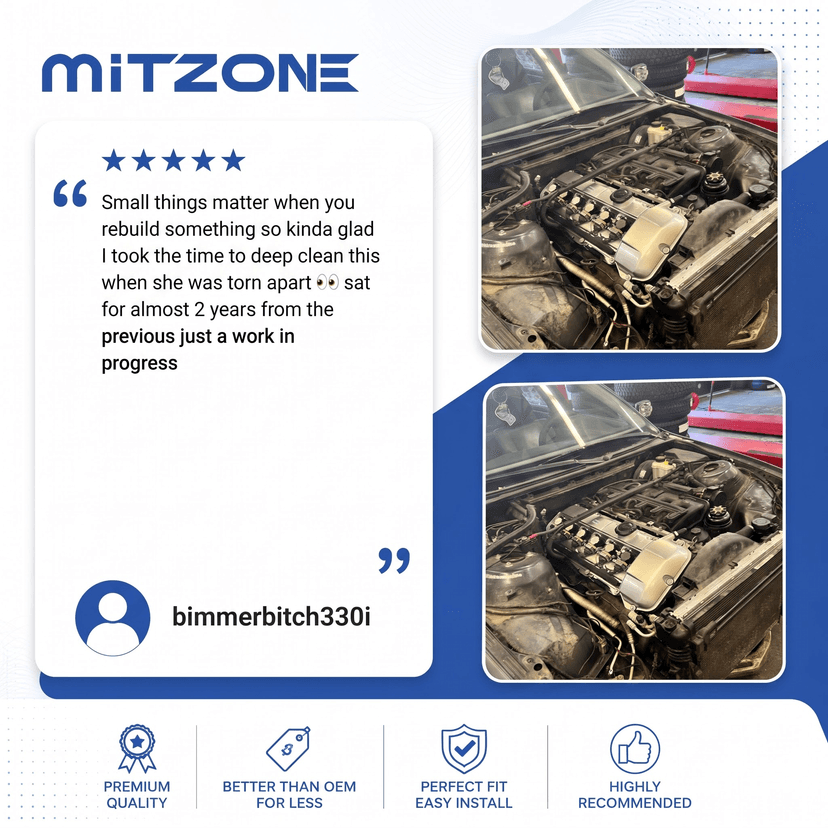
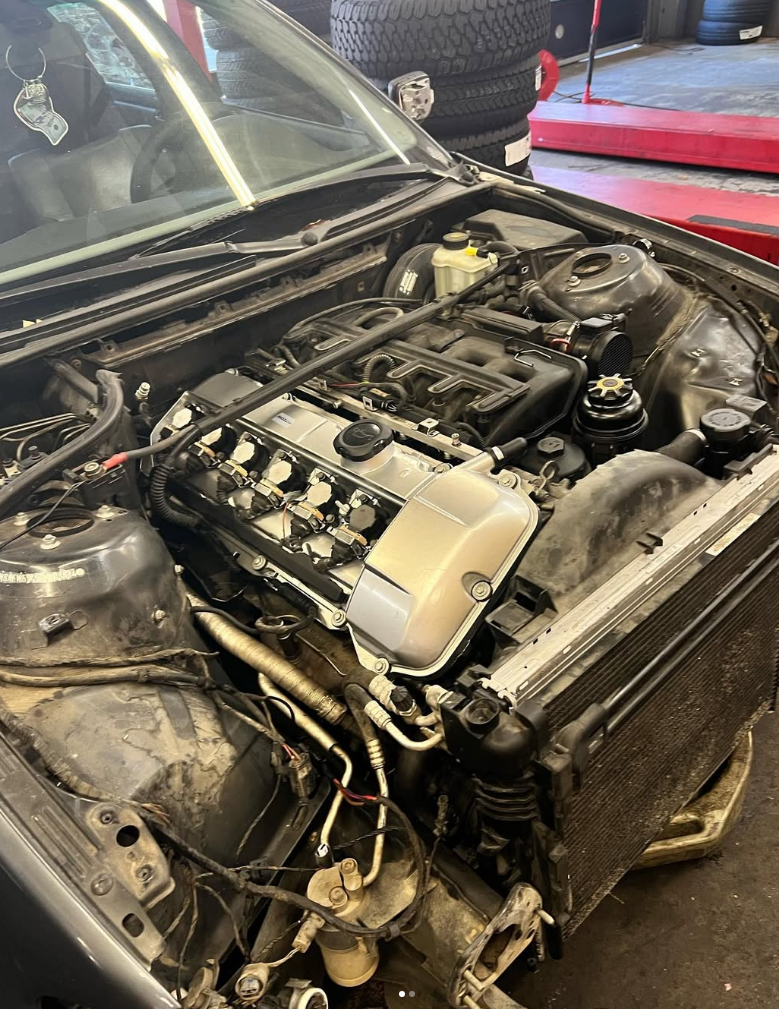
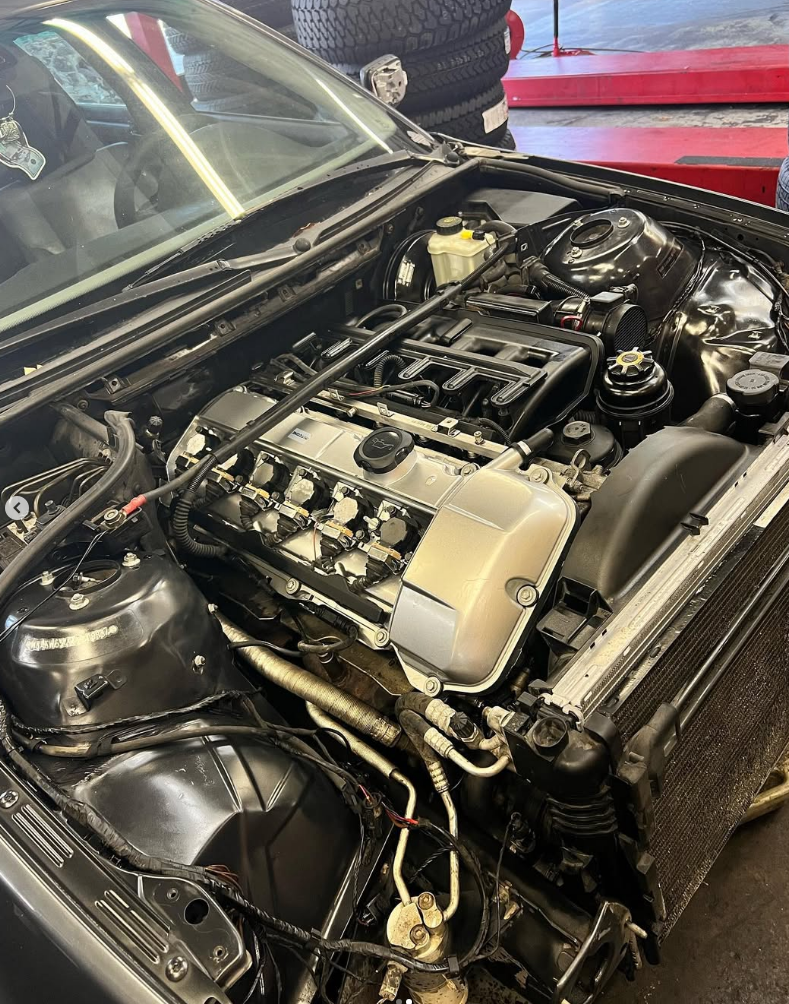
The image provided looks like a before-and-after style testimonial graphic from MITZONE, showing a crowded BMW engine bay with black molded plastic covers, silver-toned top pieces, hoses, fasteners, and other top-end components. It appears to be tied to restoration or replacement work around the upper engine area, but the exact part number, vehicle year, and compatibility range are not identifiable from the image alone. That uncertainty is normal in this category, and it is one reason buyers lean so heavily on customer feedback.
Why this kind of review matters in an EngineRebuild context
An EngineRebuild is rarely just about internal components. Once the mechanical work is done, the surrounding engine bay still has to look correct, fit properly, and be easy to service later. Missing covers, tired plastic, brittle housings, and stained top-end pieces can make a rebuilt engine feel unfinished, even if the core repair is sound.
That is where a review graphic like this can be useful. It suggests a part or kit aimed at engine-bay restoration, long-storage recovery, or a repair-shop refresh. Buyers should still be cautious, though. A clean before-and-after photo can show improvement, but it does not prove durability, material grade, or broad BMW fitment. Those details must be checked separately.
Quick takeaways buyers should notice
- The visible assembly appears to center on top-mounted engine components, not a cosmetic trim piece alone.
- The materials shown look like a mix of molded plastic, painted or metallic cover parts, rubber hoses, and metal fasteners.
- The layout suggests a tight inline-engine bay, where fit and clearance matter more than appearance alone.
- Marketing phrases such as “premium quality,” “better than OEM for less,” “perfect fit,” and “easy install” are claims, not independent verification.
What a careful buyer should check before ordering
For BMW owners and repair shops, the most important filter is fitment. A top-end cover or engine-bay replacement that is off by even a small amount can create problems with hose routing, clip engagement, or service access. In a busy engine bay, those small errors turn into installation delays fast.
Next, look for clues about how the part is made. Molded plastic housings should have consistent surfaces and clean mounting points. Metallic or painted pieces should not only look good in photos; they should be shaped to sit correctly around adjacent components. If the product is being considered for a BMW restoration or a DIY garage project, a review that mentions installation behavior is often more useful than one that only praises the appearance.
It is also worth separating a true replacement part from a broader refurbishing package. Some listings imply a complete visual transformation when in reality they may cover only the upper engine area. That is not necessarily a problem, but buyers need to know what is included before a job starts.
Where MITZONE-style testimonial graphics help, and where they do not
Testimonial graphics are good at showing the end result. They are less reliable for judging tolerances, durability, or whether a piece will hold up after heat cycles and vibration. For a vehicle that has been through long storage or a partial teardown, appearance alone is not enough. A cover that looks perfect in the photo still has to mount cleanly, clear nearby parts, and remain serviceable.
That is why a balanced CustomerReview should ideally mention the boring details: whether clips lined up, whether the installer needed trimming, whether the finish matched the surrounding bay, and whether the part behaved well after a few drives. Those are the clues that matter to sourcing managers and hands-on technicians.
Common mistakes buyers make with engine-bay restoration parts
The first mistake is assuming all BMW engine-bay parts are interchangeable because they look similar. They are not. Inline-engine bays can share a family resemblance while still differing in mounting points, cover shapes, or accessory clearance.
The second mistake is trusting a before-and-after image without checking the actual scope of the part. A buyer may expect a complete engine-bay overhaul and receive only a single cover or a partial assembly. The third mistake is reading “easy install” as a promise rather than a best-case scenario. On older cars, corrosion, missing clips, and previous repairs can make any install harder than the listing suggests.
There is also a practical caution for anyone planning a BMW refresh around an EngineRebuild: clean presentation is useful, but serviceability still comes first. If a new cover makes later inspection harder, that is a trade-off worth thinking through before purchase.
Buyer advice for engineers, shops, and DIY owners
If you are sourcing for a shop, ask for more than one photo and, if possible, a note on compatibility. If you are a DIY owner, compare the replacement part against your original pieces before removing anything important. If you are evaluating MITZONE or a similar aftermarket option, pay close attention to how the listing describes the scope: single component, cover set, or engine-bay restoration package. The difference affects both cost and labor.
For buyers who simply want a tidy result after a long storage period, this kind of product can make sense. For buyers chasing factory-perfect authenticity, the decision is stricter. In that case, “better than OEM for less” is not a conclusion; it is only a claim that still needs evidence.
FAQ
Is a CustomerReview enough to confirm fitment?
No. It is helpful, but fitment should still be checked against the vehicle application, part description, and any available compatibility notes.
Does a clean engine-bay photo prove quality?
Not by itself. It shows presentation and possible improvement, but not long-term durability or exact dimensional accuracy.
When does this type of product make the most sense?
It is most useful for BMW engine-bay restoration, long-storage cleanup, cosmetic renewal after repair, or a practical EngineRebuild where the top-end area needs to look and function properly again.
What to do next
Before buying, compare the listing against your own engine bay, confirm what is included, and read the CustomerReview for installation clues rather than just praise. That approach gives buyers a better shot at choosing a part that fits the job instead of just the photo.