
How to Evaluate a Valve Cover Supplier for BMW 2.0L Applications
Choosing a valve cover supplier is not simply a matter of finding the lowest listed price. For a BMW 2.0L petrol engine, the valve cover seals the top of the cylinder head and valvetrain area while also supporting oil-filler and crankcase-ventilation functions. A poor fit can create oil leaks, installation delays, or repeat repairs. This article explains what sourcing managers, repair shops, and parts distributors should verify before ordering an aftermarket replacement.
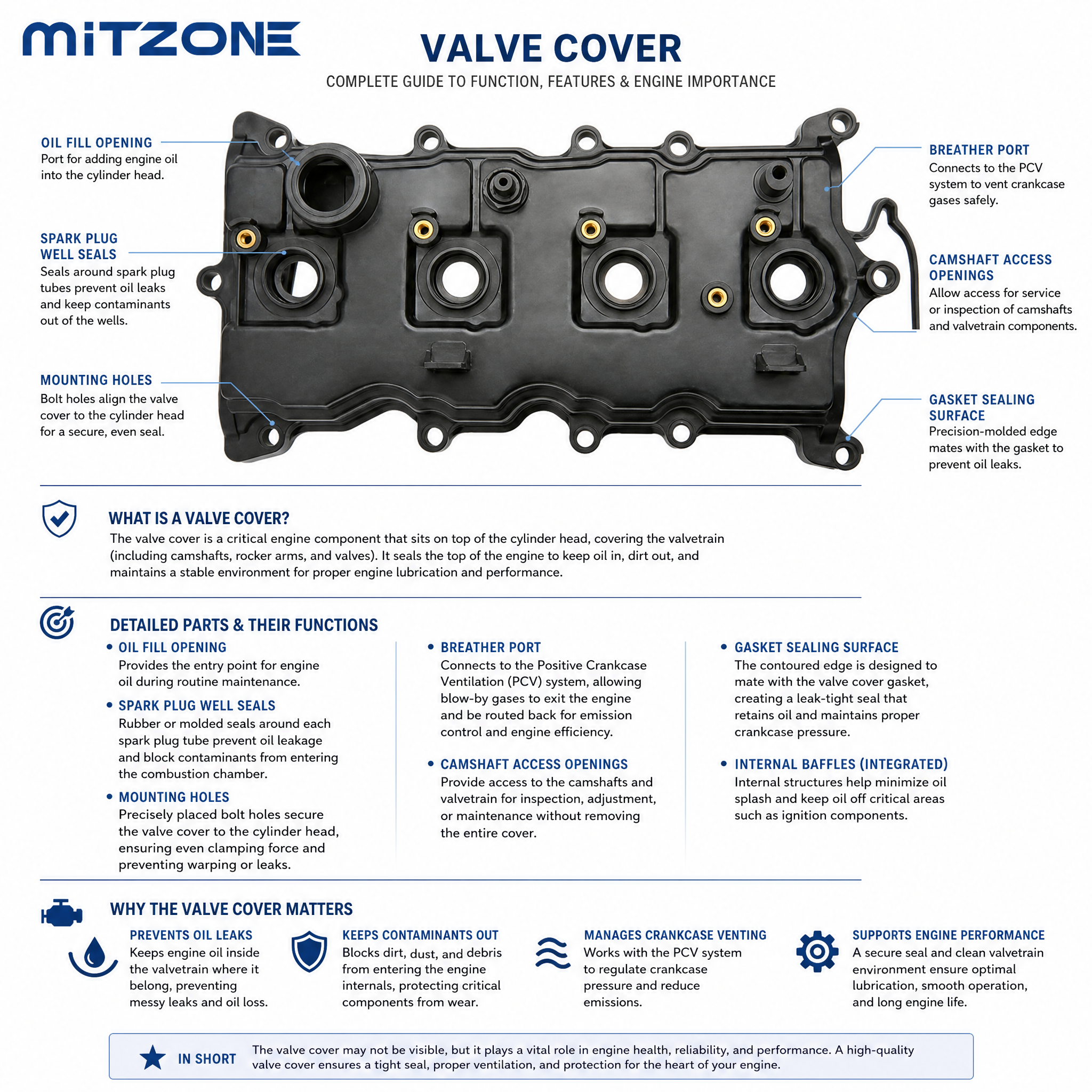
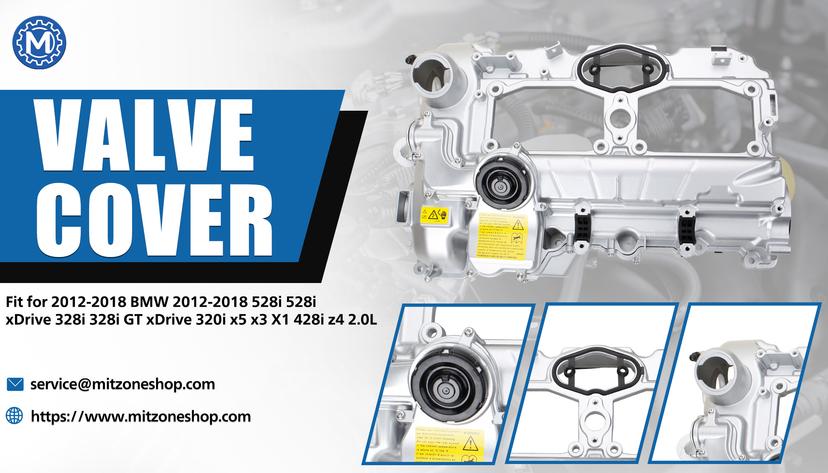
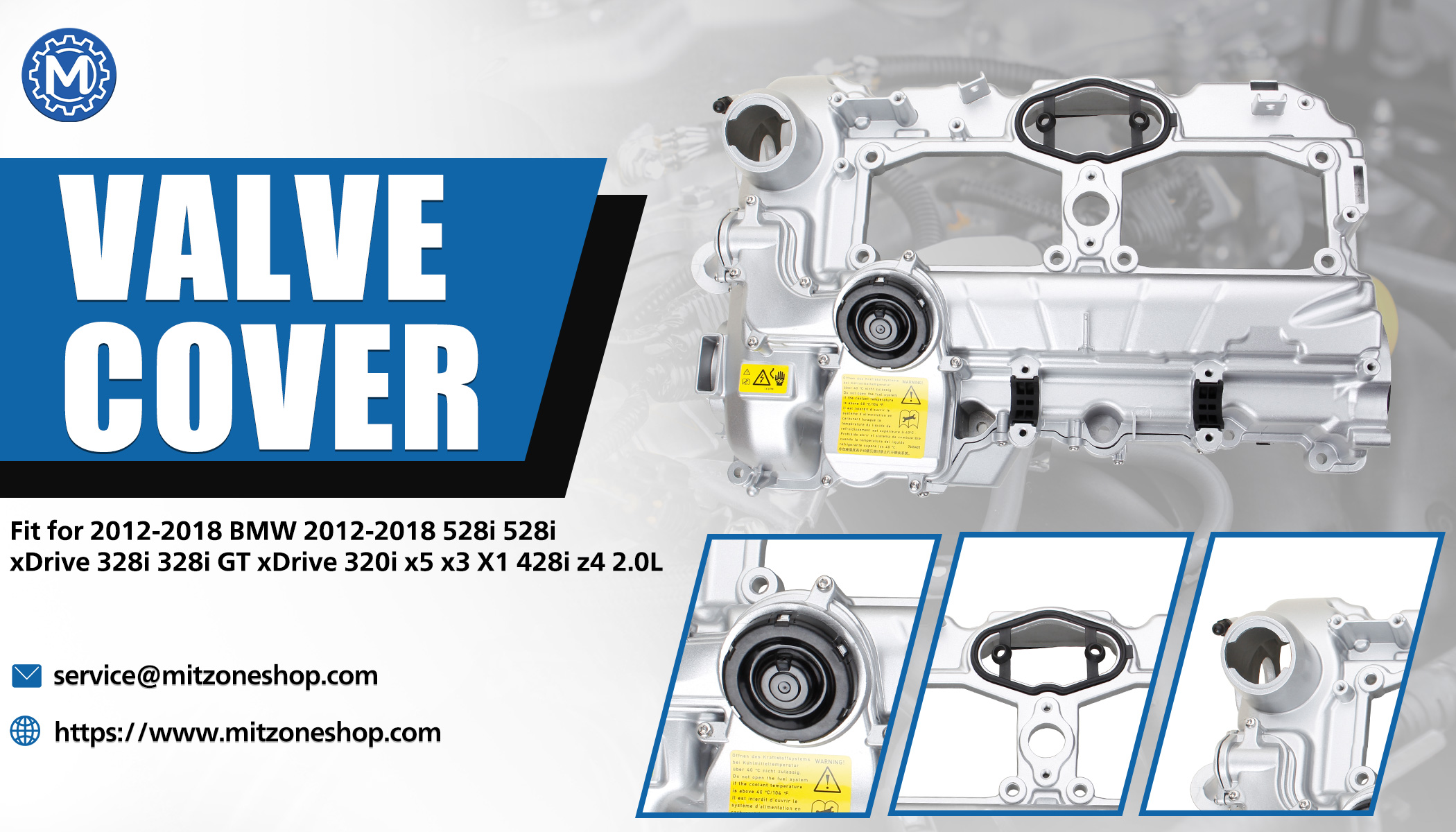
The decision is especially important when a component includes more than a basic cover and gasket. The Mitzone valve cover shown in the supplied product information is associated with part numbers 11127625477 and 11127588412. Its visible design includes a broad perimeter flange, multiple bolt holes, reinforced ribs, an oil-filler opening, a central rubber sealing area, and a circular crankcase-ventilation assembly. Those features make fitment verification more important than appearance alone.
Quick Reference: What Buyers Should Confirm
| Check | Why it matters |
|---|---|
| Part number | Confirms whether the supplier is referencing the required replacement family. |
| Engine code and VIN range | Model-year descriptions can cover more than one engine or regional configuration. |
| Included components | A gasket, diaphragm, oil cap, bolts, or sensors may not be included unless stated. |
| Sealing geometry | Flange shape, bolt-hole pattern, openings, and gasket seating must match the engine. |
| Material and process information | Useful for assessing consistency, weight, finishing, and service expectations. |
| Inspection documentation | Dimensional checks and leak testing can reduce avoidable returns, but they must be confirmed with the supplier. |
Understand the Component Before Comparing Suppliers
A modern automotive valve cover can combine several functions. It provides the upper engine enclosure, retains or supports a sealing gasket, provides an oil-filler interface, and may incorporate crankcase ventilation. The supplied Mitzone design visibly includes a circular black diaphragm or ventilation assembly near the oil-filler area, along with molded passages, mounting points, and fasteners.
The cover has a silver metallic appearance and is likely an aluminum casting, but the material grade is not supplied. Buyers should not treat a product photograph as proof of alloy specification or performance. Ask the valve cover supplier to state the material and, where relevant, provide the applicable material documentation. The same caution applies to the surface finish. Machined or finished sealing surfaces appear visible, but the exact treatment and machining specification remain unconfirmed.
From a manufacturing standpoint, this type of component is consistent with a casting followed by machining, drilling, threading, and assembly of sealing or ventilation elements. That is a reasonable description of the likely production route, not a confirmation of the actual factory process. A capable supplier should be able to explain which features are machined, which are molded or cast, and how the sealing surfaces are inspected.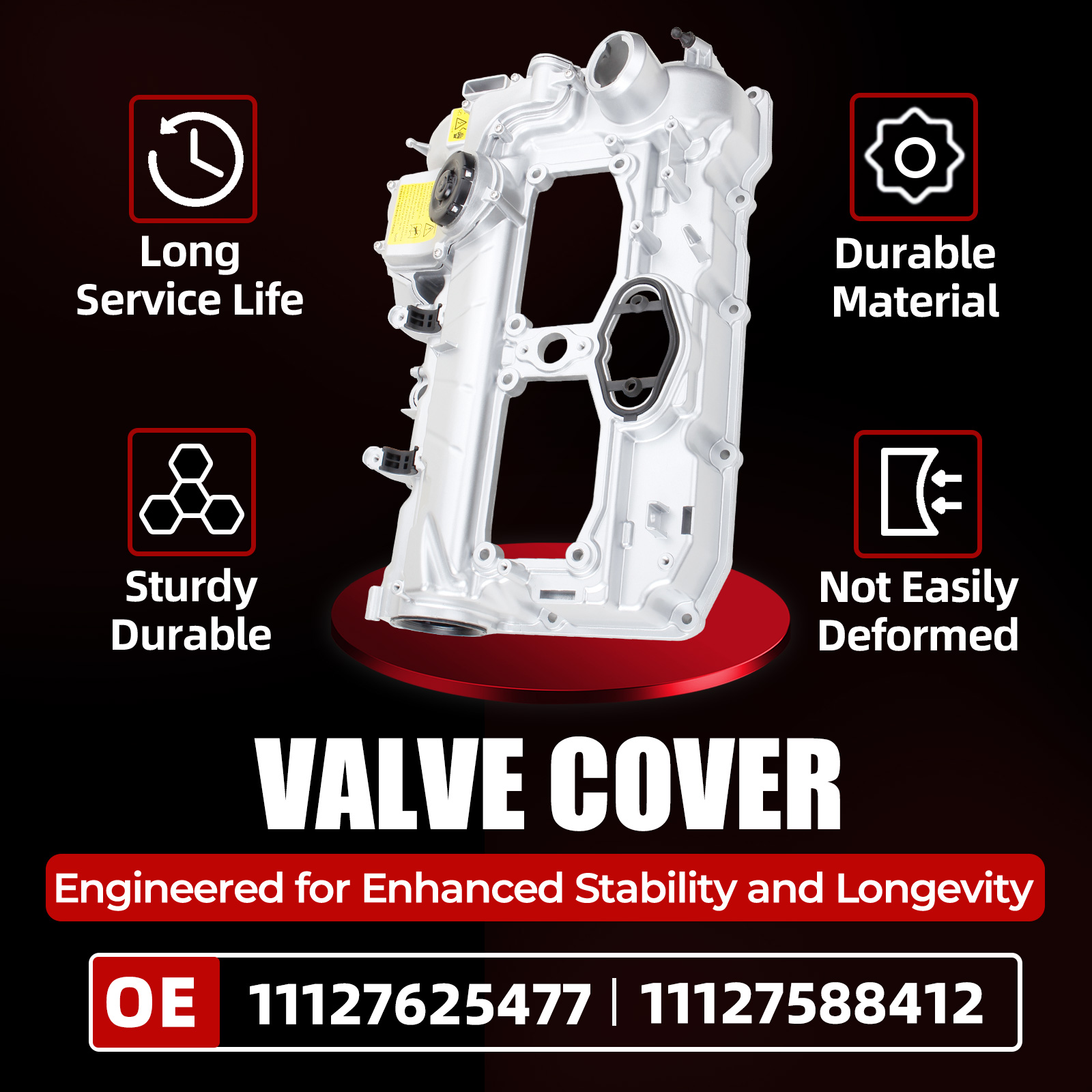
Fitment: Do Not Rely on Model Year Alone
The product information states coverage for selected 2012–2018 BMW applications, including the 528i, 328i, 328i GT, 320i, X1, X3, X5, 428i, and Z4 2.0L variants. It also references part numbers 11127625477 and 11127588412. These details are useful starting points, but they do not establish compatibility for every vehicle in those model ranges.
Exact engine codes, trim levels, drivetrain configurations, regional specifications, and VIN ranges are not supplied. A sourcing team should therefore request a fitment table or ask the supplier to validate a specific vehicle identification number. This is particularly important when the same model name was sold with different engines or when ventilation arrangements changed during production.
Before placing a bulk order, compare the supplied replacement with the original part. Check the perimeter outline, number and position of bolt holes, oil-filler location, central opening, ventilation assembly, brackets, and any sensor or hose connections. A visually similar cover can still fail to seal if one mounting boss or passage is different.
OEM Car Parts, Aftermarket Replacement, or Factory-Direct Supply?
Buyers often use terms such as OEM car parts and direct factory auto parts loosely. They should be defined before commercial discussions begin. A replacement may be an aftermarket part designed to cross-reference an original part number; that does not automatically mean it was made by the original equipment manufacturer or that it carries the same warranty, testing, or material specification.
The supplied information describes the Mitzone component as an aftermarket replacement engine part. It does not confirm that it is an exact OE replacement, an upgraded design, or a product manufactured under an OE contract. A supplier should state the product’s status clearly and explain whether the quoted part includes the installed ventilation components and sealing elements.
For distributors and repair networks, the practical question is not only whether the component can be sold. It is whether the supplier can maintain consistent identification, packaging, fitment data, and quality records across repeat orders. A factory-direct relationship may help with communication and customization, but the term itself is not a substitute for inspection evidence.
Questions to Ask a Valve Cover Supplier
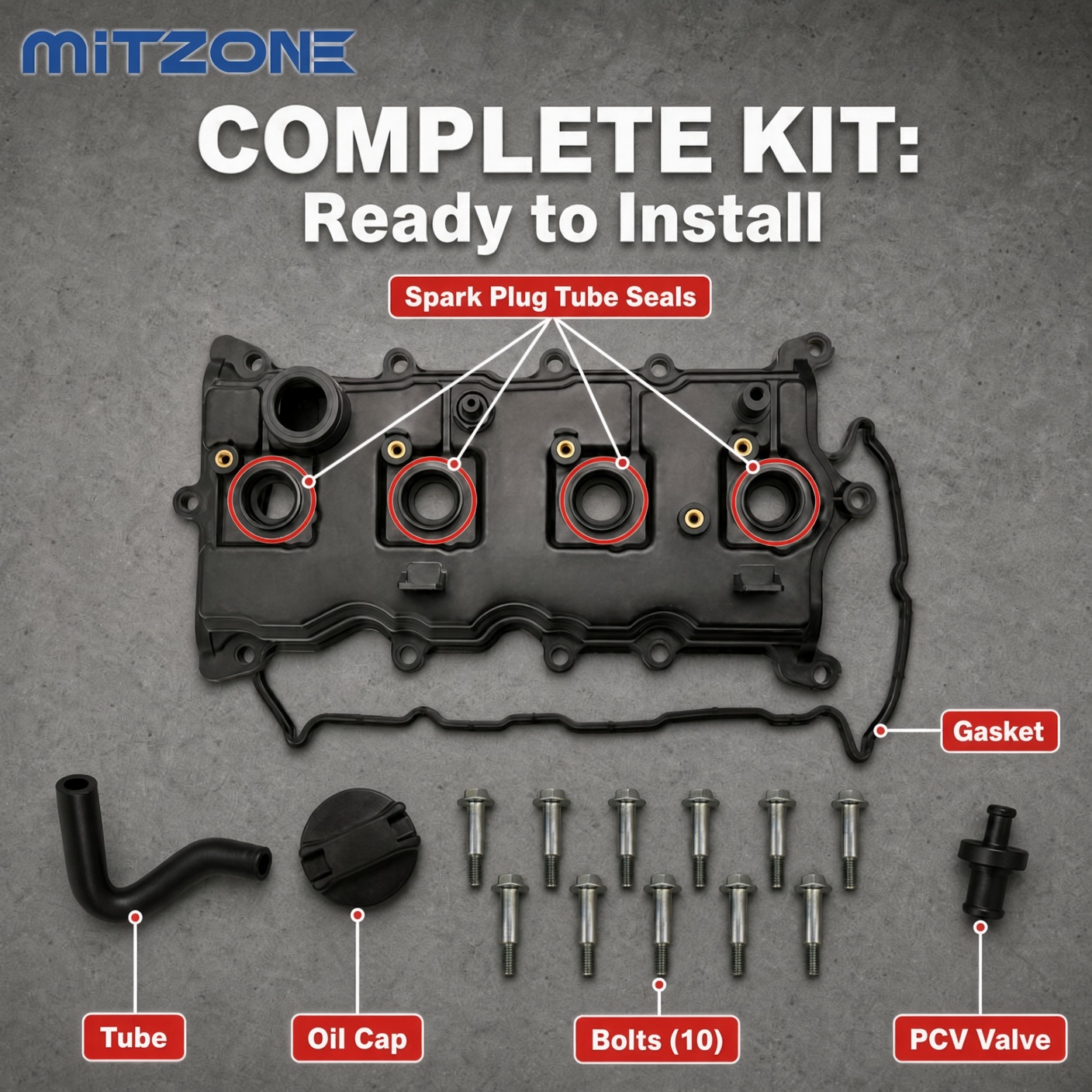
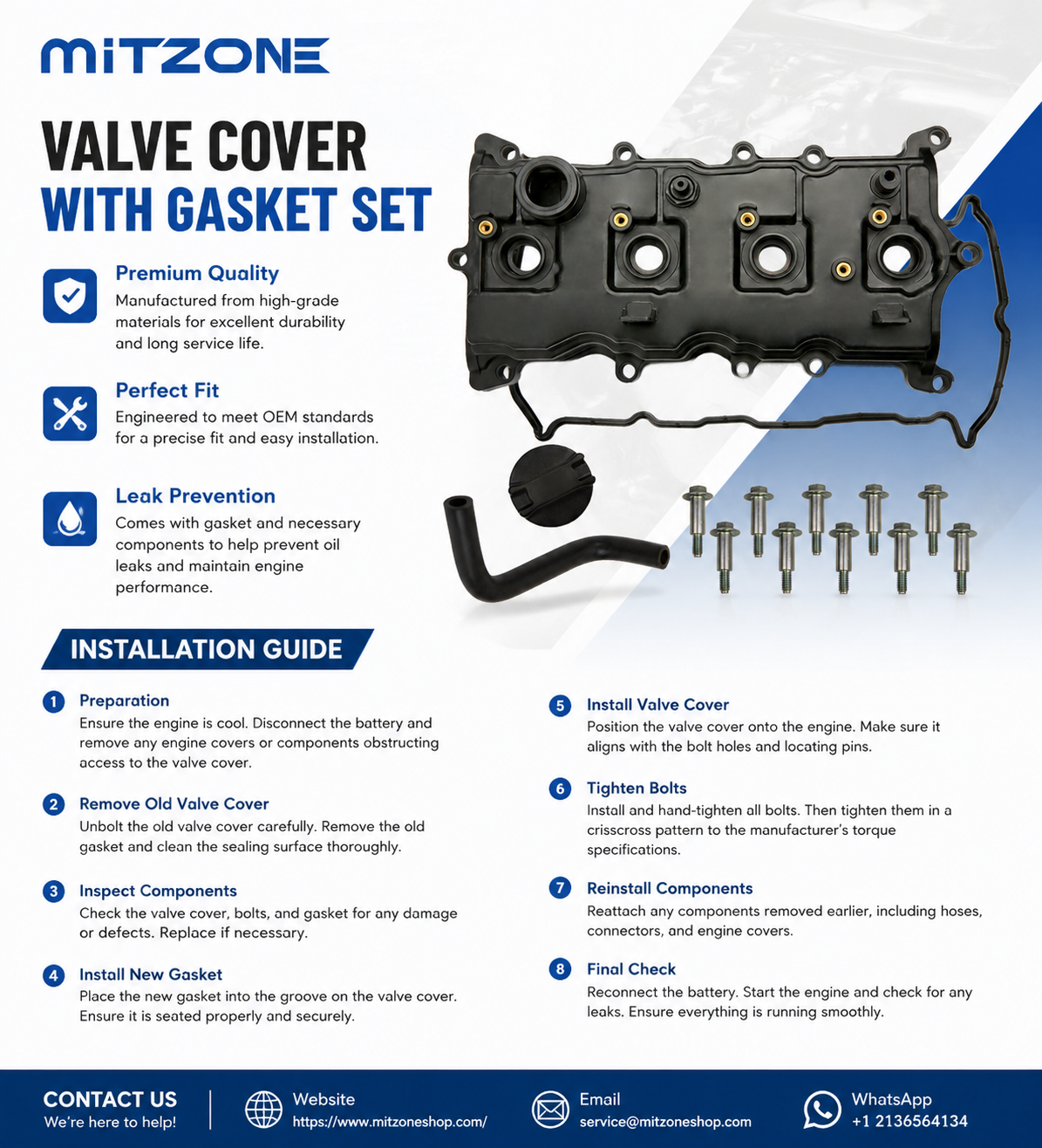
Ask for the confirmed engine codes, vehicle and VIN coverage, and the source of the part-number cross-reference. Request a written list of included components. The product image shows a gasket and ventilation-related features, but the available information does not confirm whether the gasket, bolts, oil cap, PCV diaphragm, sensors, or other hardware are included in the shipment.
Also ask how the supplier checks critical dimensions. Useful inspection points include the perimeter flange, gasket groove or seating area, bolt-hole positions, threaded mounting points, oil-filler opening, and ventilation interfaces. If the cover is supplied with a diaphragm or other assembled component, clarify whether that assembly is inspected separately.
Do not request or assume exact tolerances, pressure ratings, temperature ratings, leak-test results, warranty terms, or installation torque values unless the supplier provides them. These details should come from controlled product documentation or the applicable vehicle service information, not from a catalogue image.
Common Purchasing Mistakes
The most common error is ordering by vehicle model and year without checking the engine code. Another is assuming that a displayed gasket means a complete installation kit. A third is treating a part-number match as proof that every hose, sensor, and ventilation connection will transfer correctly.
There is also a practical packaging issue. A large cast or molded cover with raised bosses and mounting features can be vulnerable to impact damage in transit. Ask how the supplier protects the sealing flange and ventilation assembly. Inspect these areas on receipt before the part is installed.
FAQ
Which BMW applications are shown for this valve cover?
The supplied information identifies selected 2012–2018 BMW 2.0L variants, including the 528i, 328i, 328i GT, 320i, X1, X3, X5, 428i, and Z4. Exact engine codes and VIN ranges still require confirmation.
What part numbers are associated with the product?
The supplied references are 11127625477 and 11127588412. Buyers should confirm how the supplier applies each number and whether the reference matches the target vehicle.
Is the material confirmed as aluminum?
No. The component appears to be a silver-colored metal casting, likely aluminum, but the material grade is not provided. Request written confirmation before specifying it for a controlled application.
Next Step for Buyers
Prepare a fitment request containing the vehicle VIN, engine code, required part number, expected order quantity, and whether the replacement must include the gasket or ventilation assembly. Then ask the valve cover supplier for a written compatibility response and a clear component-content list. That small amount of discipline can prevent the most expensive outcome in aftermarket sourcing: a part that looks correct, ships quickly, and cannot be installed with confidence.