
What buyers need from an intake manifold supplier
Choosing an intake manifold supplier is rarely just a parts-ordering exercise. For repair shops, distributors, and sourcing teams, the real question is whether the part will fit correctly, arrive as a complete assembly, and restore the engine’s air-routing function without creating a second round of labor. That matters even more on modern Mercedes V6 gasoline applications, where the intake manifold is not just a hollow housing. It often carries linkage, vacuum-actuated controls, seals, and the hardware that manages airflow inside the engine.
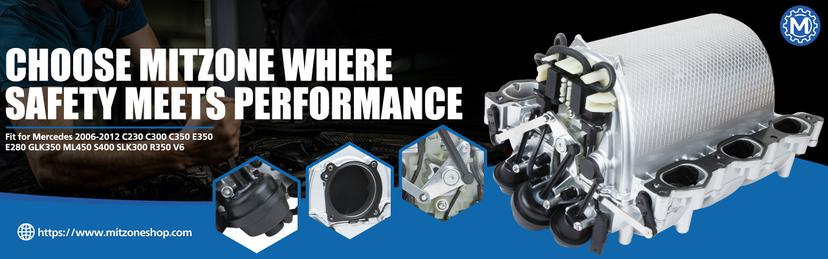
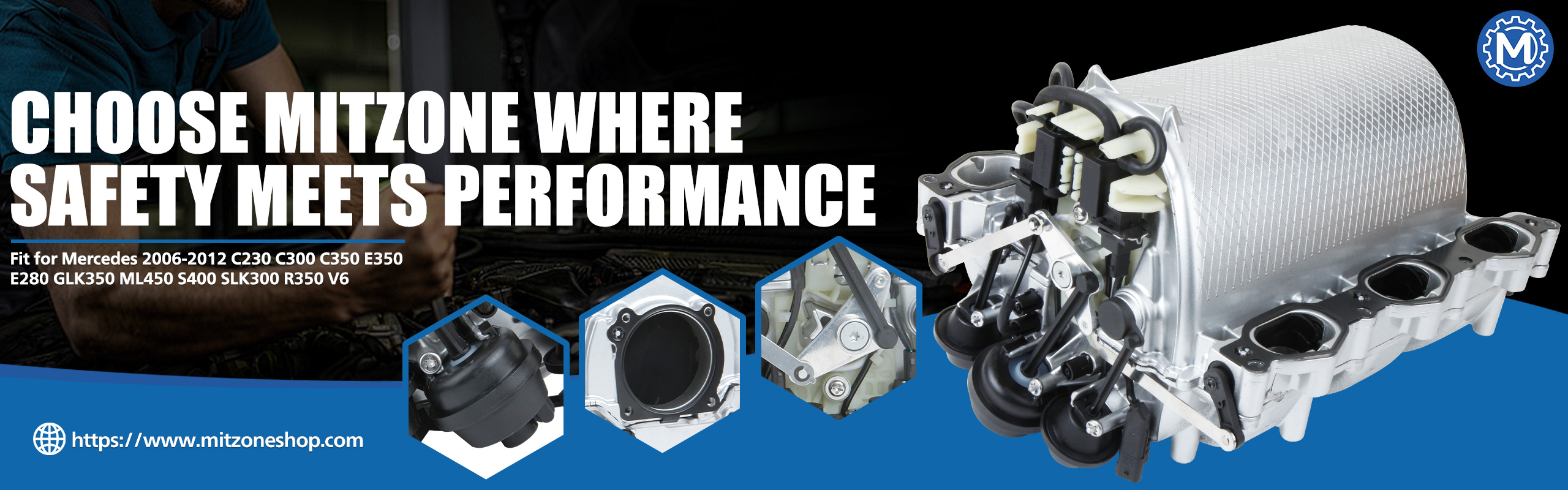
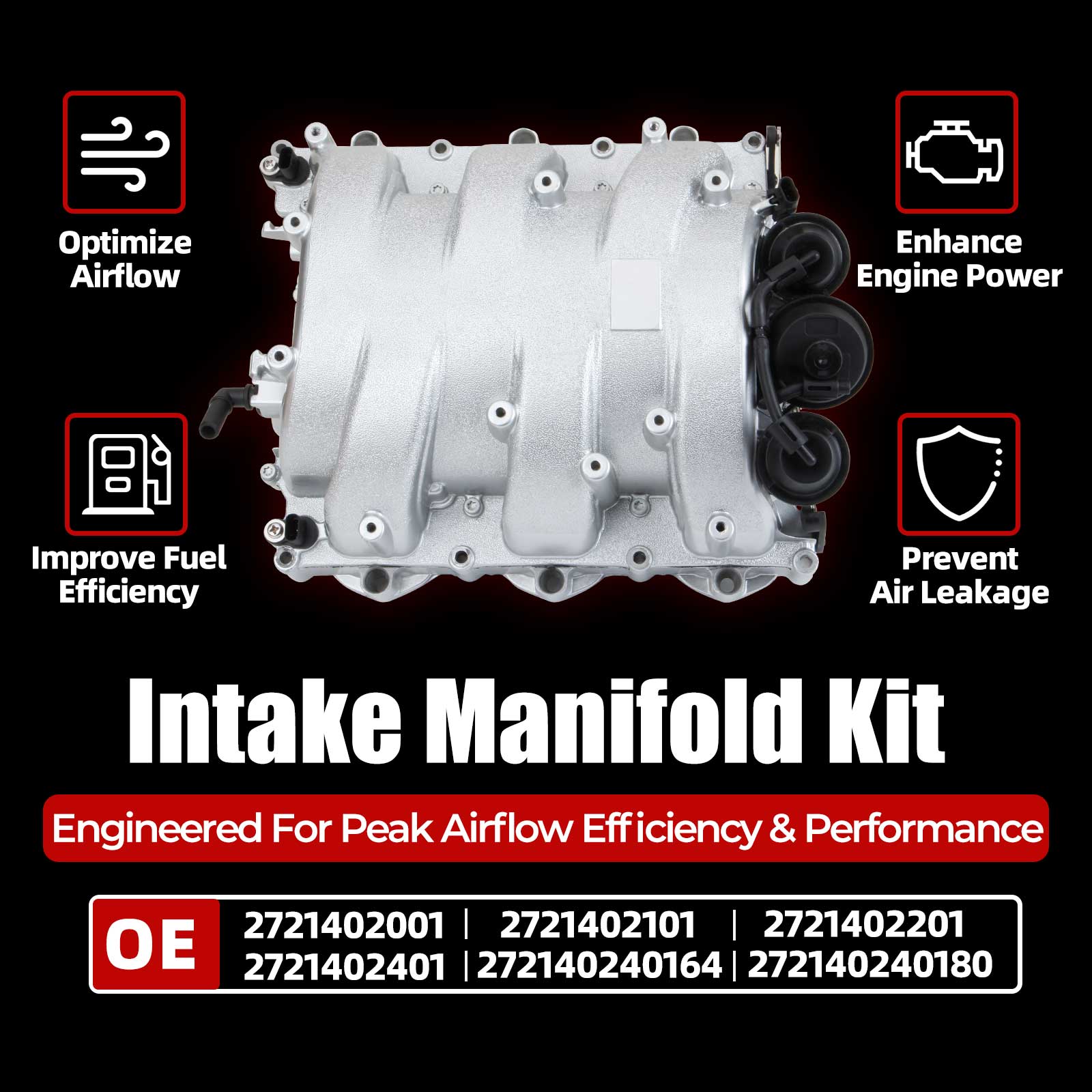
The product at hand is an automotive intake manifold assembly associated with Mercedes 2006–2012 C230, C300, C350, E350, E280, GLK350, ML450, S400, SLK300, and R350 V6 applications, with part number 2721402401 noted in the source material. For buyers, that kind of fitment list is useful, but it should still be checked carefully against engine variant and vehicle configuration. A shop that has ever pulled the wrong manifold knows the hidden cost: labor, vehicle downtime, and a customer waiting while parts are rechecked.
Why this component is more than a casting
An intake manifold distributes intake air to each cylinder. On this style of Mercedes application, the visible actuator hardware suggests a variable runner or intake flap control system, which means the manifold helps shape airflow at different engine conditions. That is a practical point, not a marketing one. If the control system fails, a replacement may need to be supplied as a complete assembled unit rather than as a bare housing.
The manifold shown appears to use a cast aluminum main housing with a machined or cast silver finish. Several black plastic or rubber components are attached, including actuators, diaphragm-style pods, hoses, and linkage arms. The flange side shows multiple oval intake ports, and the upper plenum has a textured surface pattern. Those details matter because they tell the buyer what is actually being supplied: a complete assembly, not just a shell for rebuilding.
Quick reference: what to confirm before ordering
If you are evaluating OEM car parts or direct factory auto parts alternatives, a short checklist usually prevents the expensive mistakes:
Confirm the engine code and chassis application, not only the model name.
Check whether the manifold is a complete assembly with actuators and linkages, or a bare casting.
Match the port layout and mounting points to the removed part.
Review whether gaskets, sensors, and mounting hardware are included; do not assume they are unless explicitly stated.
Ask how the part is packaged for exportor or domestic shipment, especially if the control hardware is delicate.
What to look for in manufacturing quality
For an intake manifold supplier, casting quality is only the starting point. The mating surfaces must be clean, the port geometry consistent, and the assembled hardware free from obvious binding. On a part like this, visible brackets, fasteners, and seals are not decoration; they are part of the working system. A supplier that handles these assemblies well will usually understand that a crack-free casting is not enough if the linkage arrives poorly aligned or the actuator points are damaged in transit.
In aftermarket sourcing, the practical standard is simpler than a lab report: does the part look complete, does it match the OE-style form factor, and can a technician install it without improvising? That is especially important for workshop customers who need a reliable replacement during engine repair or intake control restoration.
Common buyer mistakes
The most common error is treating all Mercedes V6 intake manifolds as interchangeable. They are not. Another is assuming that a supplier listing with broad fitment guarantees every variant is covered. It may not. Even when the model range looks right, intake runners, actuator locations, and mounting details can differ.
A second mistake is ordering by price alone. The cheapest manifold can become the most expensive if the control mechanism is incomplete or the unit arrives without key attached components. For distributors serving workshops, that is the sort of miss that damages trust quickly.
Who this part suits best
This type of manifold is typically used in engine repair, replacement of a cracked or failed intake manifold, restoration of intake control function, dealership service, independent workshop work, and aftermarket parts supply. For buyers comparing suppliers, the question is not only availability. It is whether the supplier can consistently provide the same assembled configuration and the right fitment data for the intended market.
Practical advice for sourcing teams
If you are comparing suppliers, ask for photos of the actual assembly, not only a catalog rendering. Verify the part number, inspect the actuator arrangement, and confirm the intake port shape against the removed component. When you are handling Mercedes application coverage, that extra check is worth the time. A careful order is usually cheaper than a rushed one, even before labor enters the picture.
FAQ
Is this a bare manifold or a complete assembly?
The source material shows a complete assembled manifold with integrated control hardware attached.
Can I rely on the fitment list alone?
Use it as a starting point, not the final word. Engine variant and part-number matching still matter.
What should a workshop inspect on arrival?
Check the casting, mounting faces, actuator hardware, hoses, and visible seals before installation.
Next step
If you are sourcing this part for repair or resale, request the exact part number, confirm the full fitment against the vehicle identification details, and make sure the supplier can show the assembled configuration. That simple discipline filters out many avoidable returns and keeps the job moving.