
Why a valve cover supplier matters more than many buyers expect
Choosing a valve cover supplier is not just a parts-purchasing task. For repair shops, distributors, and sourcing teams, it is a decision that affects oil control, comebacks, installation time, and how confidently a part can be matched to a vehicle application. A valve cover sits on top of the cylinder head, so when it cracks, warps, or starts leaking, the problem is immediately visible and usually not something a customer wants to wait on.
That is why the buyer’s question is rarely, “What does this part look like?” It is more often, “Will it fit the engine we are servicing, and will it solve the leak without creating another issue?” For Ford and Lincoln applications, especially, the fitment range can be broad enough to cause confusion if the listing is vague. A supplier that understands that reality saves time on both sides of the counter.
What the supplied product information tells us
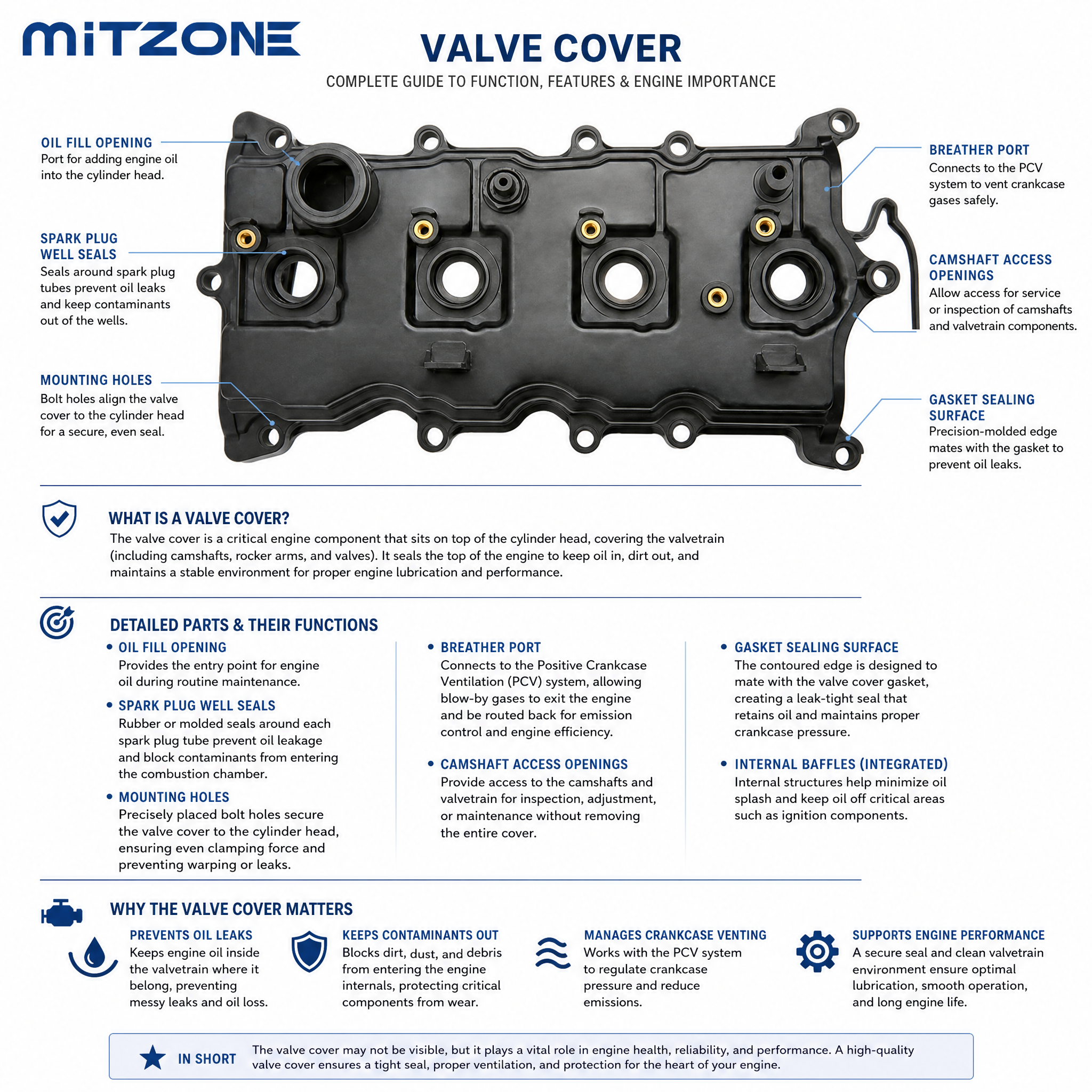
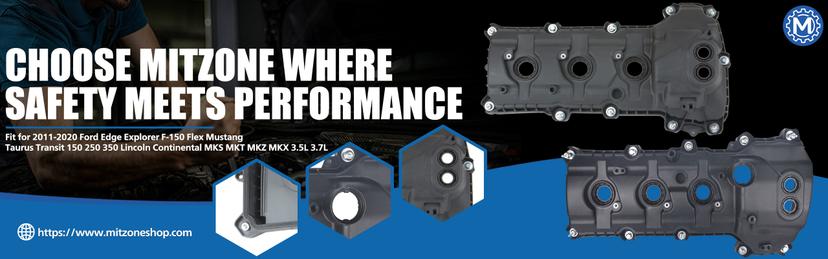
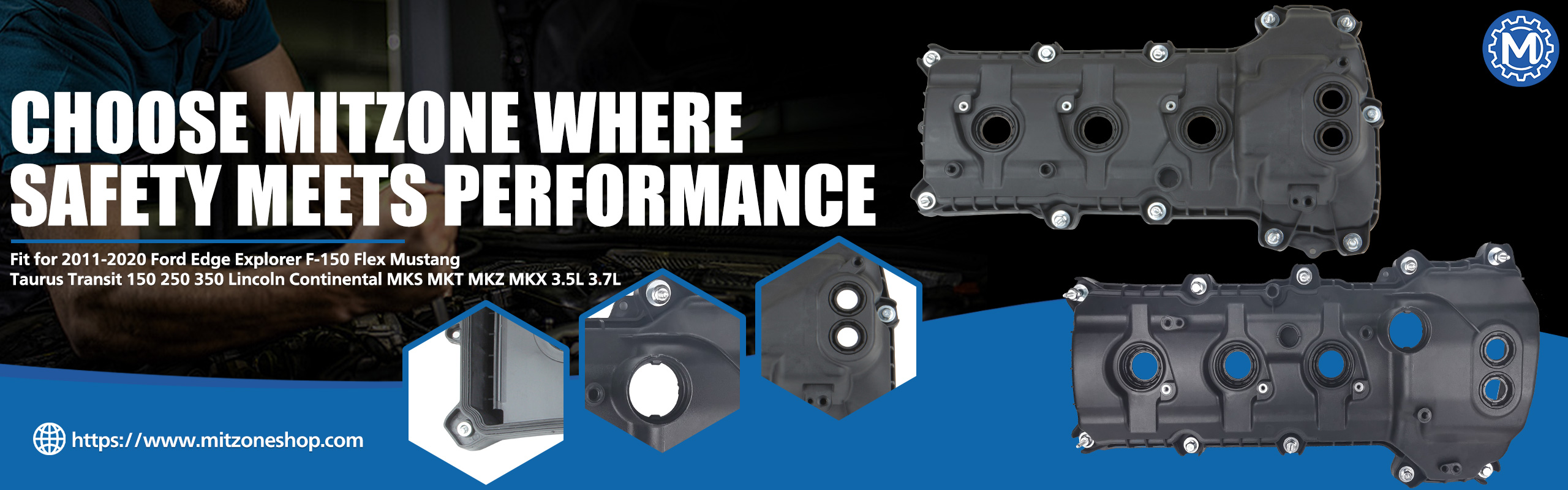
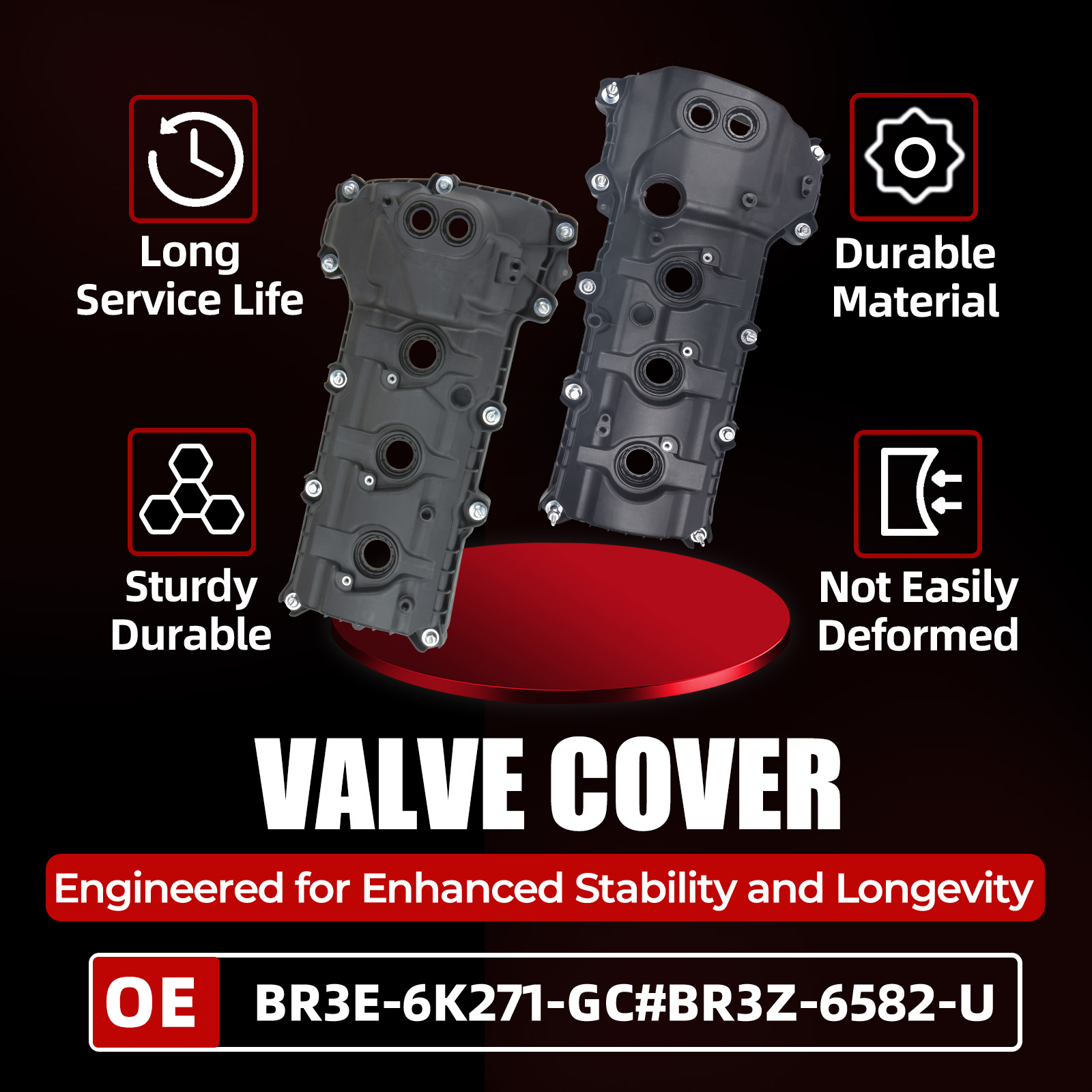
The product data describes an automotive engine valve cover, also called a cylinder head cover assembly. The visible part appears to be a dark black molded cover with an elongated rectangular profile, raised ribs, bolt bosses around the perimeter, and several circular ports or access openings. The finish is matte to satin, and the construction appears to be a molded polymer or composite part, though that cannot be confirmed from the image alone.
That matters because buyers often need more than a generic “replacement cover.” They need to know whether the part is designed for oil containment, valvetrain protection, and the integrated openings associated with oil fill, breather, or PCV-related functions. The supplied artwork also shows fitment text for 2011–2020 Ford Edge, Explorer, F-150, Flex, Mustang, Taurus, Transit 150/250/350, and Lincoln Continental, MKS, MKT, MKZ, and MKX with 3.5L and 3.7L engines. The brand shown is Mitzone, with part reference text BR3E6K271GC-BR3Z6582U.
Quick buyer takeaway: what to check before placing an order
If you are sourcing OEM car parts or replacement engine components, start with fitment, then move to details that prevent returns. The supplied data gives a useful platform list, but it does not confirm everything a buyer usually needs. The exact side, bank compatibility, gasket inclusion, torque specs, and OE equivalent status are not supplied, so those points should be verified before purchase.
That is a practical caution, not a criticism. Valve covers are one of those parts that can look straightforward and still create trouble if the wrong variant lands in the warehouse. Small differences in openings, mounting points, or engine bank can stop the job cold.
How to judge the supplier, not just the part
1. Fitment discipline
A serious exportor or domestic distributor should present clean vehicle coverage and part reference data. The more exact the compatibility description, the fewer back-and-forth emails your team will need. For direct factory auto parts purchasing, that is often where the real value sits: fewer unknowns and less rework.
2. Clarity on the assembly scope
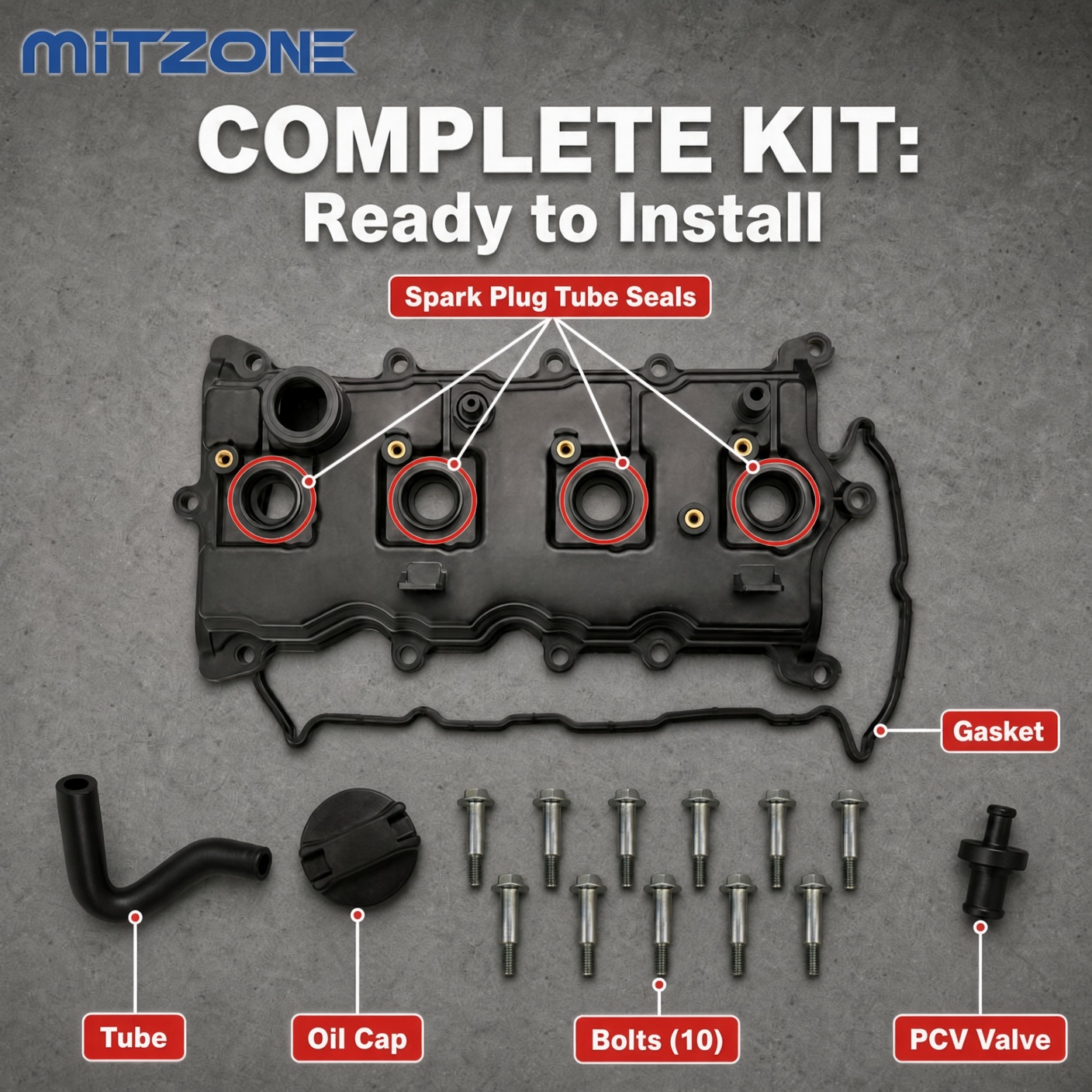
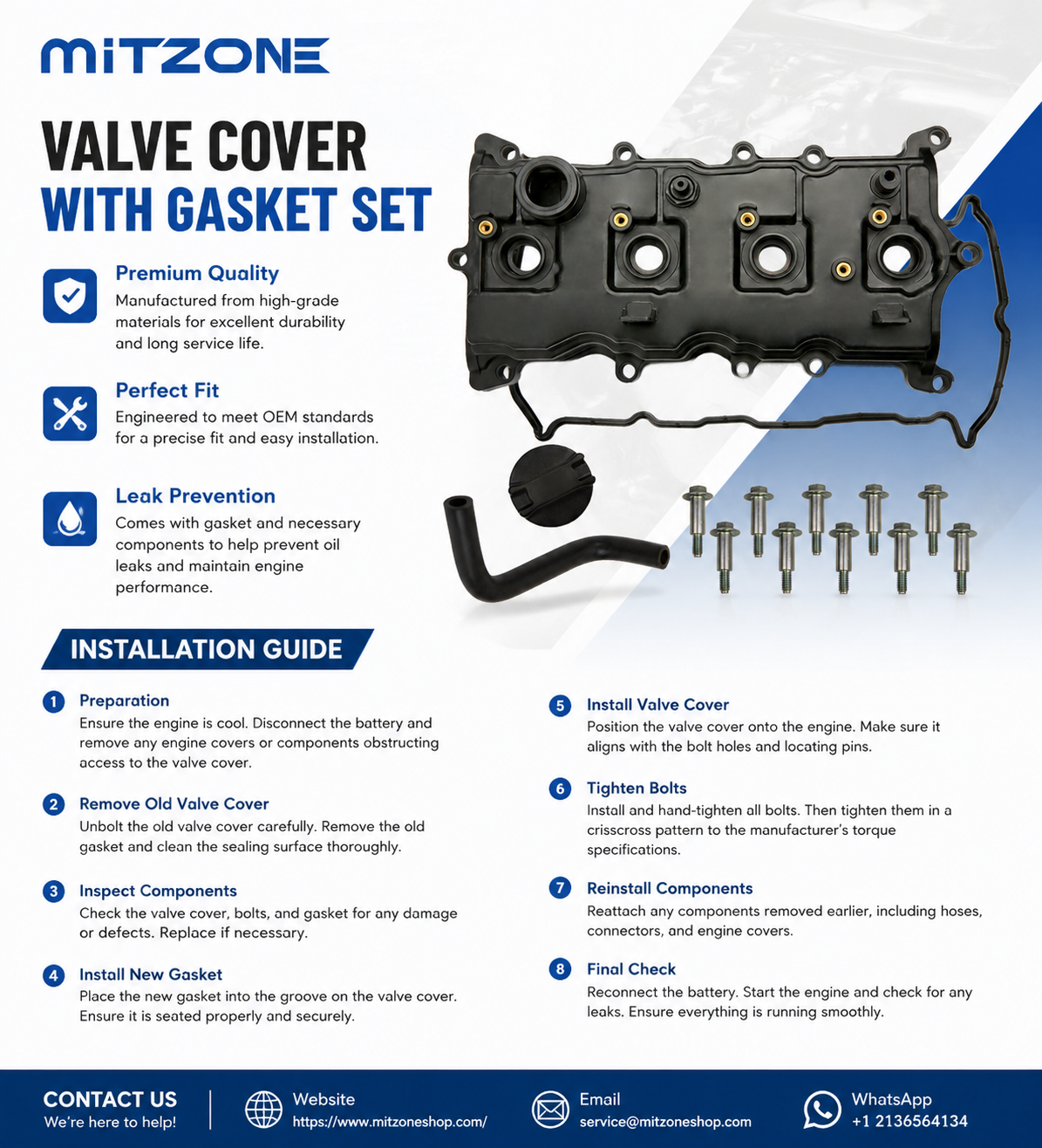
Valve cover listings can be messy. Some include seals, some do not. Some show fasteners in the image but do not supply them. Some are complete assemblies, others are bare covers. The supplied information does not confirm gasket or fastener inclusion, so a buyer should ask directly. That is especially important for service departments that prefer a single-box install.
3. Material and finish consistency
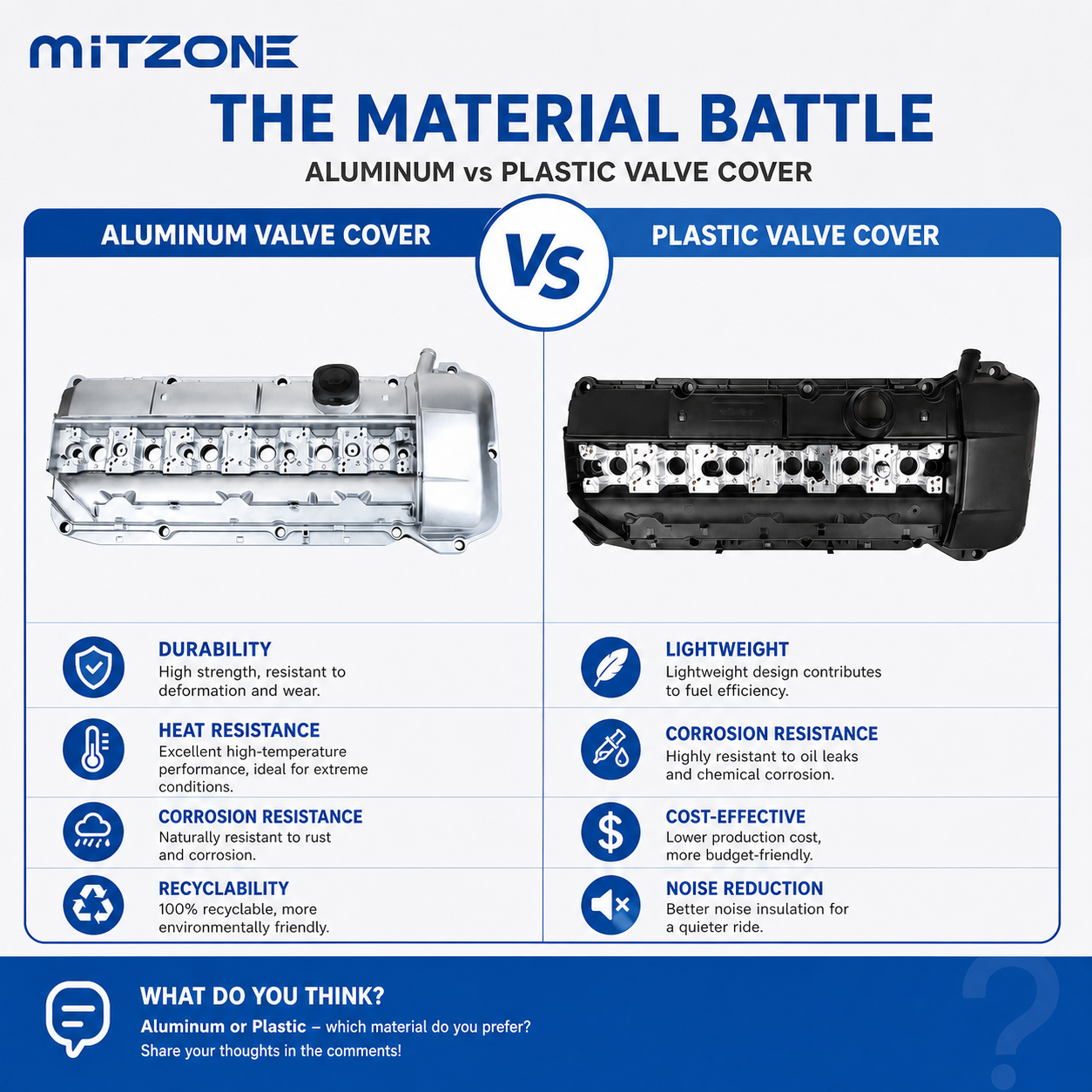
Although the exact material grade is not stated, the part’s molded appearance suggests a modern replacement cover intended to match OE-style packaging and mounting geometry. A consistent surface finish and clean sealing surfaces matter because they influence how the part seats and how confidently technicians can install it the first time.
Common mistakes when sourcing engine valve covers
One common mistake is treating all valve covers for the same displacement as interchangeable. They are not. Another is assuming the photo tells the whole story. A black molded cover with multiple ports may still differ by bank, sensor layout, or opening geometry.
Buyers also sometimes focus only on price and overlook the labor cost of a mismatch. That is a short-term win that turns into a long repair cycle. For distributors, the better approach is to keep the application data tight and ask suppliers to confirm the part reference against the vehicle list before shipment.
Where this product fits in the market
This type of valve cover is aimed at engine repair, oil leak correction, cracked cover replacement, and maintenance during head or valvetrain service. It is the kind of part that repair shops want to source quickly because a damaged cover can hold up an otherwise routine job. For sourcing managers, that makes supplier reliability more important than flashy packaging.
In practice, the best valve cover supplier is the one that gives you enough information to buy once and install once. Not more, not less.
Practical questions to ask before you order
Ask whether the part matches the exact engine bank you need. Ask whether seals or gaskets are included. Ask for the reference number in writing. Ask how the part is packaged to reduce damage in transit. Those are simple questions, but they prevent the expensive kind of surprise that shows up in the service bay.
Next step for sourcing teams and repair buyers
If you are evaluating this part for inventory or repair use, start with the supplied fitment list, then confirm the missing details with the supplier before purchase. For Ford and Lincoln applications with 3.5L and 3.7L engines, that extra check is worth the time. It is the difference between a useful replacement part and a return that slows the whole job down.