
Choosing an Intake Manifold Supplier for Replacement and OEM Programs
Finding the right intake manifold supplier is not just about getting a black plastic part that bolts to the engine. For sourcing teams, repair distributors, and engine builders, the decision affects fitment, warranty risk, installation time, and how many returns end up sitting on a dock. That matters even more with a gasoline intake manifold, where the geometry has to line up cleanly with the cylinder head, throttle-body interface, vacuum ports, and accessory connections. A part that looks right in a photo can still create a costly headache if the runner layout, mounting bosses, or sealing surfaces are off by a small margin.
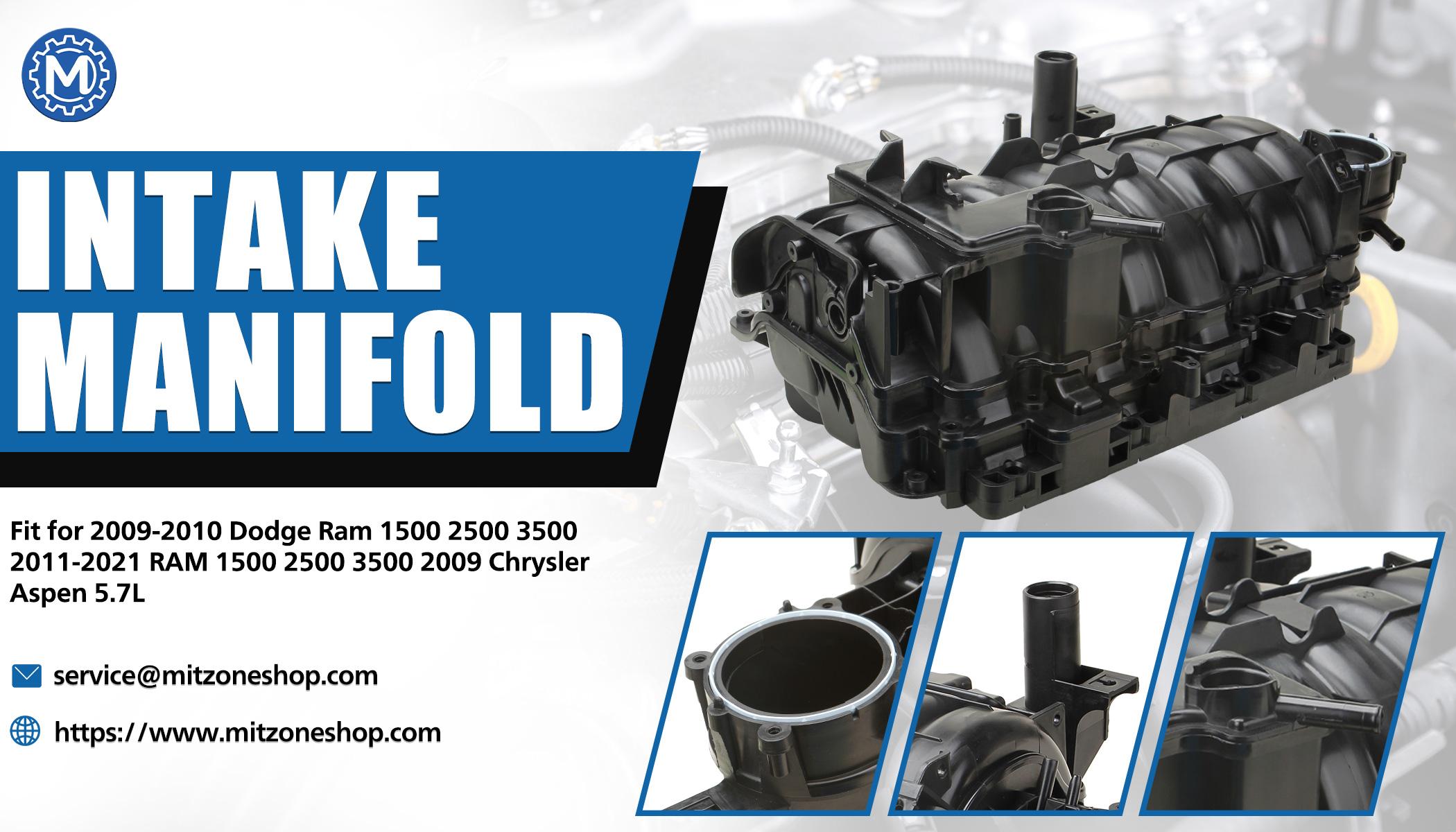
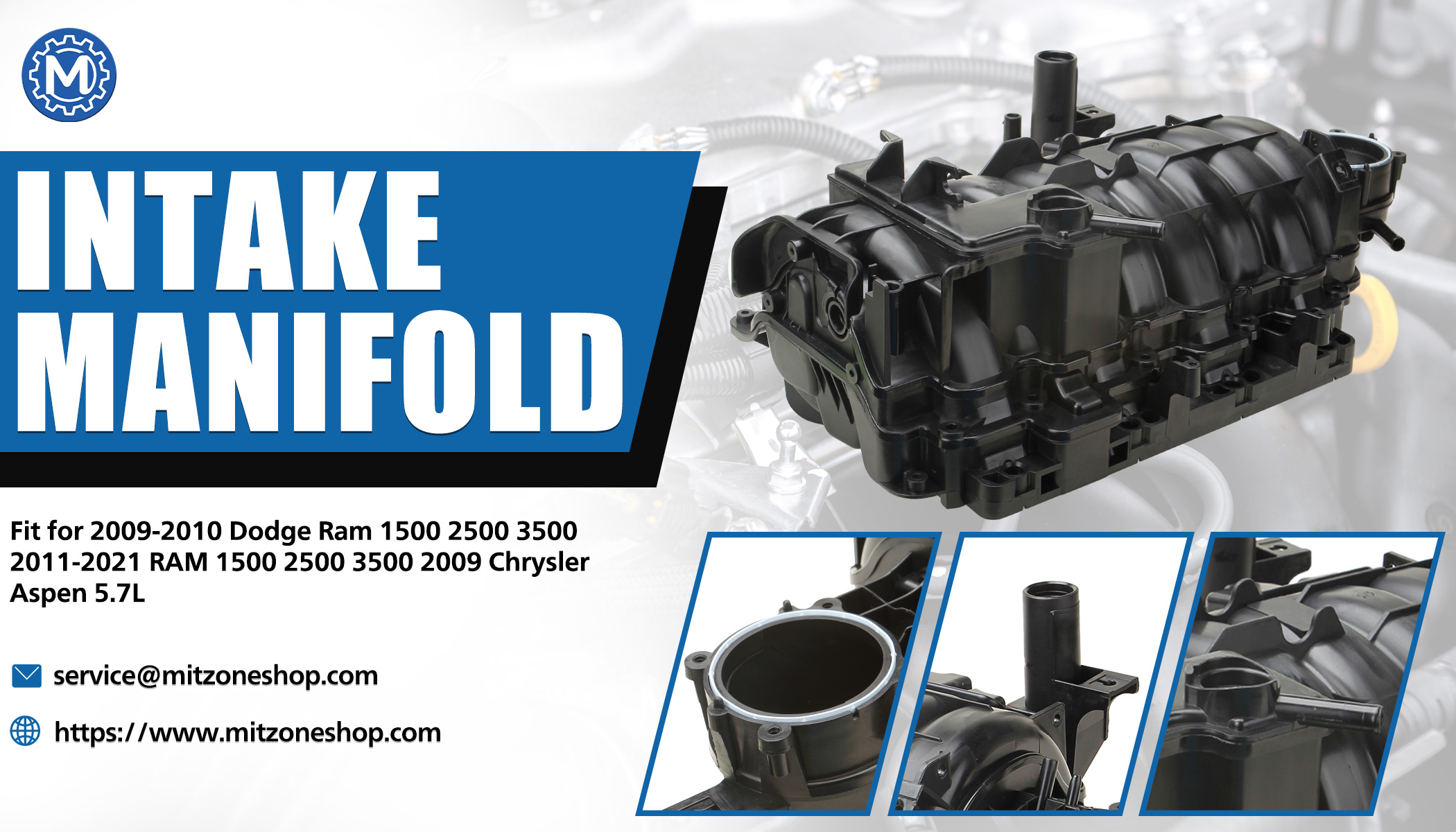
The part data here points to a molded intake manifold assembly for 5.7L applications, including 2009–2010 Dodge Ram 1500/2500/3500, 2011–2021 RAM 1500/2500/3500, and 2009 Chrysler Aspen. It is identified in the notes as Mitzone part number 68194114AC. That gives buyers a useful starting point: you are not shopping for a universal component, but for a specific fitment-driven replacement tied to a defined vehicle range.
What an intake manifold supplier really needs to get right
An intake manifold is simple in concept and unforgiving in practice. It routes incoming air into the engine cylinders, but it also has to preserve airflow consistency, support multiple ports and mounting features, and survive heat cycling over long service intervals. On a molded plastic manifold like the one described, the body typically includes a central plenum, curved runner sections, bolt holes, integrated bosses, and hose or sensor connections. The one-piece construction can help reduce weight, but it also means warpage, cracking, or sealing distortion can become obvious very quickly.
Buyers often focus on vehicle coverage first, which is reasonable, but the supplier evaluation should extend to the details that determine installation success. Are the mounting points positioned correctly? Do the runner contours match the original layout? Does the part include the same port structure and top tube interface as the OE-style unit? Those are the questions that reduce guesswork in the field.
Direct factory auto parts vs. distributor sourcing
There is no single best channel for every buyer. Some teams prefer direct factory auto parts because they want more control over production consistency and better visibility into the manufacturing line. Others need an exportor or trading partner who can consolidate shipments, manage mixed SKUs, and support aftermarket demand across regions. The right choice depends on volume, technical documentation needs, and how much of the supply chain you want to manage yourself.
If you are sourcing OEM car parts, the key issue is not marketing language; it is traceability. A supplier should be able to communicate the exact application range, the part number being offered, and any fitment caveats. In this case, the listed compatibility is specific enough to be useful, but still narrow enough that you would want to verify VIN-level or engine-code-level fitment before approving a large order.
Material and manufacturing notes buyers should watch
The visible surface and shape suggest an injection-molded plastic automotive component or molded composite part, though the exact process is not confirmed here. That distinction matters less for branding than for quality control. With molded intake hardware, the more important questions are dimensional stability, sealing performance, and how the part handles heat and vibration over time.
One practical caution: do not assume every aftermarket manifold includes the same accessories as the original assembly. Gaskets, sensors, internal inserts, fuel rails, or intake flap hardware may or may not be included, and the supplied data does not confirm them. That should be clarified before purchase, especially for fleet maintenance or e-commerce listings where return costs can erase margin fast.
Selection criteria that save time in the shop and on the shelf
Fitment accuracy
For a replacement manifold, fitment is the first gate. The listed 5.7L application range is a solid start, but the buyer still needs to confirm exact model-year and platform compatibility.
Interface quality
Pay attention to bolt-hole alignment, hose-port location, and the sealing surfaces around the plenum and runners. A small mismatch can turn a straightforward repair into a repeat labor job.
Packaging and part identification
Clear labeling helps reduce warehouse mistakes. Part number visibility, vehicle notes, and a clean reference to the application are practical necessities, not marketing extras.
Common mistakes when buying replacement manifolds
The most common error is treating all intake manifolds for the same engine family as interchangeable. They are not. Even when the engine size matches, the mounting pattern, port arrangement, and vacuum routing can differ. Another frequent mistake is ordering based on a photo alone. The one-piece black molded body may look broadly familiar, but what matters is the dimensional match underneath that surface.
It is also easy to overlook the role of installation components. A manifold replacement often exposes old gaskets, brittle hoses, or worn fasteners. If the supplier does not clearly state what is included, build that into the purchase review rather than discovering it mid-repair.
Practical advice for sourcing teams and repair buyers
For aftermarket distributors, the best intake manifold supplier is usually the one that can give you consistent fitment data, stable part identification, and enough product detail to keep returns low. For repair shops, the priority is simpler: get the car back on the road without a second teardown. In both cases, a supplier offering a defined fitment range and a clear part number has already done some of the work that saves you time later.
If you are evaluating Mitzone part 68194114AC or a similar assembly, ask for application confirmation, included-component details, and any available installation notes. That is the kind of diligence that prevents a small engine-air-system job from becoming a repeat failure.
Next step for buyers
Before placing an order, compare the listed vehicle fitment against your exact application, confirm what comes in the box, and make sure the supplier can support the part number with clean documentation. A good intake manifold supplier should make that process straightforward, not force you to guess.