
Why buyers look for a thermostat housing outlet supplier in the first place
A thermostat housing outlet supplier is usually not the first vendor a buyer thinks about until an engine cooling issue puts a vehicle in the bay and downtime starts costing money. For mechanics, repair shops, and parts teams, the part looks simple enough: a metal housing that routes coolant, supports the thermostat, and connects into the engine’s cooling circuit. In practice, it is one of those components where fitment, material quality, and consistency matter more than the catalog photo suggests.
That is especially true for OEM car parts and direct factory auto parts in modern light trucks and SUVs, where engine bay packaging leaves little room for error. A housing that is slightly off in angle, flange position, or hose connection geometry can turn a routine replacement into a comeback job. The buyer’s real decision is not just “can I get the part,” but “can I get the right part with predictable installation behavior.”
What this part does, and why the design matters
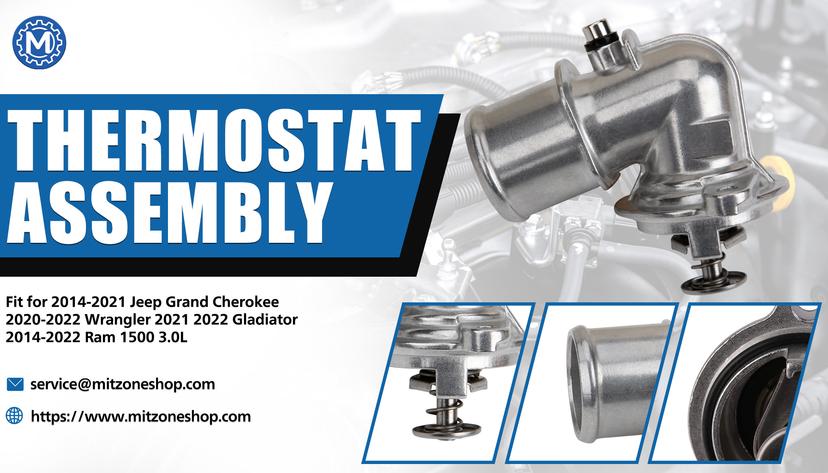
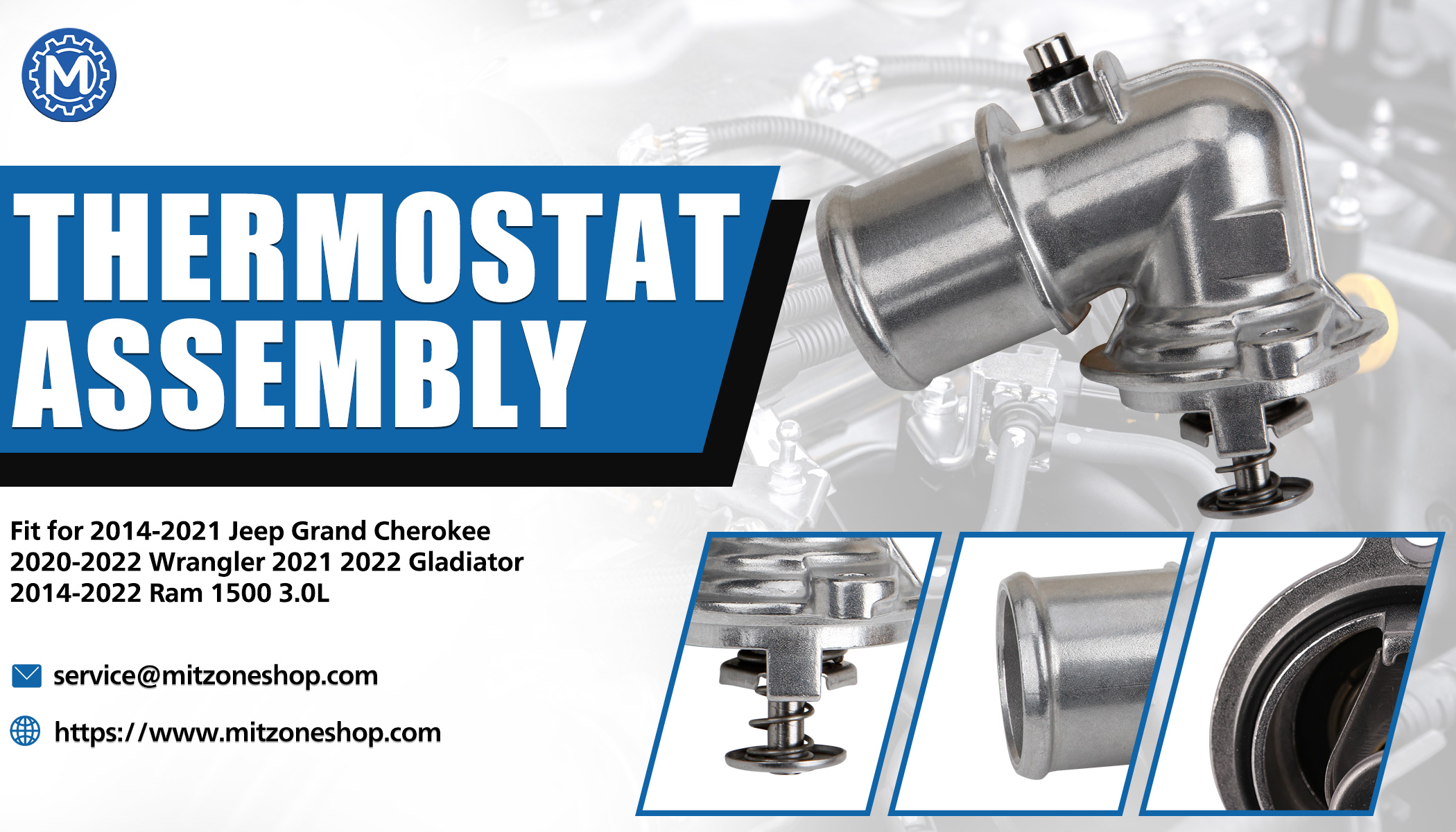
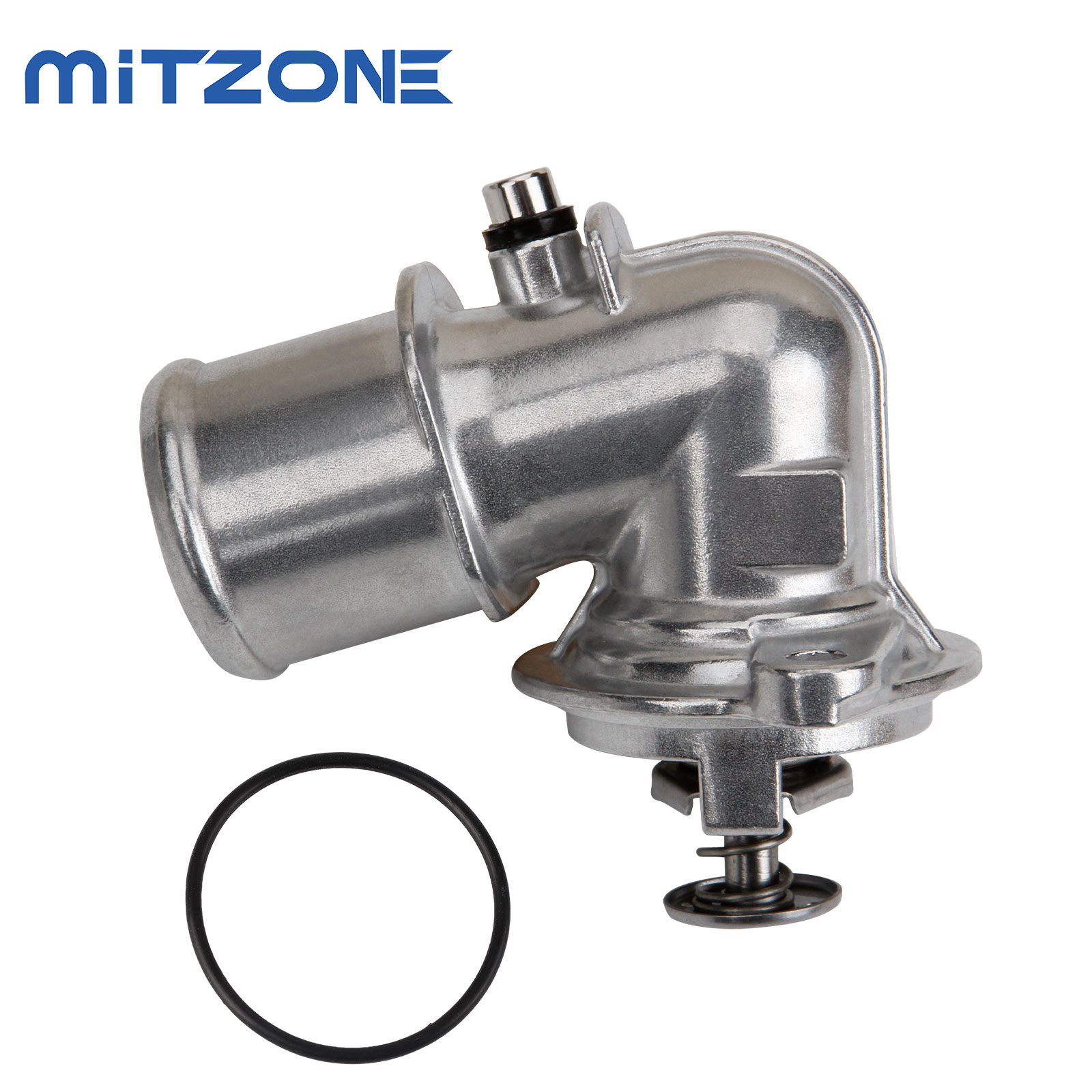
The thermostat housing assembly sits in the engine cooling system and helps regulate coolant flow through the engine. The housing provides the structure that holds the thermostat and forms the passage between hoses, pipes, and the engine’s coolant paths. On the part referenced here, the visible design includes an angled elbow shape, cylindrical inlet and outlet sections, a bolted mounting flange, and a lower plunger-like component associated with the thermostat assembly.
That layout is typical of space-constrained cooling systems. The form may look straightforward, but the geometry is doing real work: it needs to support sealing surfaces, maintain alignment, and survive repeated thermal cycling. If the housing surface finish or bolt pattern is inconsistent, the installer feels it immediately. So does the customer a week later if a seep develops.
Reference point: the Mitzone 39012034F fitment context
Based on the supplied product information, the relevant part number is Mitzone 39012034F. The listed fitment covers 2014–2021 Jeep Grand Cherokee, 2020–2022 Wrangler, 2021–2022 Gladiator, and 2014–2022 Ram 1500 3.0L applications. That kind of fitment span tells a sourcing manager something useful: this is a replacement part aimed at a defined vehicle family, not a universal casting that can be forced into service everywhere.
The housing is described as a metallic silver component with a cast or machined finish, likely aluminum or another cast metal, though the exact alloy is not confirmed. That is enough for a cautious buyer to ask the right follow-up questions without assuming more than the data supports.
How buyers should evaluate a supplier
When comparing thermostat housing outlet supplier options, the most practical checks are rarely glamorous. Fitment accuracy comes first. Then material consistency, surface finish, and whether the supplier can support stable repeat orders. For aftermarket replacement parts, these basics often matter more than marketing language about performance.
Key buyer checks
Confirm the exact vehicle applications, not just the engine family. A part that fits one model year and trim can be wrong for another. Verify the supplied part number against your catalog system. Ask whether the item is intended as an OEM-style replacement, and whether it is positioned as direct factory auto parts sourcing or aftermarket service replacement. If the supplier is also acting as an exportor, clarify packaging, labeling, and documentation expectations early; cross-border shipments fail on paperwork as often as they fail on product.
It is also wise to ask about included components. The available information does not confirm gasket, seal, sensor, or connector inclusion, so those should not be assumed. That omission matters because shop labor is tied to completeness. A missing small item can eat the margin on the whole job.
Common mistakes buyers still make
One common mistake is treating thermostat housing parts as commodity items. They are not. Two castings that look nearly identical can differ in hose angle, port depth, or mounting detail. Another mistake is buying purely on appearance. A clean silver finish does not guarantee correct machining, and a machined surface does not prove the housing will seal properly under thermal load.
There is also a tendency to overlook vehicle-specific cooling system architecture. On some platforms, the housing is part of a broader assembly logic, so the right replacement must match the original layout closely. That is why sourcing teams often prefer suppliers who can speak in fitment terms rather than generic product claims.
Practical advice for repair shops and parts teams
If you are stocking thermostat housing outlet parts for service work, keep the highest-volume applications tied to confirmed fitment data and part numbers. If you are purchasing for export or wholesale distribution, build in one extra verification step for applications, because returns on cooling parts can be expensive and awkward to diagnose after installation. For shop buyers, a quick visual comparison of mounting flange shape and outlet orientation before opening the package can save time at the bay.
For product teams, the useful question is whether the supplier can hold geometry and surface consistency across batches. That is often more important than chasing claims that cannot be verified from the part itself. A reliable cast housing with stable fitment beats a glossy sample that only works once.
What to ask before placing an order
Before you commit, ask for fitment confirmation, part-number matching, and clear application notes. If the part is intended for Jeep and Ram cooling system service, confirm the exact model years and engine listing again at the order stage. Ask whether the supplier supports OEM car parts sourcing, direct factory auto parts programs, or aftermarket replacement channels, since that affects labeling and customer expectations.
If you need to compare suppliers quickly, start with these questions: Is the geometry correct? Is the finish consistent? Is the application verified? Is the supply chain stable enough for repeat orders? Those four questions usually reveal more than a polished sales deck.
Next step for buyers
If you are sourcing this category for repair distribution, workshop inventory, or export supply, use the part number and vehicle fitment as your first filter, then press the supplier for the details that are still missing. A thermostat housing looks modest on the shelf, but in the field it is a part that either fits cleanly or creates a problem nobody wanted.