
What buyers really mean when they search for an intake manifold supplier
When engineers or sourcing teams look for an intake manifold supplier, they are usually not shopping for a single plastic part. They are trying to reduce risk on a component that affects drivability, sealing, engine breathing, and repair turnaround. On a Mercedes V6 platform, that matters even more because the manifold is not just a hollow housing; it typically carries integrated runner hardware, brackets, and actuation pieces that can complicate replacement if the assembly is incomplete or poorly matched.
This is why the decision is less about “finding a part” and more about choosing a supplier who can match fitment, configuration, and assembly quality without forcing the buyer to engineer around the part after delivery. For service networks, wholesalers, and repair-oriented buyers, that distinction can save time on the bench and avoid comebacks later.
What this manifold assembly appears to be
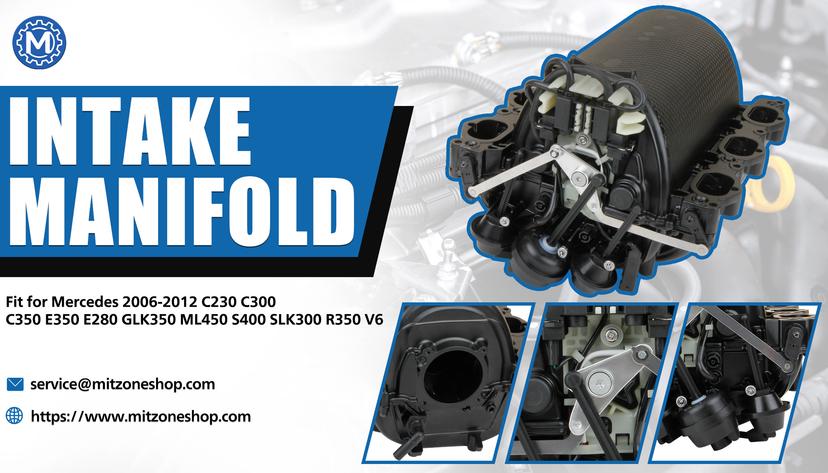
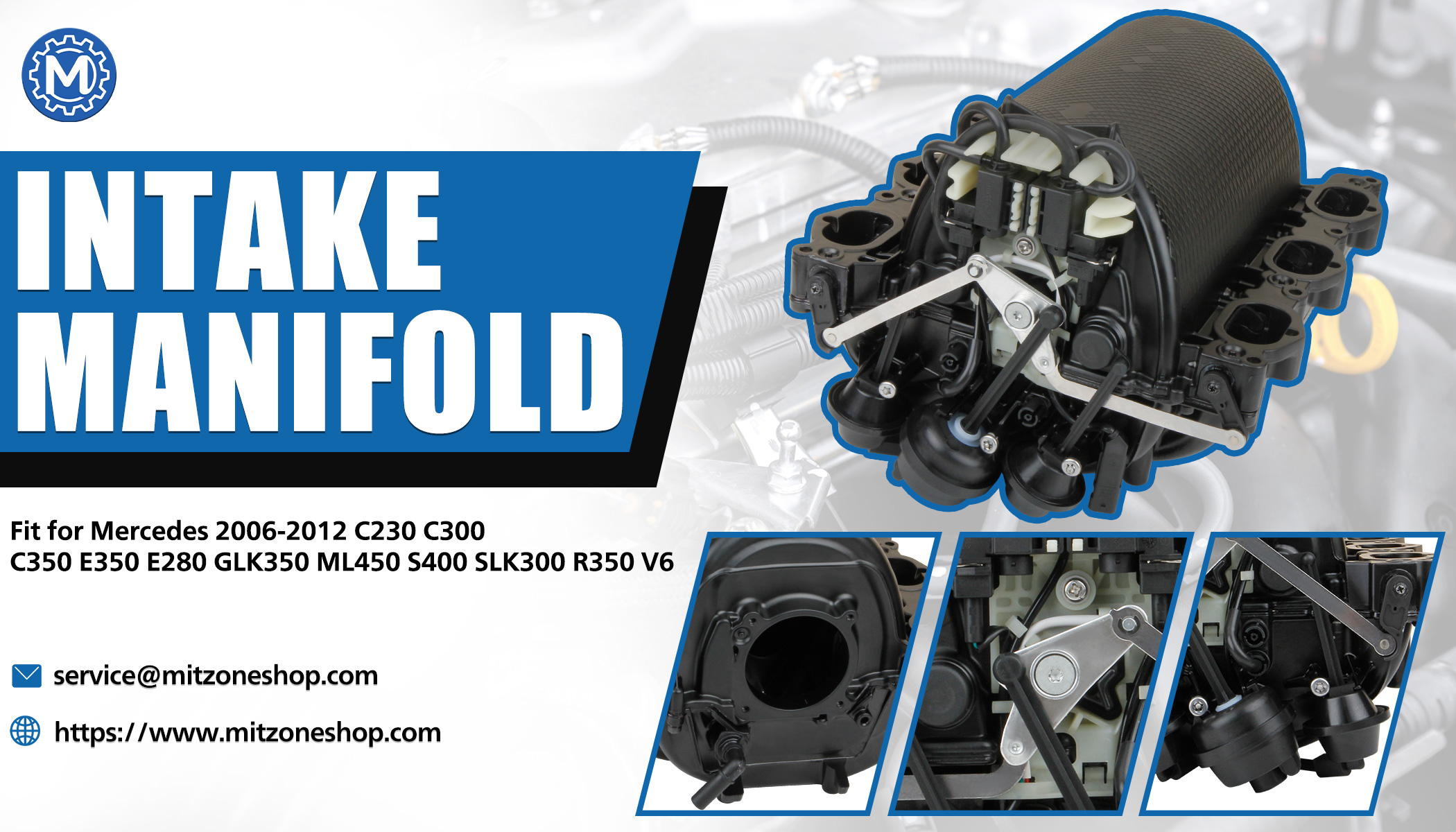
Based on the supplied product information, this is an automotive intake manifold assembly for a gasoline V6 engine, likely a Mercedes application. The visible construction suggests a black molded polymer housing with a ribbed upper plenum section, multiple side intake ports, lower runner openings, and attached metal linkage or bracket arms. There are also plastic actuator-style components and hose or tubing connections visible, which suggests the unit is sold as a complete assembled manifold rather than a bare shell.
The fitment note provided is specific: Mercedes 2006–2012 C230, C300, C350, E350, E280, GLK350, ML450, S400, SLK300, and R350 V6, with part numbers 2721402401 and 2721402201. That level of fitment detail is valuable because intake manifold replacements often fail at the sourcing stage, not the installation stage. A manifold that looks close enough on a shelf can still be wrong at the flange, actuator, or port level.
Why intake manifold sourcing is more sensitive than it looks
An intake manifold has to do several jobs at once. It routes incoming air, helps distribute flow to the cylinders, and in many modern designs supports runner control or similar actuation hardware. If the assembly is cracked, worn, or the flap mechanism sticks, the engine may run poorly even if the rest of the intake tract is healthy.
For repair buyers, the practical concern is not only the part itself but the downstream labor. A cheap replacement that arrives without the needed linkage, brackets, or mounting geometry can turn a routine service into a second teardown. That is particularly frustrating on V6 engines with tighter engine bays and more attached plumbing.
Quick buyer comparison: what to verify before ordering
Fitment first
Start with the vehicle model, year range, and part number. For Mercedes applications, that is usually more reliable than trying to match by appearance alone.
Assembly completeness
This product is shown as an assembled unit, which is useful. Buyers should still confirm whether sensors, gaskets, and bolts are included, because those items are often handled separately.
Material and finish
The visible black molded composite housing is consistent with many modern OEM-style manifolds. That does not guarantee performance parity, but it does suggest a production method aligned with high-volume auto parts manufacturing.
Actuation details
If the failed original part had runner flap or linkage problems, matching the actuation style matters as much as the housing shape. This is where many direct factory auto parts claims are overextended, so ask for exact visual and part-number confirmation.
Common mistakes buyers make
The most common error is treating all Mercedes V6 intake manifolds as interchangeable. They are not. Even within the same brand family, differences in part number, port layout, and actuator arrangement can block installation.
Another mistake is assuming a replacement manifold will solve every drivability complaint. If the issue is vacuum leaks elsewhere, carbon buildup, or damaged wiring, swapping the manifold alone may not cure the symptom. A careful diagnosis still matters, even in the aftermarket.
How a supplier should help you reduce risk
A capable intake manifold supplier should be able to provide clear fitment data, part-number matching, and product photos that show the mounting points and actuator layout. For buyers handling OEM car parts or exportor channels, documentation is often as important as the casting or molding itself.
In practical terms, the best suppliers make it easier to compare the replacement against the removed part before the box ever reaches the shop floor. That is especially useful for maintenance programs where vehicles come in with manifold wear, cracking, or flap-related faults and the repair has to be completed quickly.
FAQ for sourcing teams and repair buyers
Is this a bare manifold or a full assembly?
It appears to be a complete assembled manifold with linkage and actuator-related components attached.
Can I identify the part by appearance alone?
Not safely. The part number and vehicle fitment list should guide the order, not just the shape.
Is this suitable for Mercedes V6 repair work?
Based on the supplied data, yes, for the listed models and part numbers. As always, confirm engine and VIN details before purchase.
What to ask before you place the order
Ask for the exact part number match, confirmation of included components, and whether the item is intended as a direct replacement for the listed Mercedes vehicles. If you are sourcing for a warehouse or service program, also request packaging and labeling details so the part can be tracked cleanly through receiving and installation.
If you are comparing suppliers, use fitment confidence, assembly completeness, and communication speed as your main filters. That approach usually beats chasing the lowest sticker price, especially on a component that sits at the center of engine airflow and repair quality.
Next step
If you are evaluating an intake manifold supplier for Mercedes V6 coverage, start with the part numbers 2721402401 and 2721402201, then verify the model-year list against your vehicle records. A good sourcing decision here is the one that avoids rework, not the one that only looks close on paper.